






403
Sorry!!
Error! We're sorry, but the page you were looking for doesn't exist.
Our Land: Who Owns The Countryside? New Documentary Explores The Access Divide In England And Wales
Author: Ben Mayfield
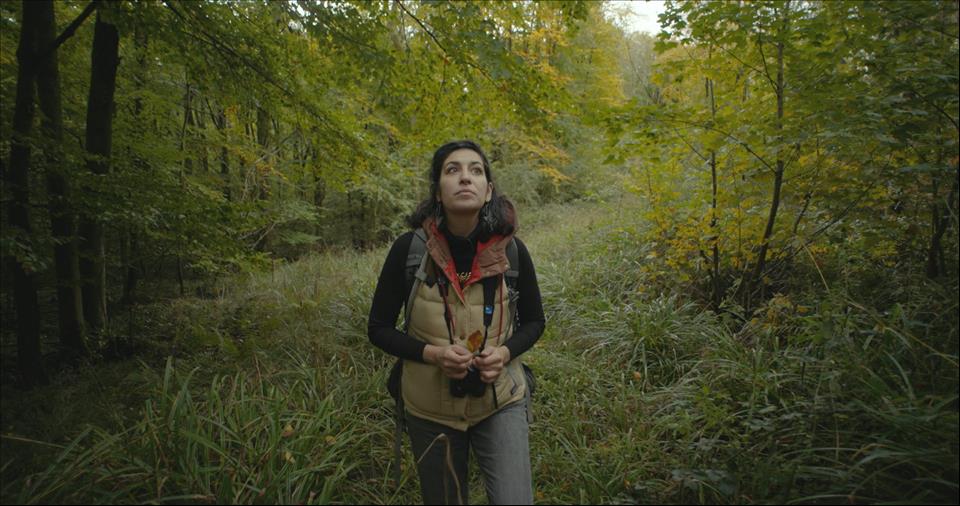
(MENAFN- The Conversation) Directed by Orban Wallace, Our Land explores the countryside access debate in England and Wales through interviews, pastoral shots, lavish illustrations and a walk in the country where the sun always seems to shine.

One percent of landowners own 50% of English and Welsh land. But the right of open access to land by the public, or the“right to roam”, extends to only 8% of this land.
Our Land follows the path of earlier activists such as Marion Shoard and Tom Stevenson who once advanced the access campaign through their experiences and storytelling. Here, the documentary's star is naturalist and conservationist Nadia Shaikh.
Shaikh explores the teaching power of the English countryside by leading a group of trespassers on a nature walk. She describes her own complex and deep-felt attachment to the countryside as a place of education and personal identity.
Our Land is a title with two meanings – private land ownership for the landowners v the campaign for shared rights in land. The film explores different attitudes to ownership as well as the physical borders between landowners and, in the words of access campaigner and contributor Guy Shrubsole,“the peasants”.
The documentary was filmed during the Darwall v Dartmoor (2023) legal dispute. Landowner Alexander Darwall successfully challenged and outlawed the longstanding right to wild camp on Dartmoor National Park in the High Court. Later overturned by the Court of Appeal and Supreme Court, the High Court ruling in favour of the landowner caused ripples of protest among walkers and campers. They temporarily lost the right to wild camp in Dartmoor – the only place in England where this was allowed by law.
Hedge fund manager Darwall is the most controversial landowner to feature in Our Land, but he is not interviewed in person. Instead, veteran documentary star Francis Fulford (he's appeared in nine shows, including one about his estate and family) fills the role of aristocratic landowner and pantomime villain.
Fulford provides an insight into the landowner outlook: proud of his family's place in English and colonial history as well as its roots on the Great Fulford estate. Fulford describes his family as having owned the estate since“time immemorial” and his love of the English countryside is unquestionable.
Indeed, many of the landowners interviewed have a paternal view of the countryside in which they view themselves as temporary guardians. Where opinions differ is how the countryside is best preserved and the extent to which the public should be allowed access to it.
Access and trespassTrespass itself is a civil matter rather than a criminal offence, which is just as well because the documentary features trespass aplenty.
For instance, campaigning author Nick Hayes crosses the fences of the Drax estate in Dorset to deliver a copy of his Book of Trespass. He discusses the colonial history of the great estates and the role of wider access as a response to the decolonisation movement.
The documentary explains how the English and Welsh culture of access differs from that of close neighbours like Scotland. The Land Reform (Scotland) Act (2003) is celebrated, and contrasted with the exclusionary laws of England and Wales. Shrubsole stands over the border with one foot trespassing in England, the other“lawfully” in Scotland.
The Land Reform Act provides a much wider right to roam the Scottish countryside than the Countryside and Rights of Way Act in England (2000). It has a presumption in favour of public access and only minor exclusions such as private gardens and some industrial land. By contrast, the English“right to roam” supplements our existing network of footpaths, but extends only to mountain, moor, heath, down and common land. Great swathes of land are left inaccessible to the public.
The law is a central character in the access debate but exists only in the background of this documentary. We learn about the Norman conquest and enclosure of the commons in the 12th to 19th century. It was a process of consolidating, privatising and fencing off shared agricultural land (common land) in Britain, transforming it into individually owned, fenced fields. This change abolished traditional communal rights for grazing and farming.
However, there is less about the mixed success of earlier attempts to open countryside such as the Access to Mountains Act (1939), post-war National Parks Act (1949) or the Countryside and Rights of Way Act. English legislative failures might be able to teach us as much as Scotland's successes.
Disagreement and concessionAs the documentary draws to its conclusions there are some limitations to the format of landowners and campaigners being interviewed separately. We hear from both sides of the access debate but there are few opportunities to see the two sides in conversation.
Fulford is goaded from behind the camera on his views about sharing his land with visitors, but no representatives from either side have the opportunity to join one another in debate.
This leaves some assertions unchallenged, such as those of the affable Hugh Inge-Innes-Lillingston, owner of the Thorpe estate in Staffordshire. On the topic of rewilding, he contends that land cannot be truly rewilded if public access is allowed. But this reductive position ignores the nuanced ways that visitors and wilderness can coexist.
Throughout, many of the featured landowners and access campaigners agree on the artificial nature of landownership, their individual powerlessness to effect change and on the social and legal constructs that trap us all in an uncomfortable standoff.
As the documentary closes with trespassers talking and singing around a fire, I was left wishing that the cast of landowners could have joined them in their conversation.
The climate crisis has a communications problem. How do we tell stories that move people – not just to fear the future, but to imagine and build a better one? This article is part of Climate Storytelling, a series exploring how arts and science can join forces to spark understanding, hope and action.
Institution:Lancaster University

Legal Disclaimer:
MENAFN provides the
information “as is” without warranty of any kind. We do not accept
any responsibility or liability for the accuracy, content, images,
videos, licenses, completeness, legality, or reliability of the information
contained in this article. If you have any complaints or copyright
issues related to this article, kindly contact the provider above.
Most popular stories
Market Research

More Story

Comments
No comment