




403
Sorry!!
Error! We're sorry, but the page you were looking for doesn't exist.
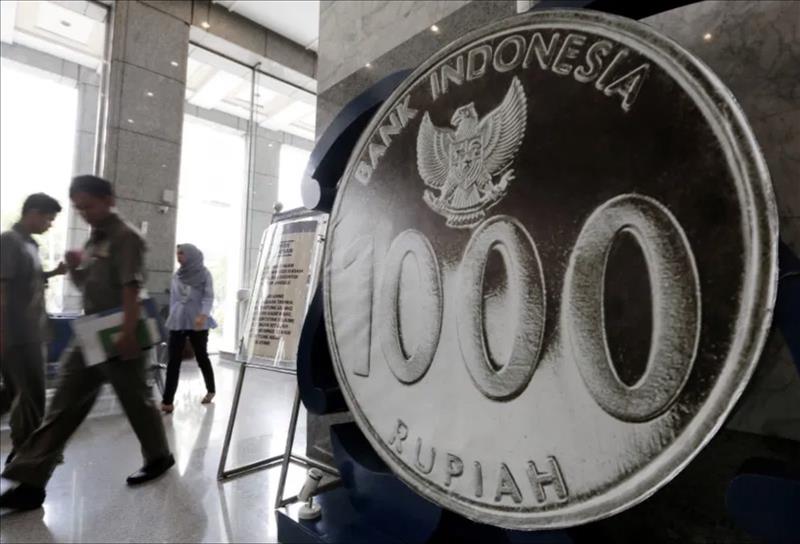
Rupiah Rout Stoking Fears Of A 1997 Repeat In Indonesia
(MENAFN- Asia Times)
TOKYO – Indonesian officials are working overtime to dismiss any suggestion that Jakarta is catching a whiff of 1997 in the air. But the force of their interventions to steady the rupiah tells a very different story.
Bank Indonesia is hemorrhaging currency reserves to put a floor under the rupiah, which recently fell to an all-time low. This includes levels seen during the Asian financial crisis 29 years ago, as the fallout from the Iran war slams global markets.
Yet Indonesia's move to impose capital controls suggests Southeast Asia's biggest economy is going to the mattresses against currency speculators - in ways that could backfire.
Next week, Indonesia will activate a Bond Stabilization Fund to support the rupiah, according to Finance Minister Purbaya Yudhi Sadewa. Yet Jakarta resorting to so-called capital-flow management tools this early in the battle smacks more of panic than strength.
To be sure, the rupiah's plunge to around 17,400 to the dollar is dramatic and a clear and present threat to the economy. A weaker exchange rate makes it harder to keep up with overseas debt payments.
It ups the odds Indonesia will import inflation. And it complicates the export of coal, nickel, palm oil and other key commodities, all of which are priced on global markets in dollars.
But there's a throw-the-baby-out-with-the-bathwater dynamic at play in Jakarta. The capital outflows exiting Indonesia reflect investors voting with their feet against the priorities that President Prabowo Subianto has pursued since October 2024.
The twin budget and current-account deficits are surely part of the problem. But the biggest worry is the yawning gap between Prabowo's reform promises and the actual macroeconomic policies he's championed.
It's fine that Prabowo embraced the mega‐infrastructure agenda of his predecessor, Joko Widodo. But global investors have been left wanting for new projects that boost productivity. They also prefer financing arrangements that don't crowd out private investment while exacerbating the national debt.
Nor is economic nationalism a good look for a government seeking to increase its regional leadership role. This includes export restrictions on nickel and other minerals that unsettle global supply chains and regulatory volatility that raises risk premiums.
Prabowo, meanwhile, has done little, if anything, of note to reduce Indonesia's reliance on commodities to generate growth. This dynamic exposes the nation's 287 million people to extreme price swings.
Team Prabowo has done itself no favors by dismissing investors' concerns. Its heavy foreign-exchange intervention and pressure on state-owned banks are exacerbating these worries. Indications of bigger spending efforts to come aren't helping.
It seems markets are no longer buying what Team Prabowo is selling. The rupiah's plunge“is a signal that macroeconomic fundamentals are under pressure,” says Liza Camelia Suryanata, head of research at Kiwoom Sekuritas Indonesia. Also, Suryanata notes,“the target of 8% GDP growth has become highly unrealistic, and even maintaining around 5% is starting to look difficult.”
Latest stories Japan's ammonia push risks locking Indonesia into coal Escalation risks rise as political centers weaken Iran weaponizes petroyuan in war reparations pushNor is Suryanata surprised that the Jakarta Composite Index is down nearly 19% year to date. That compares to positive year-to-date returns in Malaysia and Thailand and a Philippine stock market that's essentially flat.
In late April, index giant MSCI extended its review of Indonesia's stock market to determine whether it might be downgraded to“frontier” from“emerging” status amid growing concerns about transparency under Prabowo.
Since January, Jakarta has announced steps to increase the amount of shareholder data and doubled the portion of stocks available to the general public to 15%. The exchange also kicked out some tycoon-owned stocks.
Last month, Jeffrey Hendrik, acting CEO of the Jakarta exchange, said his team would“continue to engage with global investors to gather input on strengthening the capital market in the future.”
Indonesia's troubles are much deeper than that. Nor is it the only Asian economy in harm's way. The Indian rupee, for example, is down by even more year to date than the rupiah (down 5.1% and 4.1%, respectively).
“Emerging market Asia is in the direct path of the shock with relatively loose policy,” says economist Lucila Bonilla at Oxford Economics, noting that Oxford has added rate hikes to its baseline for India, Indonesia and the Philippines. Thailand, meanwhile, is the“standout risk of patience turning into complacency.”
Indonesia, though, was shaky well before bombs began falling on Iran on February 28. Even before the war began, the rupiah and the stock market were suffering their worst routs since the 1997-98 Asian crisis, flashing warning signs for developing markets across Asia. It was clear in January that markets had grown wary of general-turned-politician Prabowo's policies.
When Prabowo succeeded the more reform‐minded Widodo, he inherited an economy that had been gathering momentum. Between 2014 and 2024, the widely popular Widodo restored stability to Indonesia's political landscape and notched several meaningful reforms - most notably a wave of transformational infrastructure projects designed to lift productivity and competitiveness.
In the Widodo era, Indonesia also made headway in tackling corruption and bureaucratic inefficiency, pushing government institutions toward greater transparency. These improvements helped raise the quality of growth, ensuring that more Indonesian households shared in the gains from rising output.
And under Widodo's stewardship, Indonesia navigated the Covid‐19 shock more effectively than many of its emerging‐market peers. Yet for all his achievements, Widodo left important structural issues unresolved.
Critics say he tolerated the rise of dynastic politics and allowed old‐style patronage networks to persist. And by backing a successor from the armed forces, he opened the door to a far less predictable leadership style - a striking shift given that Widodo was Indonesia's first president from outside the military or political elite.
Global investors felt the jolt almost immediately after Prabowo took office. His pledge to propel Indonesia's US$1.4 trillion economy toward 8% annual growth initially rekindled foreign enthusiasm.
But that optimism evaporated once it became clear that his strategy relied on aggressive fiscal expansion. Capital outflows surged as investors reassessed the risks behind the new administration's growth ambitions.
Nine months into his presidency, in September 2025, Prabowo abruptly dismissed the internationally respected Finance Minister Sri Mulyani Indrawati. A former World Bank managing director, she had long been viewed as the key guardrail against a return to fiscal overreach.
Once she was out, Prabowo installed loyalist Purbaya, who quickly injected roughly $12 billion into the economy to jump-start lending.
Purbaya then moved swiftly to advance Prabowo's controversial“burden‐sharing” plan - a push to nudge the central bank toward looser monetary policy just as the government was flooring the fiscal accelerator.
Economists worry BI is becoming a mere extension of the president's growth strategy. ANZ Banking Group strategist Jennifer Kusuma notes that BI's growing role in the sovereign debt market“would foster moral hazard risks” going forward.
In late January, as the Indonesian rupiah plunged to a record intraday low, Purbaya issued a statement stressing that BI remains free to make its own calls.
“We will maintain the independence of the central bank and the government as much as possible,” Purbaya said.“I will not squeeze the central bank to finance our development programs.”
The folks at MSCI clearly aren't persuaded. In January, the index provider warned of“fundamental investability issues” in Indonesia's stock market - a statement that triggered one of the most dramatic selloffs since the 1990s. It amounted to a stinging rebuke of Prabowo's hyper-positive economic spin.
Many investors now fear it's too late to give Prabowo the benefit of the doubt. Instead of taking steps to strengthen Indonesia's economic foundations and rebuild market confidence, his finance minister has taken to attacking economists in a style reminiscent of Donald Trump, further unsettling global funds.
Just as Trump lashed out at Goldman Sachs' chief economist for not toeing his administration's line, Prabowo's team has publicly chastised Citibank analysts after a report warned that Indonesia's budget deficit could widen to 3.5% of GDP - well above the legal 3% ceiling.
Sign up for one of our free newsletters-
The Daily Report
Start your day right with Asia Times' top stories
AT Weekly Report
A weekly roundup of Asia Times' most-read stories
Purbaya veered into Trump‐style theatrics when he dismissed Citi's forecaster - who holds two master's degrees - as“not a real economist.” But you don't need a PhD to see that investors aren't brushing off Citi's warning. Least of all MSCI, which has treated the concerns as anything but trivial.
Yet as MSCI continues to argue months later, only bold and transparent capital-market reforms can achieve that. MSCI raised concern about“ongoing opacity in shareholding structures” and“possible coordinated trading behavior that undermines proper price formation.”
The bigger problem is that by prioritizing political control over creating a more productive economy, Prabowo and his economic team may be dragging the economy back to the days of living dangerously.
The irony, of course, is that Prabowo is a protege of dictator Suharto, who was ousted amid the political chaos of the 1997-1998 financial crisis. Without supply-side reforms, Prabowo's fiscal priorities will also adversely affect the economy.
The same goes for the president's assault on the central bank. Indonesia, in many ways, has joined the Fed on the frontlines of the battle for monetary policy autonomy.
The risk, says Wijayanto Samirin, economist at Paramadina University, is that BI officials“get too deep and detailed into fiscal matters and this disrupts our monetary policy ecosystem.”
Prabowo's push to weaken the central bank's independence and roll out costly populist programs suggests a shaky grasp of the very forces that fueled Indonesia's 1997–98 crisis.
And despite the cautionary tale of Malaysia's 1Malaysia Development Berhad scandal, he has pressed ahead with creating a sovereign wealth fund, Danantara - a move that has already raised red flags over governance risks and potential conflicts of interest.
Markets aren't always right. But chaotic stock losses and rupiah volatility have investors sensing a 1997-like whiff in the Jakarta air. This places the onus on Prabowo to demonstrate that he has a plan to take Indonesia forward.
Current fears about an accelerating backslide are the last thing the nation needs in 2026. And moves to limit capital flows treat the symptoms, not the underlying problems.
Follow William Pesek on X at @WilliamPesek
Sign up here to comment on Asia Times stories OrThank you for registering!
-
Share on X (Opens in new window)
Share on LinkedIn (Opens in new window)
LinkedI
Share on Facebook (Opens in new window)
Faceboo
Share on WhatsApp (Opens in new window)
WhatsAp
Share on Reddit (Opens in new window)
Reddi
Email a link to a friend (Opens in new window)
Emai
Print (Opens in new window)
Prin

Legal Disclaimer:
MENAFN provides the
information “as is” without warranty of any kind. We do not accept
any responsibility or liability for the accuracy, content, images,
videos, licenses, completeness, legality, or reliability of the information
contained in this article. If you have any complaints or copyright
issues related to this article, kindly contact the provider above.
Most popular stories
Market Research

More Story






Comments
No comment