



403
Sorry!!
Error! We're sorry, but the page you were looking for doesn't exist.
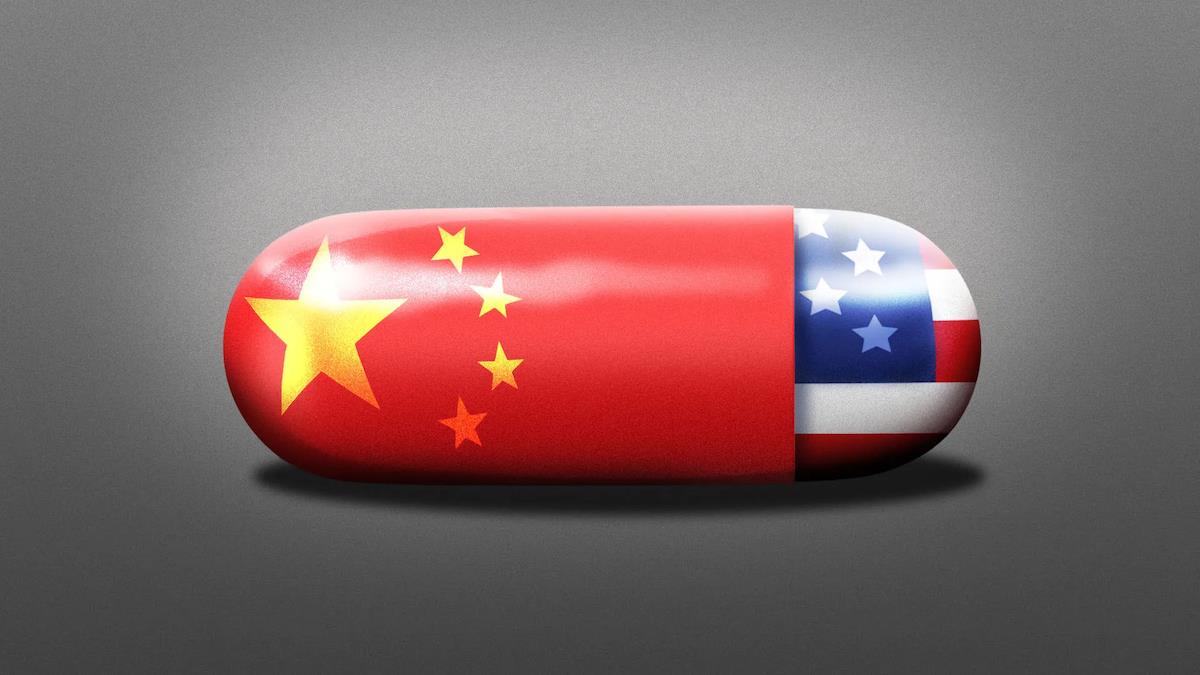
Pill And Pipeline: US Drug Supply Needs A China Reality Check
(MENAFN- Asia Times)
A quiet vulnerability sits at the heart of American health care. The United States - home to the world's most innovative pharmaceutical sector - depends heavily on China for the active pharmaceutical ingredients used to manufacture its medicines.
How heavily is debated. Some widely cited figures put the share at 80-90%, but more careful analyses suggest the number is closer to a quarter of drug volume, which is still a major exposure.
What is not debated is that some 477 FDA-registered drug manufacturing facilities operate in China, yet the FDA inspected only 204 foreign drug and device establishments in fiscal 2024. This is not a hypothetical risk. It is a structural reality that demands clear-eyed thinking, not reflexive blame.
It is tempting to frame this as a story of one nation outmaneuvering another. The truth is more mundane - and more instructive. Over several decades, global pharmaceutical companies made rational economic decisions to offshore“active pharmaceutical ingredient” (API) production to wherever costs were lowest.
China offered scale, subsidized energy, favorable fiscal incentives and an enormous domestic chemicals industry. American and European firms took the savings.
India, often cited as an alternative, itself imports roughly 70-80% of its APIs from China, meaning the apparent diversity on pharmacy shelves is largely an illusion. The dependency is not the product of a single strategic miscalculation. It is the cumulative result of a globalized industry optimizing for price over resilience.
Latest stories Stablecoins, RWAs and Hong Kong's interface moment Iran says it won't negotiate with 'erratic' Trump Iran shuts down Strait of Hormuz again, accusing US of 'piracy'What has changed is the pace of China's ascent up the pharmaceutical value chain. Chinese entities account for roughly 20% of drugs currently under global development, and in the first half of 2025, 46% of new drug molecules entering human clinical trials came from Chinese laboratories.
China is now the world's second-largest drug developer and second-largest market for clinical trials.
Analysts project Chinese companies could account for 35% of new drug approvals in the near future. Beijing's 14th Five-Year Plan explicitly designates biotechnology as a pillar industry, and the state is aggressively recruiting global scientific talent and capital to accelerate this trajectory.
This is not inherently threatening. Nations invest in sectors they consider strategic - the United States does the same with defense technology and artificial intelligence. The concern arises when concentration of supply creates fragility, regardless of who controls it. A single-source dependency on any country - ally or rival - is a structural weakness.
The more productive framing is one of supply chain resilience. Today, 40% of US generic drugs have only one FDA-approved manufacturer, and roughly 20% of critical drugs have APIs exclusively sourced from China.
The 2022–2023 amoxicillin shortage, triggered by routine supply disruptions, caused severe effects at one in three US hospitals. No geopolitical crisis was needed - just the ordinary brittleness of a hyper-concentrated pipeline.
The Covid-19 pandemic already demonstrated how quickly pharmaceutical supply chains can buckle under pressure. Tariffs -reaching up to 145% on some Chinese pharmaceutical imports - add cost but do not, on their own, create alternatives.
Reshoring production is expensive, time-consuming and requires sustained investment in workforce training, regulatory infrastructure and advanced manufacturing capacity. There are no shortcuts.
Diversification, not decoupling, should be the guiding principle. India's Production-Linked Incentive scheme and new bulk drug parks represent one avenue, though India's own dependency on Chinese starting materials limits its value as a standalone alternative.
Nearshoring, dual-sourcing of APIs, and investment in continuous manufacturing technologies are all strategies gaining traction across the industry.
The US should also invest in the unsexy but essential work of regulatory modernization - streamlining FDA approval pathways for domestically produced APIs, incentivizing redundancy rather than penalizing it and funding the kind of advanced chemistry and fermentation capacity that has atrophied over decades of offshoring.
Sign up for one of our free newsletters-
The Daily Report
Start your day right with Asia Times' top stories
AT Weekly Report
A weekly roundup of Asia Times' most-read stories
The BIOSECURE Act and similar legislative efforts reflect growing bipartisan recognition of the problem, but legislation alone will not rebuild industrial capacity overnight.
The most important insight may be the least dramatic: this is fundamentally a problem of industrial policy and risk management, not of geopolitical confrontation. Every nation acts in its own interest.
China invested strategically in pharmaceutical manufacturing while the US pursued a model that prioritized drug innovation at the top of the value chain and outsourced the industrial base underneath it.
Both strategies were rational within their own logic. The question now is whether the US can rebuild supply chain depth without sacrificing the innovation ecosystem that remains its greatest competitive advantage.
The pills Americans take every day represent a global supply web of extraordinary complexity. Making that web more resilient is not about picking a fight - it is about ensuring that the medicine cabinet never becomes a point of leverage for anyone.
Y. Tony Yang is an endowed professor at the George Washington University in Washington, D.C.
Sign up here to comment on Asia Times stories OrThank you for registering!
-
Share on X (Opens in new window)
Share on LinkedIn (Opens in new window)
LinkedI
Share on Facebook (Opens in new window)
Faceboo
Share on WhatsApp (Opens in new window)
WhatsAp
Share on Reddit (Opens in new window)
Reddi
Email a link to a friend (Opens in new window)
Emai
Print (Opens in new window)
Prin

Legal Disclaimer:
MENAFN provides the
information “as is” without warranty of any kind. We do not accept
any responsibility or liability for the accuracy, content, images,
videos, licenses, completeness, legality, or reliability of the information
contained in this article. If you have any complaints or copyright
issues related to this article, kindly contact the provider above.
Most popular stories
Market Research

More Story








Comments
No comment