




403
Sorry!!
Error! We're sorry, but the page you were looking for doesn't exist.
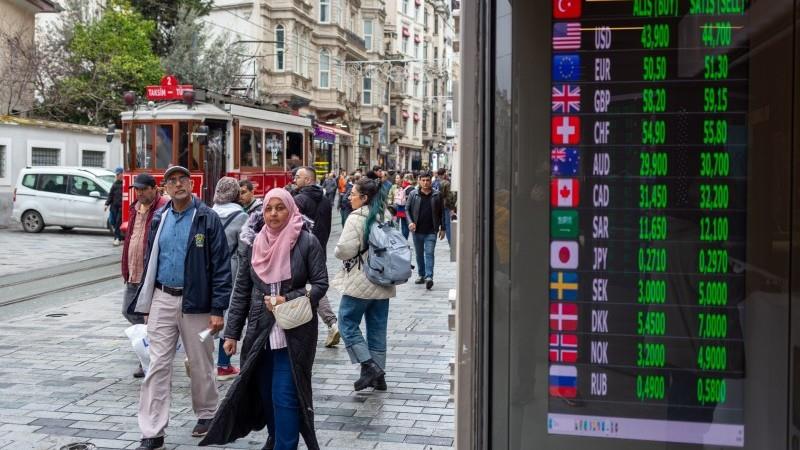
Monitoring Turkey: Geopolitics Compounds Macro Challenges
(MENAFN- ING)
Turkey's economy at a glance
-
After a turbulent reaction in March – marked by wider sovereign spreads, higher bond yields, significant pressure on equities and a rise in offshore rates – markets have staged a relief rally following the ceasefire announcement. Still, optimism remains cautious, with US‐Iran negotiations looking fragile. Against this backdrop, Turkey's CDS risk premium, which had climbed above 300bp to a nine‐month high, has eased back to below 240bp.
The uncertainty surrounding oil prices, which also affects other commodity prices, increases risks to the inflation outlook despite the decision to absorb some of the oil price shock via adjusting tax on petrol prices. Trying to find a balance between disinflation and fiscal performance, on the other hand, the government has raised electricity and natural gas prices. We have now revised our inflation forecast for this year to 27.5% from 25.5%, with risks tilted to the upside as the war is likely to further complicate the already challenging inflation outlook, not only via higher energy costs in addition to petrochemicals, refined products, but also expectations and the fiscal balance.
Budget results from the first two months of the year point to a more favourable trend than year-end projections and provide significant room to mitigate part of the inflation risk with the 12M rolling budget deficit at 2.4% of GDP. While a sliding scale tariff mechanism in fuel prices (envisaged to offset 75% of the pass-through from international oil prices and implying a support until US$105-110 per barrel in the current exchange rate level) increases the budget deficit up to 0.6% of GDP, likely moderation in domestic demand with tightening financial conditions may lead to further upside risks to the budget deficit. An increase in the threshold to 100% and maintaining the support for longer can also increase the fiscal costs.
On the external front, the geopolitical developments will increase the upside pressures given the elevated trajectory of oil and gas prices, in addition to a potential decline in tourism revenues and a rise in gold imports. A US$10 increase in Brent crude oil will likely result in a US$4-5bn rise in the current account, implying a strong sensitivity to energy prices. We expect around US$54bn (3.1% of GDP) for 2026, according to ING's baseline oil scenario.
Growth will likely be under pressure due to tighter financial conditions and the negative contribution from net exports. So, we have revised our 2026 growth forecast from 3.4% to 3.0%, while risks remain on the downside.
Since the end of Feb, we have seen US$9.6bn outflows in bond and equity markets, plus an unwinding of more than US$21bn in carry trade positions. Prolonged uncertainty would certainly threaten more portfolio outflows, though the ceasefire has currently provided relief. On the flip side, Turkish residents have remained subdued without any meaningful change in FX deposits (after adjusting for gold and EUR/USD price changes). And there has been no big pick-up in demand for FX mutual funds either. Accordingly, foreign outflows and the lower gold price have been the drivers of the decline in the CBT's FX reserves. The central bank's net reserve position (excluding FX swaps) fell from US$78.6bn to around US$18.3bn by 3 April. Losses in the CBT's foreign exchange reserves have come to a halt, while preliminary data point to an improvement supported by the Bank's FX swap operations with domestic banks and some reversal in capital flows.
Against this backdrop, we expect that the CBT will leave both the policy rate and the corridor framework unchanged at the April MPC meeting. Nonetheless, ongoing geopolitical uncertainty may encourage a more cautious approach, potentially leading to an adjustment of the policy rate from 37% to the current effective funding rate of approximately 40%.
Similar to the rest of the EM space, we have seen some relief in Turkey following signs of de-escalation in the US-Iran conflict. This suggests that the worst of the US-Iran conflict should be over, and the central bank has been relatively untroubled in maintaining market confidence and a stable USD/TRY trajectory. This has been helped by significant rhetorical activity from officials in recent weeks.
The TRY market has navigated the US-Iran conflict by significantly reducing long positions, which have been cut approximately in half. Additionally, CBT FX reserves declined from a peak of US$210bn to about US$161bn, reflecting the broader sell-off in global gold markets. However, recent market data suggests a resumption of long positions in TRY, which is in line with improving global sentiment. Overall, we expect USD/TRY to remain on a stable trajectory up to 46.6 by mid-year and the market will gradually resume long carry trades in TRY.
In the rates market, we saw a peak 1y OIS around 40.50% in late March and early April and have since seen some relief to the current 38.00%. Market pricing CBT rates for year-end have stabilised somewhere around 35.50%. This is not too far from our forecast of 33.00% for year-end and seems justified given the still upside inflation risks in our forecast and Turkey's openness to the US-Iran conflict in the event of a new escalation.
CBT Reserves (US$ bn) Benign food prices prompt a positive inflation surprise in MarchMonthly inflation in March stood at 1.94%, lower than market consensus, while annual inflation resumed a downtrend with a fall to 30.9% (vs the CBT's target at 16% and forecast range between 15-21% in the latest inflation report) from 31.5% a month ago. Food was the key driver for the positive surprise in the headline reading, though pricing pressures in energy have unsurprisingly increased with the geopolitical shock. Seasonally adjusted data, published by TurkStat and closely monitored by the Central Bank of Turkey, indicate in three-month moving average terms that the underlying inflation trend is still high above of 2%, while core inflation shows a further uptick, implying challenges to disinflation in the current environment.
Core inflation (CPI-C) rose by 1.64% MoM, leading to an increase in the annual rate to 29.7%, while the currency managed by the central bank with modest nominal TRY depreciation in recent months limited the increase. In March, PPI stood at 2.3% MoM, moving up to 28.1% YoY, after floating at 27-28% in the previous five months. In addition to food products, coke & refined petroleum products, chemicals, and basic metals were the major drivers in the March PPI increase, likely reflecting the impact of the Gulf War on some industrial materials. Global commodity prices and particularly oil prices in the current geopolitical backdrop will remain the key risk factors to the PPI trend in the near term.
Inflation expectations and CBT forecast (12m- ahead, YoY%) The CBT shifts away from easing biasAt its latest rate‐setting meeting, the Central Bank of Turkey (CBT) maintained its policy rate unchanged, as widely expected. The Bank left the one‐week repo rate at 37%, and the interest rate corridor stable at 450 basis points, with the upper and lower bands remaining at 40% and 35.5%, respectively.
The statement signalled a shift away from the easing stance observed previously as the Bank revised its message that“monetary decisions” would be determined with a prudent approach on a meeting-by-meeting basis instead of“the size of the steps”, and that monetary policy will be tightened if there is a significant deterioration in the inflation outlook but removed the prior emphasis on“deviations from interim targets” as a condition for additional tightening.
In addition, the Bank specified that a tightening would require not only significant but also persistent deterioration in the inflation outlook, implying a willingness to tolerate temporary effects from recent developments. These suggest that, in the near term, the CBT will adopt a wait‐and‐see approach before deciding whether to reduce the effective cost of funding back toward the policy rate or introduce additional tightening, as referenced in the statement.
The policy rate vs. interbank O/N rate Downside GDP risks are growingIn 2025, GDP rose by 3.6% vs 3.3% in 2024, driven mainly by domestic demand. After seasonal adjustment, the fourth quarter GDP alone corresponds to a QoQ increase of 0.4%, indicating a gradual slowdown compared with the preceding two quarters. The sequential performance was driven primarily by private consumption. All other expenditure components pulled the growth rate lower: net exports had the largest negative impact, followed by inventory depletion, government consumption and capital formation.
Activity likely moderated in 1Q as industry, services and construction sectors point to a sluggish outlook. Consumption indicators, on the other hand, show some loss of momentum. Growth will likely be under pressure from March onwards as evidenced by weakening PMI on the back of financial conditions and the negative contribution from net exports. Longer and deeper geopolitical conflict will lead to further pressure on the outlook, while whether the weaker growth will be accepted is also important.
Real GDP (%YoY) and contributions (ppt) Setback in the March PMIThe manufacturing sector (seasonally adjusted basis) PMI, which has been on an increasing trend since October, and in February hit the highest level since early 2024, dropped in March to 47.9. The drop from near stabilisation levels to deeper in the negative territory is attributable to the geopolitical shock in the Middle East. Accordingly, we saw an acceleration in the rate of moderation in orders, implying a slowdown in demand, increasing pricing pressures with higher energy costs, and a scale-back in production, employment and purchasing activity.
Findings in the sectoral PMIs, on the other hand, released by the Istanbul Chamber of Industry, showed that seven of 10 sectors recorded a decline in their PMIs in comparison to February, while only two of them positioned above the 50 level.
PMI & Business Confidence Unemployment rate on the riseThe headline unemployment rate (seas. adj.), which plunged in December to the lowest level in the current series starting from 2005, has been gradually increasing over the last two months and reached 8.5% in February vs 8.2% the month before. This is attributable to the employment increase being smaller than the rise in labour force participation and expanding unemployment. Labour force participation, despite an increase over the previous month, has remained weak, standing at 52.6%. The participation rate being below 53% in the last three months – for the first time since mid-2023 – shows ongoing strains in the labour market.
Broadly defined unemployment indicators also appear to be under pressure compared to the previous month. One of the broader unemployment indicators, the underutilisation rate – which combines time-related underemployment, potential labour force, and the unemployed – increased by 0.1 ppt MoM to 29.9%. The NPL pressure that was eased by the regulator's restructuring decisions has been on the rise again lately. This is mainly driven by the commercial segment, particularly SME lending, while the increase in retail loans is rather slow, which is also supported by the collections.
Labor market outlook Turkey's current account deficit widens further in FebruaryThe current account posted a deficit of US$7.5bn, higher than the market forecast. Following the data, the 12-month rolling current account deficit maintained the uptrend and reached US$35.4bn, or approximately 2.4% of GDP, from US$33.2bn in the previous month. A closer look at the monthly figures shows that the deficit widened by roughly US$2.3bn compared to the same month of 2025, primarily due to a higher trade gap, which deteriorated from US$-5.5bn to US$-7.5bn stemming from the turn of the core trade surplus in 2025 to a deficit and rising gold imports despite a moderation in energy costs. The deterioration in the monthly current account was also driven by a worsening balance in services income.
On the capital account side, inflows lost momentum in February from the largest ever monthly figure in January and stood at US$3.3bn. With net outflows from errors and omissions of US$6.5bn (the biggest in the last two years), and considering the current account deficit, official reserves dropped by US$10.6bn.
Overall, the current account surplus in February exceeded expectations and maintained a widening trend, while weakening capital flows led to financing of the deficit mainly via reserves. Preliminary customs data from the Ministry of Trade suggest continuing deterioration in the March current account, as the foreign trade deficit appears to be widened by more than US$4.0bn in comparison to last year, likely reflecting the impact of geopolitical developments.
Current account (12M rolling, US$bn) Improvement continues in the March budgetThe Central Government Budget recorded a deficit of TRY229.9bn in March, compared with a deficit of TRY261.5bn in the same month last year. A closer look at the breakdown shows that tax revenues increased by 63.9% YoY, driven primarily by a sharp rise in personal income tax collections. Among indirect taxes, VAT revenues rose markedly compared with last year due to a shift in declaration timing, while the annual increase in special consumption tax SCT revenues continued to display a weak trend, also contributed by the reinstated sliding scale tariff mechanism. On the expenditure side, primary spending growth slowed to 41.3% YoY. This deceleration was mainly attributable to a faster increase in expenditures for goods and services procurement and current transfers on an annual basis.
As a result of these developments, the rolling 12‐month budget deficit declined to TRY1,508 bn, corresponding to 2.2% of GDP. In the most recent Medium‐Term Programme (MTP), the budget deficit for 2026 was projected at 3.5% of GDP. Meanwhile, the primary budget balance showed a marked improvement in March. Accordingly, the rolling 12‐month primary surplus reached TRY958.1bn, equivalent to 1.4% of GDP. The latest MTP had envisaged a primary balance of 0% of GDP.
Budget performance
Legal Disclaimer:
MENAFN provides the
information “as is” without warranty of any kind. We do not accept
any responsibility or liability for the accuracy, content, images,
videos, licenses, completeness, legality, or reliability of the information
contained in this article. If you have any complaints or copyright
issues related to this article, kindly contact the provider above.
Most popular stories
Market Research








Comments
No comment