



403
Sorry!!
Error! We're sorry, but the page you were looking for doesn't exist.
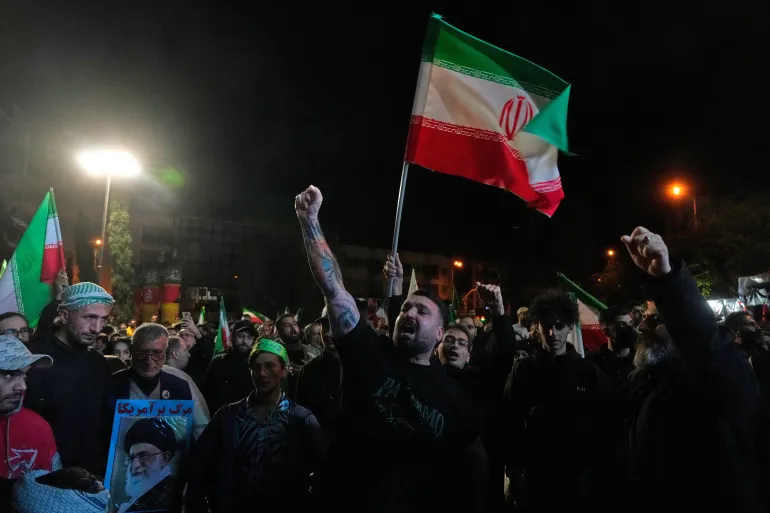
Fragile US-Iran Ceasefire Tested By Early Violations As Islamabad Talks Loom
(MENAFN- Daily News Egypt) A ceasefire between the United States and Iran has taken effect with broad international support, but early violations and continued hostilities are already casting doubt on its durability ahead of talks scheduled in Islamabad.
Egyptian President Abdel Fattah Al-Sisi hailed the announcement as“welcome news for millions who seek peace,” expressing hope it could pave the way toward a lasting agreement that restores regional security and stability. He reaffirmed Egypt's support for Gulf states, Jordan, and Iraq, stressing that any future deal must address their security concerns, and urged all parties to engage seriously in negotiations.
UN Secretary-General Antonio Guterres welcomed the truce and called for adherence to international law, while Qatar praised Pakistan's mediation efforts. Turkish President Tayyip Erdogan cautioned against provocations that could derail the fragile agreement.
Pakistani Prime Minister Shehbaz Sharif confirmed reports of violations in several areas and urged restraint to preserve the ceasefire.
On the ground, missile and drone attacks were reported across Gulf countries, including Qatar, Saudi Arabia, the UAE, Kuwait, and Bahrain. Qatar said it intercepted a missile and advised residents to remain indoors. Saudi Arabia issued multiple alerts before declaring the threat over, while the UAE reported a fire at a gas facility following a missile threat. Kuwait and Bahrain also reported defensive responses.
Iranian state media linked the attacks to earlier airstrikes on oil facilities on Lavan Island, which damaged refinery infrastructure. The Revolutionary Guards warned of stronger retaliation against any new assault and announced strikes on more than 25 strategic sites.
Iranian President Masoud Pezeshkian nonetheless described the ceasefire as an achievement, while US President Donald Trump clarified that Lebanon was not part of the agreement. Iranian Foreign Minister Abbas Araqchi added that safe passage through the Strait of Hormuz would be ensured for two weeks under Iranian coordination.
With Washington and Tehran set to begin talks Friday in Islamabad, deep mistrust and ongoing clashes underscore the fragility of the truce.
The most significant threat to the accord lies in Lebanon. President Trump dismissed a recent surge of attacks in Lebanon as a“skirmish” on Wednesday, even as Israel intensified its military campaign in the hours following the announcement of the US-Iran deal. Trump maintained that Lebanon was excluded from the truce due to the presence of Hezbollah.
“They [Hezbollah] were not included in the deal. That'll get taken care of, too. It's all right,” the President remarked.
This stance appears to contradict the original announcement made by Prime Minister Sharif, which suggested Lebanon was included in the cessation of hostilities. In response, the IRGC warned that it would intervene if Israeli operations against Lebanon continued.
“We issue a firm warning to the United States and its Zionist ally: if the aggression against beloved Lebanon does not cease immediately, we will fulfil our duty and deliver a response,” the IRGC said in an official statement.
Furthermore, the diplomatic track faces a potential collapse before it begins; according to sources cited by The Wall Street Journal, Iran has informed mediators it will boycott the Pakistan summit unless a ceasefire is simultaneously established in Lebanon.
US Vice President JD Vance will lead the US negotiating team in Islamabad, which is expected to begin on Saturday morning, White House Press Secretary Karoline Leavitt said Wednesday.
Trump's envoy Steve Witkoff and his son-in-law Jared Kushner will accompany Vance in the talks, Leavitt said at a White House press briefing.

Legal Disclaimer:
MENAFN provides the
information “as is” without warranty of any kind. We do not accept
any responsibility or liability for the accuracy, content, images,
videos, licenses, completeness, legality, or reliability of the information
contained in this article. If you have any complaints or copyright
issues related to this article, kindly contact the provider above.
Most popular stories
Market Research

More Story


Comments
No comment