




403
Sorry!!
Error! We're sorry, but the page you were looking for doesn't exist.
Funeral Cards, A Genealogical Treasure Trove
(MENAFN- Swissinfo)
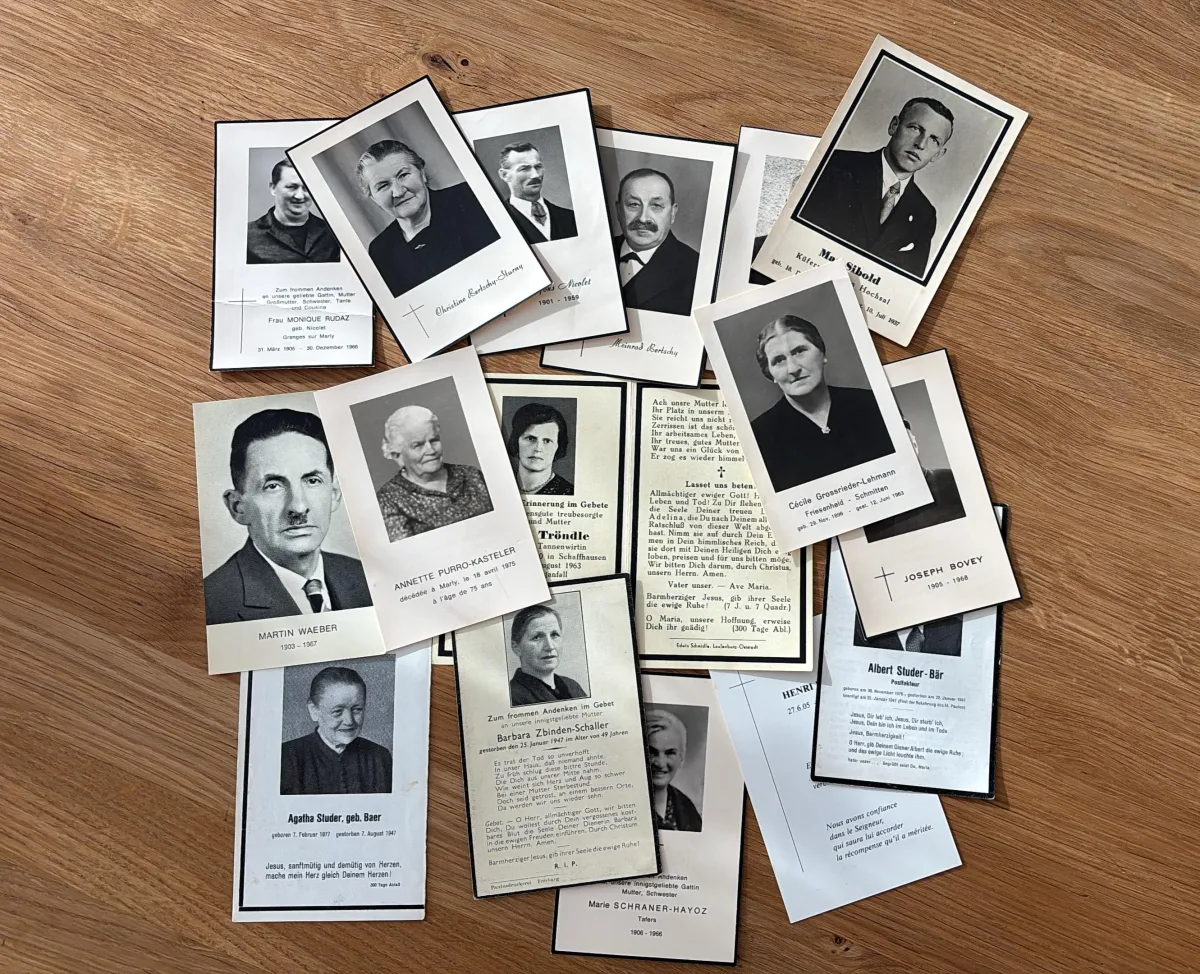
In some parts of Switzerland there is a rather unusual custom known as funeral cards. But like many others, this religious practice is disappearing. The interest in these cards now lies more with genealogists, for whom they are a mine of information.
This content was published on
February 28, 2026 - 11:00
7 minutes
I'm mainly in charge of translating, proofreading and publishing articles for SWI swissinfo. I also occasionally write press reviews and original articles on "Swiss oddities" - the things that make Switzerland unique. After studying history and religious studies, I began my journalistic career at Radio Fribourg. After a spell in the newsroom at the Swiss Telegraphic Agency, I joined SWI swissinfo in 2000, where I specialised in federal politics and history. I now translate, proofread and produce stories.
-
More from this aut
French Departm
-
Deutsch
de
Totentafeln, ein neuer Schatz der Genealogie
Read more: Totentafeln, ein neuer Schatz der Genea
Français
fr
Les cartes mortuaires, nouveau trésor de la généalogie
Original
Read more: Les cartes mortuaires, nouveau trésor de la généa
Italiano
it
Le cartoline mortuarie, nuovo tesoro della genealogia
Read more: Le cartoline mortuarie, nuovo tesoro della genea
In a few parts of Switzerland, the tradition of funeral cards, also known as souvenir pictures, remains strong. These small cardboard cards usually feature a photograph of the deceased, a few biographical details and a quotation from the Bible. Some also include a pious image or a prayer, extending the spiritual dimension of the remembrance.
These cards are traditionally distributed at the funeral, or at a later date, along with a letter of thanks for the condolences received or an invitation to the 30th Mass, a Catholic celebration that takes place one month after the bereavement.
They primarily fulfil a religious function, inviting us to pray for the repose of the soul of the deceased, but above all they have a memorial function: they recall the dates of birth and death and provide a tangible reminder of a loved one.
In the past, they were often kept in family albums or used as bookmarks in missals.
Massive distributionFuneral cards first appeared in the first half of the 19th century and are historically linked to European Catholicism, mainly in Latin countries (Italy, France, Belgium) and Germanic countries (Germany, Austria). Outside Europe, the practice spread mainly in Quebec, but there are also examples in Catholic communities that emigrated to the United States.
Switzerland joined this movement under the influence of its neighbours. Initially the preserve of wealthy, devout families, these cards became widely available from the last quarter of the 19th century, boosted by industrialisation, which reduced printing costs, and by the democratisation of photography, making it possible to personalise them.
The explosion in death caused by the Spanish flu of 1918-1919 acted as a powerful accelerator. Because of the restrictions imposed on funeral ceremonies, funeral cards became an essential means of paying tribute to the dead. To meet the influx of requests, funeral directors and printers quickly put standardised models into circulation. So the Spanish flu pandemic did not create the funeral card, but it did establish and generalise its use.
More More Demographics When Spanish flu hit SwitzerlandThis content was published on Oct 8, 2018 The Spanish flu pandemic of 1918-1919 killed 25,000 Swiss people and infected half of the population.
Read more: When Spanish flu hit Switze
Legal Disclaimer:
MENAFN provides the
information “as is” without warranty of any kind. We do not accept
any responsibility or liability for the accuracy, content, images,
videos, licenses, completeness, legality, or reliability of the information
contained in this article. If you have any complaints or copyright
issues related to this article, kindly contact the provider above.
Most popular stories
Market Research

More Story







Comments
No comment