




403
Sorry!!
Error! We're sorry, but the page you were looking for doesn't exist.
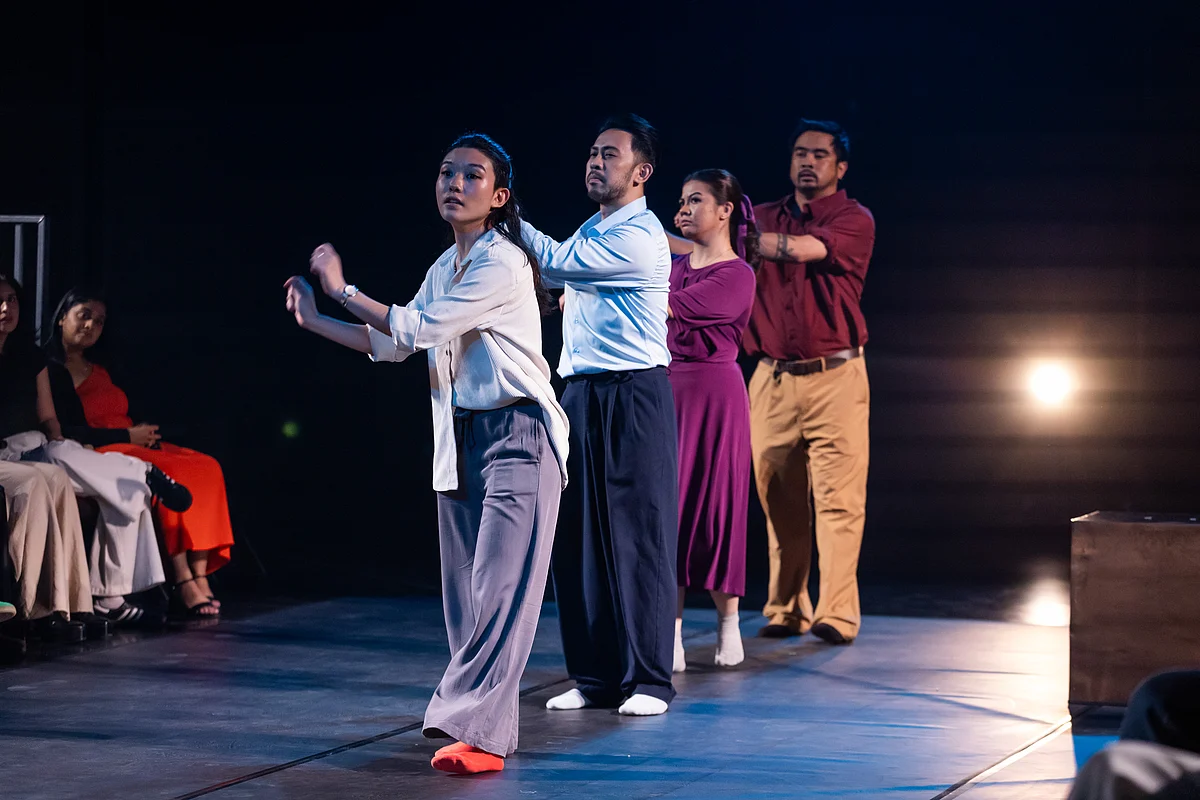
Beyond The Commute: How 'Metro Diaries' Maps The Soul Of The UAE Migrant Experience
(MENAFN- Khaleej Times) In Dubai, where the skyline changes faster than the seasons, there is one constant: the slick, silver streak of the metro. For many, it is merely a utilitarian vessel, a way to get from Point A to Point B.
But for +63Kolektib, an independent collective of mostly Filipino artists, the Dubai metro is so much more: it's the ultimate metaphor for the migrant journey - a moving archive of longing, hope, and resilience, one that defines life in The Gulf.
Recommended For YouThe cultural performance Metro Diaries had its world premiere at The Arts Centre, New York University Abu Dhabi, last year. Now, it is coming 'home' to Dubai, where it was born from real migrant stories, presenting an "unapologetic yet respectful" look at the lives of Dubai's migrants.
The metro as a moving life cycle
The decision to set the play within the context of the Metro was born of both necessity and observation.“The daily lives of daily hustle here, when you get in during rush hour, it's like a battle,” Jomel Duran Reyes, the play's cultural producer and performance-maker, explains.“It represents the daily journey of being a migrant.”
Jomel sees it as a reflection of personal growth:“We use it as a liminal representation of the struggles and victories that have led us to where we are now. It's a symbol of where we used to be when we first came, what we have achieved at the moment, and where we still want to go."
One of the most moving vignettes in the play involves a character finally securing a room of their own. "In a place where we share space with almost everyone in the world, coming home to a place you can call your own at the end of the day allows you to feel at ease," says BJ Hidalgo, the performance's production manager. "Small wins really matter. Even if you feel stuck, looking back at where you started, compared to where you are now, shows that you are moving forward. A small victory is still a victory.”
In this context, Jomel says that“this self-reflection of small things is actually a good thing for a migrant... it will push (them) to continue. You are not being held back in a static position.”
The 90 per cent truth
The authenticity of Metro Diaries stems from its source material. Jomel reveals that 90 per cent of the dialogue comes directly from the personal journals and real-life experiences of the performers. BJ describes a workshop where the team took the metro and buses specifically to record: "They took photos and notes of what they observed - people praying, reading, or talking loudly on the phone. Those words were included in the performance.”
Malavika Suresh - a spoken-word artist and academic researcher, and one of the few non-Filipino members - notes that while the stories are personal, they are far from exclusive: "These stories transcend race. Whether you are Filipino or Indian or from anywhere else, there is something you relate to.”
She also underlines the symbolic force of the performer's movements:“You could watch the whole play on mute, and still be able to take away most of the stories.”
“Everyone, wherever you came from, had a struggle in uprooting oneself; you're trying to find your footing in a foreign land.. (this) will always be a personal journey,” adds Jomel - and one that many of us can relate to.
Breaking the mask of resilience
Perhaps the most significant achievement of Metro Diaries is the challenge it offers to the "resilient migrant" trope. Filipino workers abroad are often hailed as heroes - strong, tireless, and always smiling - in their home country. Before the show,“there was no space for talking about mental health in a public way,” adds Jomel. The play tackles the mental struggle - the crushing weight of work pressure, combined with the emotional demands from family back home... and an ever-present cultural mourning. Malavika adds to this by pointing out the inherent guilt so many feel: "You feel guilty for feeling troubled, because you think you have an opportunity that other people would kill for. You're being strong for the people back home, because they depend on your income."
A communal embrace
Jomel recalls a night sitting by the corniche, struggling with the script until the "true" version finally rushed into him. The result has been a profound connection with the audience. "After the first show, an audience member approached me with red eyes," Jomel shares. "She was crying because she realised she was that person on stage. For me, even one person saying 'I saw myself' is enough."
Malavika agrees, citing the power of representation. "One person told me, 'This is the first play I've seen where the character is me.' We were so grateful to do this for a community that is so prevalent, yet often invisible.”
When asked what the spectator will take away from watching the performance, and what the creators hope will change in their perspective the next time that they board the actual metro, Malavika answers instantly:“Compassion. Compassion for the people around you, and compassion for yourself. Understanding that you aren't moving too slow and that your struggle is worth talking about."
Jomel hopes the play reminds people that their stories have value. "We should celebrate the struggles that shaped us," he says. "Just being alive and moving forward is something to be thankful for."
Metro Diaries invites the UAE to look closer at the person standing next to them on the Red Line, not as a demographic or a worker, but as a fellow traveler on a long, complex journey towards home.
Metro Diaries will be performed on February 14 at 7 pm and on February 15 at 4pm, at the SIMA Performing Arts in Alserkal Avenue.
ALSO READ- After Gaza, 'no place feels like home', says Palestinian journalist Plestia Alaqad 'I wasn't trying to be brave': UAE women on loss and healing at Emirates LitFest

Legal Disclaimer:
MENAFN provides the
information “as is” without warranty of any kind. We do not accept
any responsibility or liability for the accuracy, content, images,
videos, licenses, completeness, legality, or reliability of the information
contained in this article. If you have any complaints or copyright
issues related to this article, kindly contact the provider above.
Most popular stories
Market Research

More Story








Comments
No comment