







403
Sorry!!
Error! We're sorry, but the page you were looking for doesn't exist.
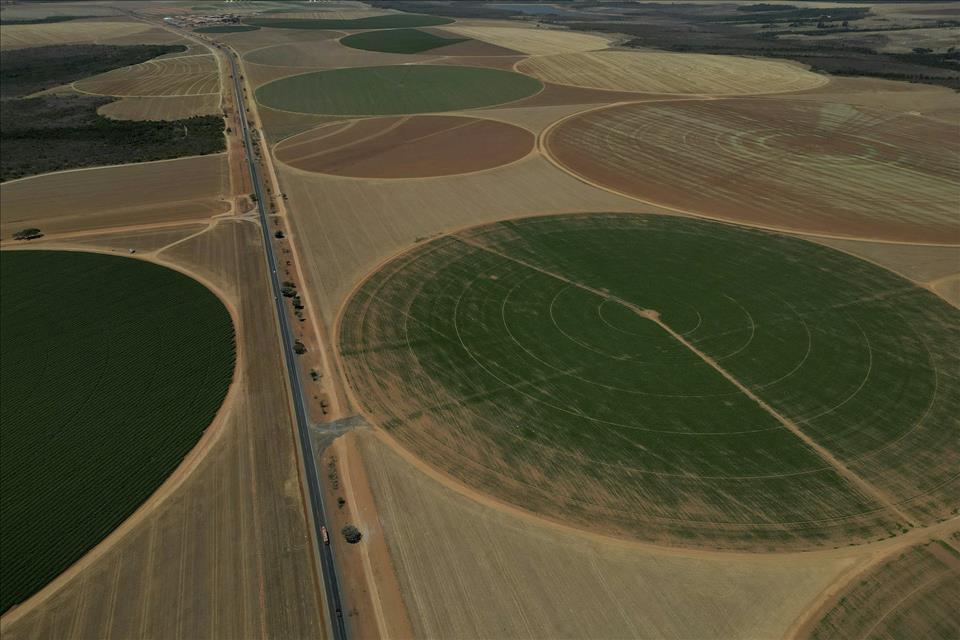
Weakening The Soy Moratorium In Brazil: A Political Choice That Ignores The Science
Author: Aline Soterroni
(MENAFN- The Conversation) In the first days of 2026, the Brazilian Association of Vegetable Oil Industries (ABIOVE ), which represents the largest soybean traders in Brazil, announced its withdrawal from the Amazon soy moratorium.

Created in 2006, the moratorium is a voluntary commitment between companies, governments and civil society, establishing that signatory traders and industries will not purchase soy produced from areas deforested in the Amazon biome after July 2008.
The moratorium is widely recognised as one of the world's most effective voluntary multisectoral agreements for decoupling direct deforestation from soy expansion in the Brazilian Amazon.
ABIOVE's member companies account for a substantial share of Brazil's soybean processing capacity and exports. As such, they play a central role both in the soy expansion and in the implementation of environmental commitments across the country.
Although the moratorium has not been formally terminated, its weakening by an actor as influential as ABIOVE may mark the beginning of the end of the most successful zero-deforestation agreement in history.
Fewer state tax benefitsA large body of research demonstrates unequivocally that the moratorium has not constrained soybean production in the Amazon biome. On the contrary, between 2009 and 2022, the area planted with soy increased by more than 300%, while deforestation fell by 69% in the municipalities monitored under the moratorium.
In addition, the agreement was responsible for establishing a sophisticated system for monitoring, traceability and independent auditing of the soybean supply chain in the Brazilian Amazon.
Despite all this evidence, some argue that the soy moratorium is no longer necessary. This view has recently gained political traction through manoeuvres by the government of the state of Mato Grosso, including the Decree 1,795, which seeks to regulate part of a state law (Law 12,709/2024 ) whose constitutionality is still being examined by Brazil's Supreme Federal Court.
In practice, the Mato Grosso government aims to restrict state tax benefits for companies that adopt environmental criteria beyond those required by law, as is the case with the Amazon soy moratorium.
The core argument is that Brazil's Forest Code - the country's main environmental law regulating land use on private properties - alone is sufficient to ensure high socio-environmental standards in agricultural production. But is this really the case?
Full implementation of Brazil's Forest CodeThere is a scientific tool capable of addressing this question: mathematical and economic land-use modelling. According to a study I led, published in Global Change Biology, even the rigorous implementation of the Forest Code would prevent only about half of the deforestation projected to accommodate the expansion of agriculture and livestock production in Brazil up to 2050.
These findings indicate that, while full implementation of the Code is essential and urgent, it is not sufficient to guarantee deforestation-free agricultural production that is truly sustainable and aligned with increasingly demanding markets, such as that of the European Union.
It is also worthwhile to remember that achieving zero deforestation is central to Brazil fulfilling the commitments it has voluntarily undertaken, including the Paris Agreement and the Glasgow Leader's Declaration on Forests and Land Use.
Better futures are possibleOne of the most motivating aspects of my research area is the opportunity to explore better futures. What if the Amazon Soy moratorium were expanded from the Amazon to the Cerrado? Around a decade ago, in 2017, this was precisely the debate.
That year, the Cerrado Working Group was created with the aim of discussing an agreement that would eliminate the direct conversion of native vegetation for soybean production in the most biodiverse and threatened tropical savanna on Earth.
In another modelling study that I led, published in Science Advances, we simulated this plausible future, in which the Soy moratorium is adopted simultaneously in the Amazon and the Cerrado biomes.
The results show that even with a moratorium of this scale, Brazilian soybean production would continue to grow in order to meet domestic and international demand. By 2050, the reduction in planted area would be only about 2% compared with a scenario without an expanded moratorium.
With strategic land-use planning, the impact on production would therefore be minimal, while the environmental and social benefits would be immense. This scenario highlights Brazil's potential for environmental leadership, demonstrating that large-scale commodity production can be reconciled with the conservation of natural resources.
Brazil is one the most megadiverse nations in the world, home to around 20% of all known species. This extraordinary biodiversity - together with ecosystem services such as pollination, climate regulation and rainfall patterns - underpins the country's position as a major global producer and exporter of food.
Yet prolonged droughts, intense rainfall events and more frequent heatwaves are already affecting agricultural productivity, confirming scientific warnings about the vulnerability of Brazilian agriculture in an increasingly warming planet.
In the face of the intertwined climate and biodiversity crises, the debate should focus on policies and initiatives that complement Brazil's Forest Code, such as expanding the Amazon Soy moratorium to the Cerrado, rather than on dismantling it.
Protecting native vegetation is an essential condition for the long-term viability of Brazilian agriculture and the most effective insurance against the impacts of climate change.
Approving legislation that trades standing forests, irreplaceable biodiversity, water security and climate regulation - while also jeopardising the rights of Indigenous Peoples and local communities - for soybeans largely used as animal feed is not just short-sighted land-use governance. It is, quite literally, casting pearls before swine. Not to mention the unnecessary reputational risk generated for the Brazilian agricultural sector.
Rather than hastily weakening one of the most successful environmental agreements ever implemented, companies and trade associations should strengthen safeguards, resist legislation that undermines environmental protection, and work alongside governments and civil society to build supply chains that are genuinely sustainable and free from deforestation. The science is clear. The choice, however, is political.
Institution:University of Oxford

Legal Disclaimer:
MENAFN provides the
information “as is” without warranty of any kind. We do not accept
any responsibility or liability for the accuracy, content, images,
videos, licenses, completeness, legality, or reliability of the information
contained in this article. If you have any complaints or copyright
issues related to this article, kindly contact the provider above.
Most popular stories
Market Research

More Story







Comments
No comment