



403
Sorry!!
Error! We're sorry, but the page you were looking for doesn't exist.
India-EU FTA Sparks Cheer Among Surat Textile Traders
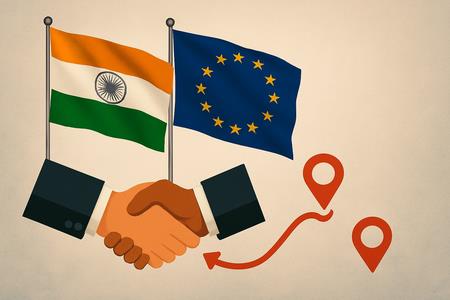
(MENAFN- IANS) Ahmedabad, Jan 27 (IANS) The signing of the Free Trade Agreement (FTA) between India and the European Union has triggered a wave of optimism among textile traders in Surat, one of India's largest textile hubs.
The agreement, finalised on Tuesday, is expected to significantly boost exports by providing Indian textile products with improved access to markets across 27 European countries. Industry representatives said the FTA would allow Surat-based traders to sell their products in Europe at more competitive prices, leading to higher exports, improved sales, and better profit margins.
Under the agreement, tariffs on 96.6 per cent of European goods entering India will be reduced or eliminated, while Indian textile exports to Europe will receive tariff concessions, making them more price-competitive.
Kailash Hakim, President of the Federation of Textile and Trade Associations, Surat, said the agreement would help the industry overcome losses caused by higher tariffs in the US market.
He thanked Prime Minister Narendra Modi, stating that the India-EU trade deal would not only neutralise existing challenges but also create new opportunities for growth and global expansion for Surat's textile sector.
Echoing similar views, Sushil Gupta, a Surat-based textile trader, said the FTA would strengthen India's export position and provide long-term stability to the industry.
He added that improved access to European markets would help traders scale up operations and explore new international partnerships.
Johnny Rathod, another textile trader from Surat, said the agreement would encourage the adoption of European-quality machinery, gradually replacing Chinese machines and enabling higher-quality production.
He described the FTA as a major boost for the textile industry, particularly for hubs like Surat that drive India's textile exports.
Announcing the agreement in New Delhi, European Commission President Ursula von der Leyen described it as“the mother of all deals,” while Prime Minister Narendra Modi called it“historic.”
The pact includes large-scale tariff reductions, including the phased elimination of duties on most EU exports of chemicals, machinery, electrical equipment, aircraft and spacecraft, while import duties on motor vehicles - currently up to 110 per cent - will be cut to 10 per cent under a quota of 250,000 vehicles.
India will also lower tariffs on EU products such as wine, beer and olive oil. Beyond trade, the agreement includes a joint security partnership and is expected to boost investment flows, improve market access and strengthen supply-chain integration between the two sides.

Legal Disclaimer:
MENAFN provides the
information “as is” without warranty of any kind. We do not accept
any responsibility or liability for the accuracy, content, images,
videos, licenses, completeness, legality, or reliability of the information
contained in this article. If you have any complaints or copyright
issues related to this article, kindly contact the provider above.
Most popular stories
Market Research

More Story



Comments
No comment