




403
Sorry!!
Error! We're sorry, but the page you were looking for doesn't exist.
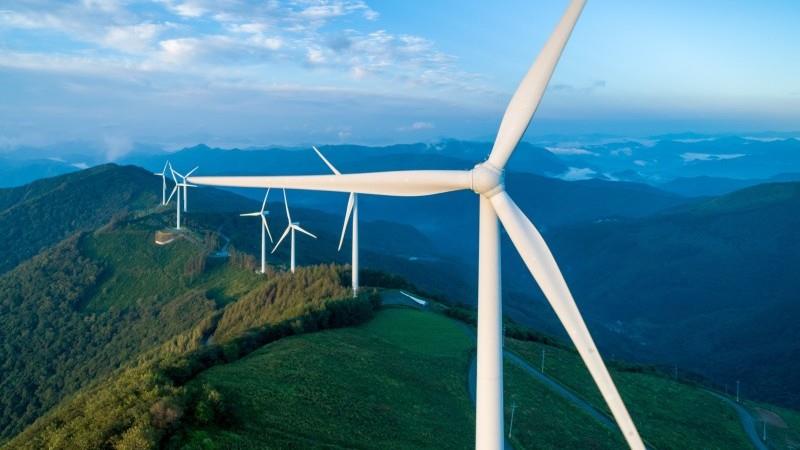
Renewables Growth To Be Driven By Shifting Priorities
(MENAFN- ING)
We've entered an era in which electrons are fuelling technological advancement and economic growth. Solar and wind power, with their increasingly competitive costs, abundant supply, and clean nature, are well-positioned to play a vital role. In this outlook, we highlight our top three calls on the opportunities and risks for the global solar and wind market.
Call 1: Shifting priorities are driving robust solar and wind power generationElectricity generation from solar and wind will grow steadily this decade. The International Energy Agency (IEA) projects that global solar and wind power generation will grow by 20% in 2026 and an average annual increase of 15% from 2026 to 2030 under its Stated Policies Scenario (STEPS), which reflects current policies and achievable policy goals. Bloomberg New Energy Finance is relatively more bullish, expecting 17% annual growth in both power generation and installed capacity in its Economic Transition Scenario.
Given policy and geopolitical uncertainties in some regions, we lean towards the IEA's STEPS forecast. But both outlooks show robust growth despite the turmoil.
Solar and wind's steady growthGlobal solar and wind power generation forecast in TWh
China leads the growth in solar power generation, at 94% from 2026-2030. For wind, China and Europe both have the strongest growth outlook within the same period, at 50%. While the US outlook for solar is slightly higher than Europe's, its weak spot is wind at only 19%.
China leads solar and wind developmentSolar and wind power generation forecast by region in TWh
The main drivers of solar and wind growth have shifted beyond sustainability. AI, energy security, and strategic competitiveness have become the strongest engines.
-
For the US, the demand is driven by AI's growing electricity needs. With shorter build times and fewer supply chain hurdles, renewables are becoming a 'bridge' until more dispatchable sources, such as gas and nuclear power, come online. Technology companies are also buying more renewable power to manage emissions from higher power use.
In Europe, growth is driven by energy independence. The Russia-Ukraine war pushed Europe to reduce its reliance on Russian gas and cope with higher gas prices, which in turn favours the buildout of renewables. Decarbonisation remains an important driver, though the focus has shifted to strategic autonomy, affordability and innovation.
China 's renewables market will be sustained by its absolute advantage in manufacturing solar and wind equipment – and its target to reduce emissions by 7-10% from peak levels by 2035. This means China will push full-speed ahead with renewables.
However, on the supply side, regions face different challenges in 2026.
-
Europe 's main risk is grid constraints from limited transmission and interconnection capacity, which can restrict deployment. On the positive side, member states will implement the EU's new Grid Package to modernise infrastructure. Project economics remains solid generally, though offshore wind has weakened due to higher costs and lower power prices. This should drive wider use of 'contracts for differences ' to stabilise revenues and improve auctions.
The US 's top risk is tariffs, which will reshape supply-chain partnerships (see Call 3) and permitting. This could mean tougher approvals and high-profile project cancellations, especially in offshore wind. The One Big Beautiful Bill Act (OBBBA) is of less concern, as many top-tier developers have secured tax credits through 2030. Overall, we still expect solid market development despite lowered expectations.
China faces fewer supply chain and grid issues. Its challenge is adapting to last year's shift from fixed tariffs to market-based auctions. While this will benefit the market in the long term, developers now face pressure to lower bidding prices and margins. Developers need to enhance cost efficiency, innovation, and strategic optimisation – key factors to watch this year.
Addressing the intermittency of solar and wind power isn't new, but 2026 will see a stronger push. More than ever, the industry sees adding battery energy storage systems (BESS) as a crucial solution for sustaining the future of solar and wind. Doing so can boost revenues by enabling a wider range of services and reducing curtailment. And in some cases, BESS is simply a prerequisite for building renewables in areas with grid congestion.
Thanks to advances in technology, BESS costs declined, disruptively, by 61% from 2020-2025.
Battery storage system costs continue to declineSurveyed prices for turnkey BESS in $/kWh (real 2025)
We expect this trend to continue in 2026 and beyond. Combined with rising demand, it's expected to result in a 31% annual increase in installed capacity through 2030. China is set to account for 46% of the global capacity in 2026, thanks to its advantages in BESS costs and deployment. This share will decrease slightly this decade as other countries ramp up production. In the US, for instance, a survey by Roth Capital Partners shows that major solar developers expect the share of storage attached to their projects to increase from 26% in 2026 to over 50% in 2030.
BESS deployment remains strong this decadeGlobal cumulative BESS installed capacity forecast in GW
These forecasts hinge on the assumption that geopolitical tensions do not escalate into a full-blown trade war over rare-earth elements critical to battery systems.
However, there are other challenges. The biggest, which we discussed in last year's Energy Outlook, is the duration of battery discharge time. The batteries available today offer only four hours of discharge time – which isn't long enough. Long-duration energy storage solutions (LDES) offer promising potential but remain costly and limited, making them unlikely to have a major market impact in 2026. On the positive side, policy is supportive in many jurisdictions to increase the commercialisation of LDES. In the US, the OBBBA has preserved battery tax credits until the next decade, though the qualifying conditions would become tougher over time.
Lithium-ion phosphate (LFP) batteries remain the main choice for BESS, whereas electric vehicles will mainly rely on other lithium chemistries such as Nickel Manganese Cobalt (NMC) batteries. This is because LFPs have a longer cycle life and lower costs since they avoid nickel and cobalt. There's now increased development of sodium-based batteries, as sodium is more abundant and therefore cheaper than lithium. Sodium-based batteries will be a meaningful niche for BESS. Its market share will grow this decade, but will likely remain in the mid-single digits.
Call 3: Strategic choices needed: boosting local production vs rapid and cheap expansionBoth Europe and the US have introduced policies to strengthen domestic solar and wind manufacturing. However, in the near term, shifting away from cheap Chinese products – which supply 98% of the EU's solar panel imports – could raise costs, disrupt supplier partnerships, and slow installations. In 2026, balancing long-term industrial gains with short-term, cheaper imports will become more challenging.
To enhance domestic manufacturing, the US will rely heavily on tariffs, while the EU will focus on implementing the Net-Zero Industry Act (NZIA) as its primary tool, without tariffs.
For the US, tariffs will reshape solar and wind supply chains this year. In 2025, the US imposed steep solar tariffs – averaging 350% to 670% – on Cambodia, Thailand, and Vietnam, which supply a significant share of US imports. A 50% tariff was also imposed on steel-derivative products, which included wind towers and nacelles. Lastly, the US began investigating solar imports from India, Laos, and Indonesia, suggesting that additional tariffs could be imposed on these countries.
The EU 's risk of supply chain disruptions is lower because of limited tariff measures. But the bloc is wary of the lion's share of Chinese solar equipment flowing in. In December 2025, Italy became the first EU country to have a solar auction that banned Chinese-made modules, cells, and inverters. We expect more countries to add auction rules in 2026, either through an outright ban on Chinese components or, more modestly, by prioritising EU-made components.
While these measures support domestic manufacturing, the benefits will take time to materialise. In the short term, solar manufacturing in both regions would be barely self-sufficient, though wind is in better shape. Plus, despite growing solar module capacity, cell and wafer capacity will remain low. This makes it difficult to establish a fully integrated supply chain.
Assessing the dependence of US and European solar and wind manufacturing on foreign productionAdditionally, increased supply-chain turbulence awaits in 2026. For the US, while elevated tariffs can give domestic solar modules a price advantage, it can be time-consuming for developers to renegotiate supplier partnerships. It can be costly, too, as surging demand for US solar components can drive up prices.
For Europe, excluding Chinese or prioritising European components could raise project costs. In Italy's case, by 17%, according to BNEF's estimates. Meanwhile, funding under the NZIA appears insufficient to attract significant private investment. Therefore, EU solar manufacturing capacity is unlikely to grow substantially in the near future.
China, the global leader in renewables manufacturing, faces different challenges. Tariffs and overcapacity are hurting export competitiveness, squeezing margins and driving consolidation. These risks are expected to materialise in 2026 and persist for several years.
Taken together, despite uneven progress and varied challenges, solar and wind will continue to grow in 2026, strengthening their role in the global energy system.

Legal Disclaimer:
MENAFN provides the
information “as is” without warranty of any kind. We do not accept
any responsibility or liability for the accuracy, content, images,
videos, licenses, completeness, legality, or reliability of the information
contained in this article. If you have any complaints or copyright
issues related to this article, kindly contact the provider above.
Most popular stories
Market Research

More Story








Comments
No comment