




403
Sorry!!
Error! We're sorry, but the page you were looking for doesn't exist.
Why Hedgehogs Used To Be Hated
Author: Kate Davies
(MENAFN- The Conversation) Hedgehogs have been part of human culture for thousands of years. Across different societies, they've been symbols of fertility, protection and healing, as well as fear, superstition and suspicion.

Today, 17 species of hedgehog are found across Europe, Africa and Asia, many of which live in close proximity to people, a closeness that has helped shape the stories told about them.
Long before written history, hedgehog-like imagery could be found in symbolic art linked to fertility and renewal, suggesting these animals mattered to people for far longer than written records can reveal.
In ancient Egypt, they were seen as guides and protectors, admired for their ability to survive winter through hibernation, a powerful symbol of rebirth. However, the Egyptians also hunted them for sport and used their spines in folk remedies, including those thought to cure baldness.
Hedgehogs also historically took on more unsettling roles. In parts of China, early stories described hedgehog spirits that could shapeshift into human form and bring misfortune. Later traditions, however, recast them as sacred household protectors and healers.
Hedgehogs' horrible historyIn Britain, hedgehogs were viewed largely as negative until relatively recently. During the middle ages, they were closely associated with witchcraft. One widespread belief was that witches could transform into hedgehogs to cause harm and mischief. They were also thought to sneak into fields at night to steal milk directly from cows' udders.
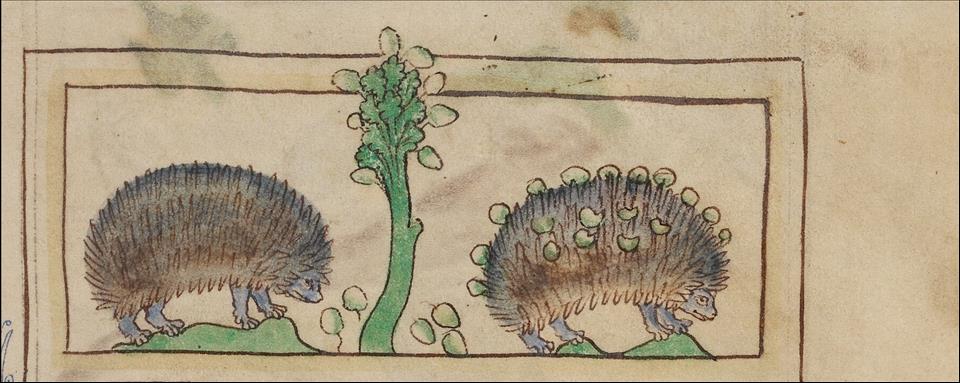
Another long standing belief was that hedgehogs carried stolen fruit on their spines. Medieval illustrations often showed them sneaking through orchards with apples skewered on their backs, an image that still appears in children's books and birthday party treats today. Some long-standing myths also persist, with well meaning people offering them milk, despite hedgehogs being lactose intolerant.
Although some of these stories survive today as charming curiosities, others had more serious consequences. Hedgehogs were officially classed as “vermin” under the Preservation of Grain Act 1532, alongside a long list of other animals.
Parishes were required to kill them, with bounties of three pence paid for each hedgehog, a significant sum at the time. Communities that failed to meet their quotas could even be fined. Hedgehogs remained on these vermin lists for centuries.
It's estimated that over the 140 years from 1660 to 1800, around half a million hedgehogs were destroyed in this way – a figure comparable to a substantial proportion of the UK's current population. And they weren't alone, wildcats, otters and pine marten (to name but a few) were all once persecuted in the same way, and are now among the UK's most legally protected species, after suffering significant population declines.
Persecution and protectionAlthough this act was eventually repealed, the killing of hedgehogs continued well into the 19th and early 20th centuries, particularly on shooting estates. Records suggest that tens of thousands were destroyed each year during this period, with the numbers killed declining between the 1960s and early 1980s. This may reflect changing attitudes and the introduction of wildlife protection legislation, but it is also possible that hedgehogs were becoming scarcer.
Today, hedgehogs are seen very differently in the UK at least. In 2016 they were voted Britain's favourite mammal, beating red foxes, which came in second place, by a considerable margin. Public affection for hedgehogs has fuelled garden conservation campaigns, dedicated charities and a growing network of rehabilitation centres, caring for sick and injured animals – often supported by members of the public who actively manage gardens with hedgehogs in mind.
While attitudes towards hedgehogs have improved dramatically in recent decades, this has not been enough to halt their decline, with the species recently reclassified as “near threatened” on the International Union for Conservation of Nature red list. Understanding our cultural journey and changing attitudes towards hedgehogs helps explain both our desire to protect them and some of the mistakes we still make.
It also offers a warning, other species once dismissed as pests only gained serious protection once their declines became impossible to ignore. Species such as badgers and foxes continue to provoke strong and divided public opinion, much as hedgehogs once did – a reminder of how strongly stories shape which animals we choose to protect.
The hedgehogs journey from feared pest to beloved garden icon shows how powerful human stories can be, both in harming wildlife and in motivating protection. But affection alone isn't enough.
Myths that once justified persecution still linger in softer forms, shaping well-meaning but sometimes harmful behaviour. Right now hedgehogs need protection. Simple actions, such as offering a shallow dish of water, creating hedgehog-friendly gardens, providing escape routes from garden ponds and reducing pesticide use, will all help to save this now much-loved mammal.
Institution:Nottingham Trent University

Legal Disclaimer:
MENAFN provides the
information “as is” without warranty of any kind. We do not accept
any responsibility or liability for the accuracy, content, images,
videos, licenses, completeness, legality, or reliability of the information
contained in this article. If you have any complaints or copyright
issues related to this article, kindly contact the provider above.
Most popular stories
Market Research

More Story








Comments
No comment