




403
Sorry!!
Error! We're sorry, but the page you were looking for doesn't exist.
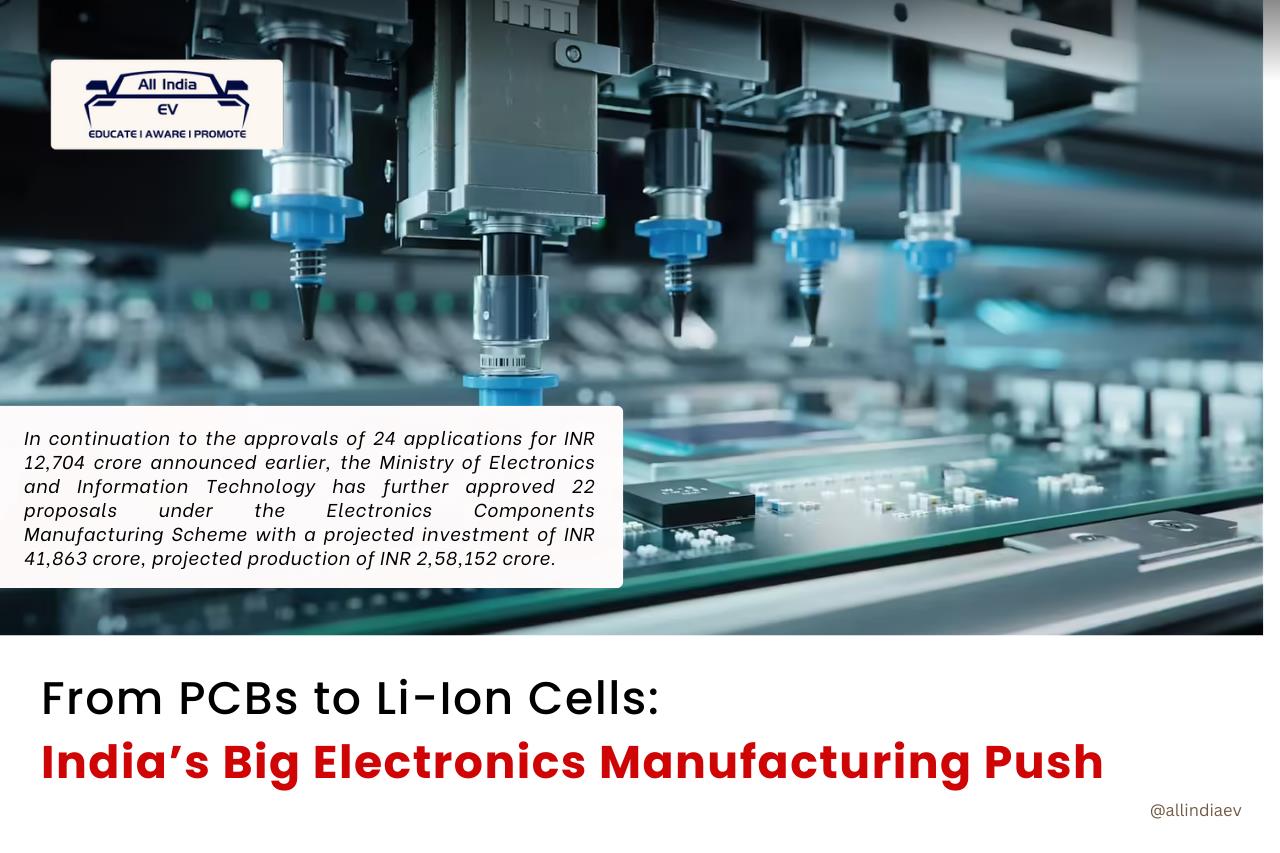
Electronics Manufacturing Push Expands With Third ECMS Approvals
(MENAFN- The Arabian Post)
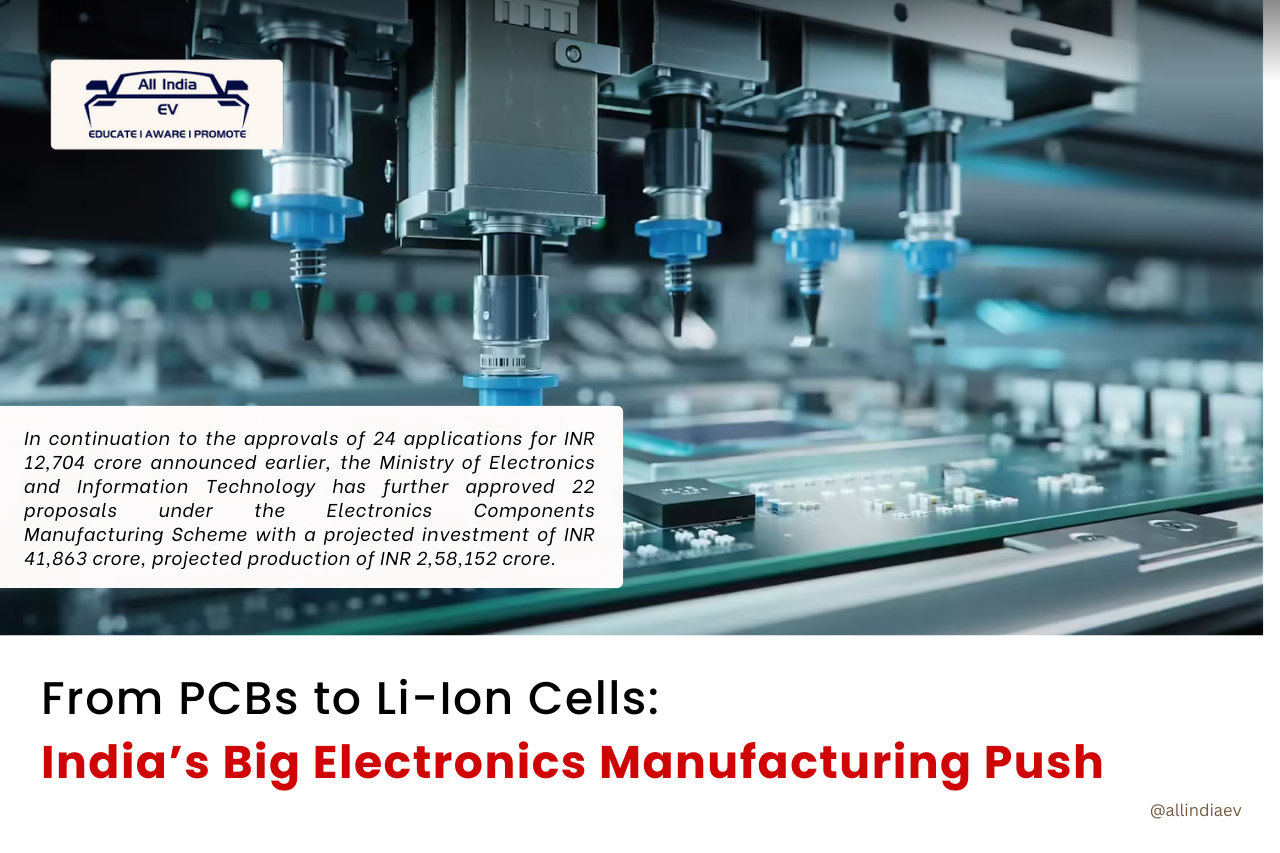
Government approval for 22 proposals under the third tranche of the Electronics Component Manufacturing Scheme marks another step in the effort to deepen domestic supply chains and reduce reliance on imported parts. The cleared projects are expected to draw investment of ₹41,863 crore and generate projected production worth ₹2,58,152 crore over their implementation period, according to official disclosures tied to the decision.
The proposals, cleared by the Union Cabinet chaired by Prime Minister Narendra Modi, span a mix of large conglomerates and specialised component makers focused on sub-assemblies that feed into consumer electronics, industrial equipment and emerging technology segments. Officials said the projects are expected to create 33,791 direct jobs, with a larger number of indirect roles anticipated across logistics, tooling, testing and ancillary services as manufacturing capacity scales up.
The Electronics Component Manufacturing Scheme, commonly referred to as ECMS, is designed to address a persistent weakness in the electronics ecosystem: dependence on imported components even when final assembly takes place domestically. While handset and electronics assembly has expanded rapidly over the past decade, component localisation has lagged, leaving manufacturers exposed to supply disruptions and currency volatility. The third tranche approvals are intended to close that gap by encouraging firms to manufacture key inputs such as printed circuit boards, camera modules, connectors, passive components and specialised sub-systems within the country.
Officials involved in the evaluation process said the latest round places greater emphasis on scale, technology depth and export potential. Several approved proposals involve backward integration into higher-value components, including precision engineering and advanced materials, rather than basic assembly. This approach reflects feedback from earlier tranches, where industry participants argued that long-term competitiveness would depend on mastering complex components rather than expanding low-margin manufacturing alone.
See also RBI move lifts realty outlookThe ECMS operates alongside other incentive programmes such as the Production Linked Incentive framework, but differs in its narrower focus on components rather than finished products. Policy planners view this distinction as critical, given that components account for a substantial share of the value of electronics imports. By targeting this segment, authorities aim to improve value addition within the domestic ecosystem and strengthen resilience against external shocks.
Industry executives welcomed the approvals but cautioned that execution will be as important as policy intent. Several component manufacturers noted that success would depend on timely disbursement of incentives, stable policy conditions and parallel investments in infrastructure such as power reliability, clean-room facilities and logistics. Skilled manpower also remains a concern, particularly for projects involving advanced fabrication and testing processes.
Analysts tracking the sector said the projected production figure of ₹2,58,152 crore signals the government's expectation that approved firms will not only meet domestic demand but also serve export markets. Global electronics supply chains are undergoing reconfiguration as companies seek to diversify manufacturing bases, and policymakers see an opportunity to position the country as a credible alternative for component sourcing. However, competition remains intense, with established hubs in East and Southeast Asia continuing to benefit from mature ecosystems and economies of scale.
Employment generation has been highlighted as a key outcome of the third tranche. The estimate of 33,791 direct jobs reflects roles across engineering, operations, quality control and management. Economists note that electronics manufacturing tends to create a multiplier effect, supporting additional employment in services and small-scale manufacturing clusters that develop around large plants.
See also Microsoft bets big on India's AI future with record-breaking $17.5 billion injectionNotice an issue? Arabian Post strives to deliver the most accurate and reliable information to its readers. If you believe you have identified an error or inconsistency in this article, please don't hesitate to contact our editorial team at editor[at]thearabianpost[dot]com. We are committed to promptly addressing any concerns and ensuring the highest level of journalistic integrity.

Legal Disclaimer:
MENAFN provides the
information “as is” without warranty of any kind. We do not accept
any responsibility or liability for the accuracy, content, images,
videos, licenses, completeness, legality, or reliability of the information
contained in this article. If you have any complaints or copyright
issues related to this article, kindly contact the provider above.
Most popular stories
Market Research

More Story








Comments
No comment