




403
Sorry!!
Error! We're sorry, but the page you were looking for doesn't exist.
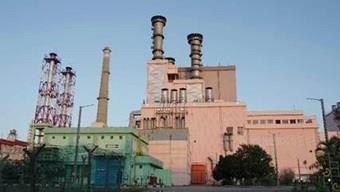
India Enters Advanced Nuclear Reactor League With PFBR Milestone: Report
(MENAFN- IANS) New Delhi, May 23 (IANS) India has moved a significant step closer towards long-term energy self-sufficiency after its indigenously developed 500 MW Prototype Fast Breeder Reactor (PFBR) at Kalpakkam in Tamil Nadu achieved criticality -- a stage at which a nuclear reactor attains a controlled and self-sustaining chain reaction for the first time, a report said.
According to an analysis by Business Report, the milestone marks India's entry into an elite group of nations possessing advanced fast breeder reactor technology, with Russia being the only other country operating commercial fast breeder reactors.
The achievement is being viewed as a major breakthrough in India's three-stage nuclear power programme envisioned by nuclear scientist Homi Jehangir Bhabha, often regarded as the architect of the country's nuclear strategy, it said.
The PFBR has been designed to generate more fuel than it consumes by using plutonium-based fuel and breeding additional fissile material, thereby strengthening India's long-term energy security prospects.
In addition, the reactor's criticality signals India's transition into the second stage of its nuclear programme.
In the first stage, natural uranium is used as fuel in nuclear reactors, producing plutonium as a by-product.
The second stage involves using this plutonium in Fast Breeder Reactors (FBRs), according to the report.
The Kalpakkam reactor is expected to play a key role in developing Uranium-233 from thorium, paving the way for the third stage of the programme where India aims to utilise its vast thorium reserves for large-scale power generation.
Moreover, India possesses some of the world's largest thorium reserves, while its uranium resources remain relatively limited.
The report highlighted that thorium-based energy generation could potentially meet the country's power needs for several hundred years.
The development is also expected to support India's clean energy transition and its commitment to achieving net-zero carbon emissions by 2070 under the leadership of Prime Minister Narendra Modi.
As of now, the country's nuclear power generation capacity stands at 8.78 GW, contributing nearly 3 per cent of the country's electricity output.
With indigenous 700 MW reactors and upcoming international collaborations involving 1,000 MW reactors, India's installed nuclear capacity is projected to rise to 22.38 GW by 2031-32, according to the report.

Legal Disclaimer:
MENAFN provides the
information “as is” without warranty of any kind. We do not accept
any responsibility or liability for the accuracy, content, images,
videos, licenses, completeness, legality, or reliability of the information
contained in this article. If you have any complaints or copyright
issues related to this article, kindly contact the provider above.
Most popular stories
Market Research

More Story






Comments
No comment