




403
Sorry!!
Error! We're sorry, but the page you were looking for doesn't exist.
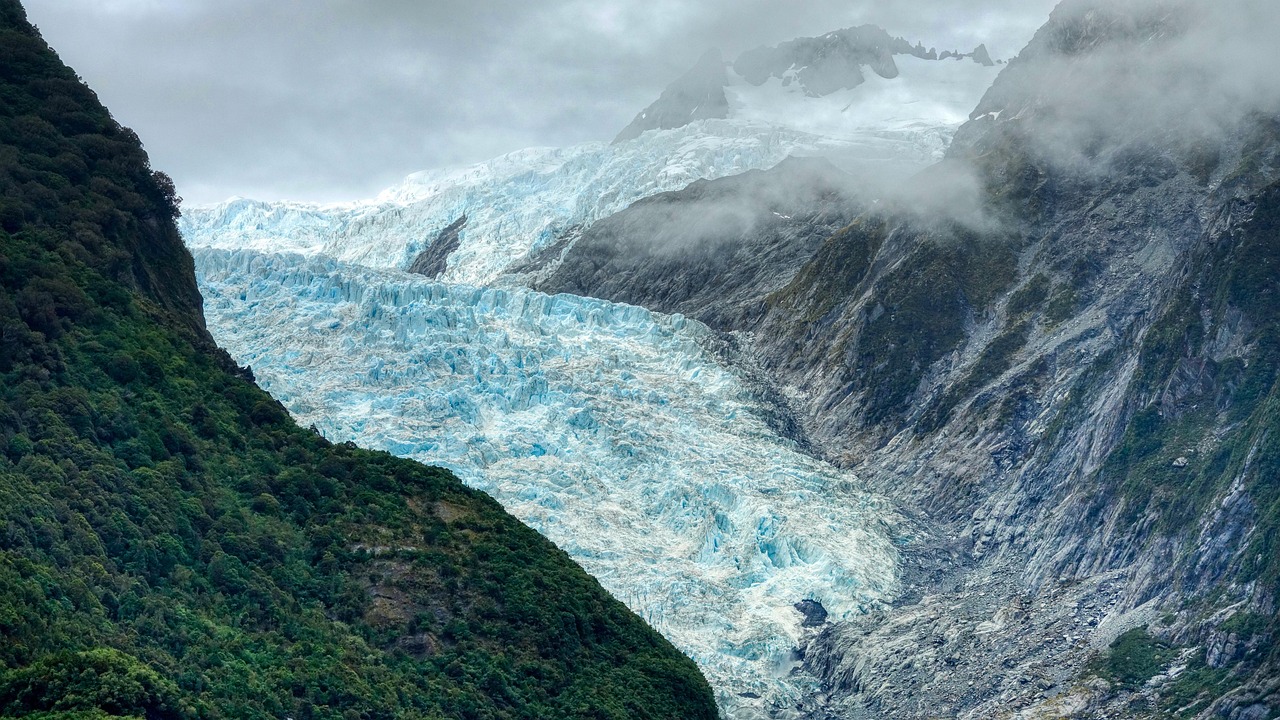
Climate Change Drives Loss of Mountain Glaciers
(MENAFN) Mountain glaciers worldwide are vanishing at catastrophic rates driven by climate change, scientists warn based on current data, placing millions at risk of water scarcity while amplifying threats of environmental disasters.
The United Nations has designated 2025 the International Year of Glaciers' Preservation, with this year's International Mountain Day on Dec. 11 spotlighting the theme: "Glaciers matter for water, food and livelihoods in mountains and beyond."
The latest Intergovernmental Panel on Climate Change (IPCC) Assessment Report reveals mountain glaciers shed an average 267 gigatons of ice annually between 2000 and 2020. The World Glacier Monitoring Service (WGMS) 2024 report verified that 2023 recorded the swiftest glacier loss in documented history.
Current IPCC projections paint a dire picture for mountain glaciers. Should warming cap at 1.5C, half will disappear before century's end. At 2C warming, losses reach 60%–70%, while 3C warming would erase nearly every mountain glacier on the planet.
In remarks to Anadolu, Istanbul Technical University Professor Orhan Ince—scientific director of the TerrArctic Mega Grant Project and head of the university's Microbial Ecology Group—cautioned that high-mountain ecosystems face swift, irreversible transformation through global warming, altered precipitation patterns, and intensifying extreme weather events.
"The consequences are staggering," Ince said. "In the Himalayas alone, 1.9 billion people's water supply is at risk. South America faces 12%–22% higher water stress in agricultural regions. Global hydropower production could drop 8%–12% by 2050. In Türkiye, seasonal river flows critical for drinking water and irrigation may decline 20%–25% by mid-century. These losses are irreversible, but they can still be slowed."
Certain mountain systems now face complete glacier extinction rather than mere reduction, he emphasized.
"The European Alps have already lost 65% of their glacier volume since 1970, Alaska–Yukon more than 30%, and parts of the Himalayas over 40%," he noted.
Accelerated glacier melt dramatically elevates geological hazards including landslides, flash floods, and glacial lake outburst floods, while simultaneously disrupting ecosystems and destabilizing global atmospheric circulation patterns.
The United Nations has designated 2025 the International Year of Glaciers' Preservation, with this year's International Mountain Day on Dec. 11 spotlighting the theme: "Glaciers matter for water, food and livelihoods in mountains and beyond."
The latest Intergovernmental Panel on Climate Change (IPCC) Assessment Report reveals mountain glaciers shed an average 267 gigatons of ice annually between 2000 and 2020. The World Glacier Monitoring Service (WGMS) 2024 report verified that 2023 recorded the swiftest glacier loss in documented history.
Current IPCC projections paint a dire picture for mountain glaciers. Should warming cap at 1.5C, half will disappear before century's end. At 2C warming, losses reach 60%–70%, while 3C warming would erase nearly every mountain glacier on the planet.
In remarks to Anadolu, Istanbul Technical University Professor Orhan Ince—scientific director of the TerrArctic Mega Grant Project and head of the university's Microbial Ecology Group—cautioned that high-mountain ecosystems face swift, irreversible transformation through global warming, altered precipitation patterns, and intensifying extreme weather events.
"The consequences are staggering," Ince said. "In the Himalayas alone, 1.9 billion people's water supply is at risk. South America faces 12%–22% higher water stress in agricultural regions. Global hydropower production could drop 8%–12% by 2050. In Türkiye, seasonal river flows critical for drinking water and irrigation may decline 20%–25% by mid-century. These losses are irreversible, but they can still be slowed."
Certain mountain systems now face complete glacier extinction rather than mere reduction, he emphasized.
"The European Alps have already lost 65% of their glacier volume since 1970, Alaska–Yukon more than 30%, and parts of the Himalayas over 40%," he noted.
Accelerated glacier melt dramatically elevates geological hazards including landslides, flash floods, and glacial lake outburst floods, while simultaneously disrupting ecosystems and destabilizing global atmospheric circulation patterns.

Legal Disclaimer:
MENAFN provides the
information “as is” without warranty of any kind. We do not accept
any responsibility or liability for the accuracy, content, images,
videos, licenses, completeness, legality, or reliability of the information
contained in this article. If you have any complaints or copyright
issues related to this article, kindly contact the provider above.
Market Research

More Story







Comments
No comment