




403
Sorry!!
Error! We're sorry, but the page you were looking for doesn't exist.
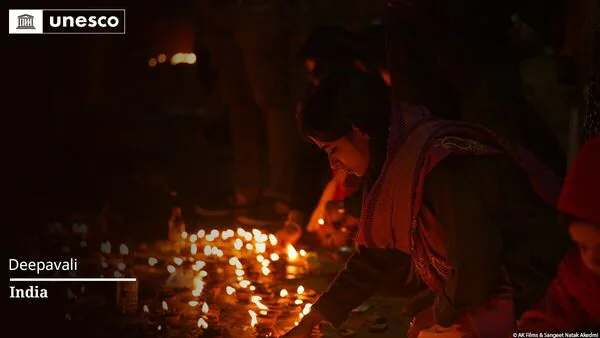
After Durga Puja, Now India's Deepavali Inscribed On UNESCO's Intangible Cultural Heritage List
(MENAFN- Live Mint) India's Deepavali festival has been added to UNESCO's Representative List of the Intangible Cultural Heritage of Humanity. The announcement was made on Wednesday during a key session of UNESCO's Intergovernmental Committee for the Safeguarding of Intangible Cultural Heritage, currently being held at Delhi's Red Fort.
This year marks the first time India is hosting the committee's annual meeting, now in its 20th edition and scheduled from December 8 to 13, news agency PTI reported.
As the inscription was declared, attendees at the venue broke into chants of“Vande Mataram” and“Bharat Mata ki Jai”, underscoring the significance of the moment for the Indian delegation.
With Deepavali now recognised, India's tally on UNESCO's Intangible Cultural Heritage list rises to 15. Other elements already inscribed include the Kumbh Mela, Kolkata's Durga Puja, Gujarat's Garba dance, yoga, Vedic chanting traditions and Ramlila, the traditional dramatic retelling of the Ramayana.
Delhi's Art, Culture, Language and Tourism Minister Kapil Mishra described Deepavali's inclusion on UNESCO's Intangible Cultural Heritage list as a significant milestone for India's cultural identity. He said the global recognition underscored the depth of the country's spiritual traditions and the enduring importance of the festival. Mishra also credited Prime Minister Narendra Modi's efforts in helping secure the inscription, according to a report in The Tribune.
What UNESCO Means by 'Intangible Cultural Heritage'UNESCO notes that cultural heritage is not limited to monuments or artefacts; it also includes living traditions and expressions passed down through generations. These may take the form of oral traditions, performing arts, rituals, festive practices, community knowledge related to nature and the universe, and traditional craftsmanship.
While intangible heritage can be fragile, UNESCO says it plays a crucial role in safeguarding cultural diversity in an increasingly globalised world. Understanding the traditional practices of different communities fosters dialogue and mutual respect, strengthening social cohesion.
The organisation emphasises that the value of intangible heritage lies not in the cultural practice itself, but in the knowledge, skills and identity it transmits from one generation to the next. This transmission, UNESCO says, is vital not only for minority groups but also for mainstream communities, and holds equal relevance for developing and developed nations.
According to UNESCO, intangible cultural heritage is:- Traditional and contemporary: It reflects inherited customs while also adapting to modern rural and urban life. Inclusive: Shared practices, even across regions or cultures, remain part of intangible heritage as long as they are passed down and contribute to a community's sense of identity. Representative: It depends on the communities that maintain and transmit it, rather than being defined by exclusivity or exceptional value. Community-based: A practice becomes heritage only when the community that upholds it recognises it as such.

Legal Disclaimer:
MENAFN provides the
information “as is” without warranty of any kind. We do not accept
any responsibility or liability for the accuracy, content, images,
videos, licenses, completeness, legality, or reliability of the information
contained in this article. If you have any complaints or copyright
issues related to this article, kindly contact the provider above.
Most popular stories
Market Research

More Story




Comments
No comment