




403
Sorry!!
Error! We're sorry, but the page you were looking for doesn't exist.
Qatar's Global Influence On Rise: AFD CEO
(MENAFN- The Peninsula)
Fazeena Saleem
|
The Peninsula
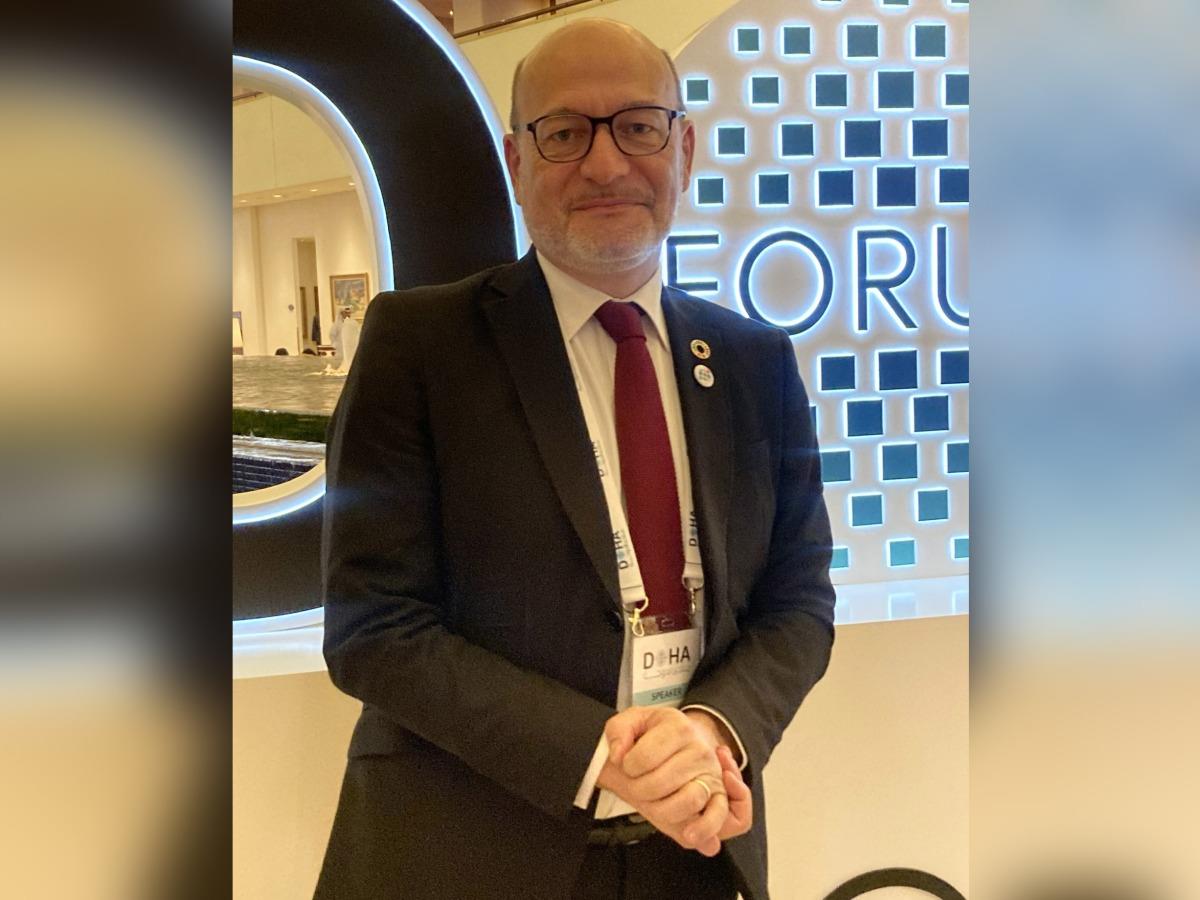
Doha, Qatar: As the Doha Forum 2025 concluded this week, Rémy Rioux, Chief Executive Officer of the Agence Française de Développement (AFD) and Chairman of the global Finance in Common coalition, said the forum's theme Justice in Action captured the shift from rhetoric to real-world impact in international development, while underscoring Qatar's growing influence on the global stage.
“It was my first participation in the Doha Forum, and I was really eager to feel the spirit of the room,” Rioux said in an exclusive interview with The Peninsula.
“I felt very comfortable during these three days. I like the theme of Justice in Action: it's fully consistent with my institution's values and principles.” Rioux stressed that credibility in development finance now depends on tangible outcomes.“It's about action: less words and more impact, concrete transformation,” he said.
Read Also-
Fanar 2.0 a major leap in Arabic AI technology
Doha Forum reinforces Qatar's vital role in global peace and dialogue
From Central Asia to Qatar: QazCode expands its global ambitions
Qatar Museums partners with Dukhan Bank to build two new cultural institutions
“As a public development bank, our sole legitimacy is what we accomplish. We are very attentive to impact measurement, and that is what we present to the market when we issue about €10 billion in bonds every year.” On the sidelines of the forum, AFD and the Qatar Fund for Development (QFFD) signed their first co-financed project, marking a major step in bilateral cooperation. The partnership follows the February 2024 state visit of H H the Amir to France, which opened a new chapter in humanitarian and development collaboration.
“We signed an investment in the Saint Joseph Hospital in East Jerusalem, which we will make climate-resilient,” Rioux said. The project includes infrastructure upgrades and extensive staff training. The hospital treats about 100,000 patients annually, 98 percent of them Palestinians.“In the current context, this is a signal our two countries want to send,” he added.
His discussions with Education Above All (EAA) Foundation focused on projects in West Africa to reduce the number of out-of-school children, a priority for both AFD and Qatar.
Rioux has led AFD since 2016, doubling its activity to nearly €14 billion annually. The Agence Française de Développement, the world's oldest international development bank and the fourth largest globally, operates in nearly 160 countries with 3,500 staff.
Rioux also attended the forum as Chairman of Finance in Common (FiCS), a coalition of 550 public development banks worldwide.“We are building a seamless architecture of public financial institutions to mobilise private finance at unprecedented scale, especially for climate,” he said, warning that temperature increases in the Gulf are nearly double the global average.
He praised Qatar's expanding global footprint, citing its diplomatic mediation efforts and its growing role in global financial markets, energy and renewables.“Qatar has moved from a regional actor to a global one over the past two decades,” he said.“What I value is that while Qatar is deeply embedded in markets, it also keeps the flame of solidarity alive.“Through development finance, AFD Group and Qatari institutions are opening a new chapter in our bilateral relationship.” Looking ahead to the 10th anniversary of the Paris Climate Agreement, which Rioux helped negotiate in 2015, he warned that the biggest obstacle to climate progress is no longer technology, but public trust.“The real barrier today is pessimism, fear of catastrophe,” he said.“We have the technologies, the awareness and probably the financing. What we face now is a social ceiling.” He added that climate action must be fair and inclusive.“Until people are convinced the transition benefits everyone, including women, children and the most vulnerable, we will not fully succeed,” he said.
Rioux also called for a fundamental rethink of global development finance, as France prepares to chair the G7 next year.“We must move from assistance to investment,” he said, referring to the post-1960s model of Official Development Assistance (ODA). He described Qatar as uniquely positioned between the G7 framework and the Global South.“Qatar can help bridge these worlds and invent a new, more convincing model of international cooperation, especially as ODA is rapidly declining.”
Legal Disclaimer:
MENAFN provides the
information “as is” without warranty of any kind. We do not accept
any responsibility or liability for the accuracy, content, images,
videos, licenses, completeness, legality, or reliability of the information
contained in this article. If you have any complaints or copyright
issues related to this article, kindly contact the provider above.
Most popular stories
Market Research

More Story




Comments
No comment