







403
Sorry!!
Error! We're sorry, but the page you were looking for doesn't exist.
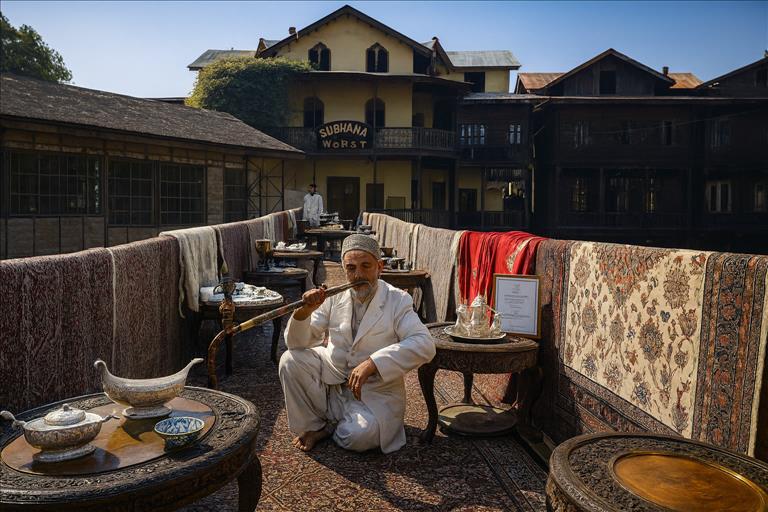
How Kashmiri Ancestors Matched Marwaris To Build A Business Powerhouse
(MENAFN- Kashmir Observer)
AI-refined version of the iconic“Subhana the Worst” photo.
AI-refined version of the iconic“Subhana the Worst” photo.
Kashmir's old traders liked to say that a good business begins long before the first sale.
It begins with patience, with a certain way of seeing the world, with the type of confidence that grows when families work with their hands and build something that lasts.
In the old quarters of Srinagar, that belief shaped entire neighbourhoods. Merchants studied wool at dawn, ran karkhanas through the day and checked accounts by night.
ADVERTISEMENTArtisans leaned over looms for hours, gently pressing colour into threads that would travel far beyond the valley.
A visitor could walk from Zaina Kadal to Khanyar and feel that the place breathed through its workshops.
Elders who grew up in that landscape describe a simple truth: Kashmir once thought like a business powerhouse.
Families who dealt in Pashmina, carpets, walnut woodwork and papier-mâché operated with the assurance of seasoned traders. They built export houses that survived on discipline rather than luck.
Anyone who has listened to their stories hears a pride that carries the weight of experience.
These families were early globalisers long before the word existed.
Many compare this drive to the Marwari business tradition of Rajasthan. Their story began in a desert where the land offered very little, pushing entire communities toward enterprise.
Generations learned to trust numbers, save carefully and take calculated risks. Children observed adults negotiate with the clarity of people who had no other safety net.
The world opened for them because they moved toward it, whether through railway towns a century ago or digital markets today.
Old Kashmir matched that ambition in its own way.
Exporters understood their craft down to the last thread and knot. They followed changing tastes in Paris, Dubai and London, and packed their shipments with the confidence of people who knew the world expected something special from them. They placed value on trust, sometimes above profit. A promise made in a karkhana carried the weight of a formal contract. Buyers returned because they never wondered whether a shipment would arrive.
The scale was immense for a small valley. Thousands of looms hummed in homes and workshops. Tens of thousands of families depended on these networks.
The memory of that world survives in stories told over evening tea: an uncle who travelled with samples to Delhi, a cousin who spoke with foreign buyers on crackling phone lines, a grandfather who saved every extra rupee to buy more wool and build a larger unit for the next season.
Time, however, has its own plans.
Political disruption, curfews and long closures made trade unpredictable. Transport stalled, taxes rose, and margins squeezed. Machine-made copies flooded markets abroad, reducing the worth of genuine handicrafts.
Researchers tracking the sector have noted falling export numbers, shrinking wages and a steep drop in young artisans entering the field.
Many grew up watching their fathers work long, exhausting hours without the stability needed to raise a family. Some decided the struggle was too heavy to inherit.
Families that once reinvested in karkhanas shifted toward safer, shorter routes: shop-to-shop trading, small commissions, land purchases that protect wealth but do not create new ventures.

Legal Disclaimer:
MENAFN provides the
information “as is” without warranty of any kind. We do not accept
any responsibility or liability for the accuracy, content, images,
videos, licenses, completeness, legality, or reliability of the information
contained in this article. If you have any complaints or copyright
issues related to this article, kindly contact the provider above.
Most popular stories
Market Research

More Story







Comments
No comment