




403
Sorry!!
Error! We're sorry, but the page you were looking for doesn't exist.
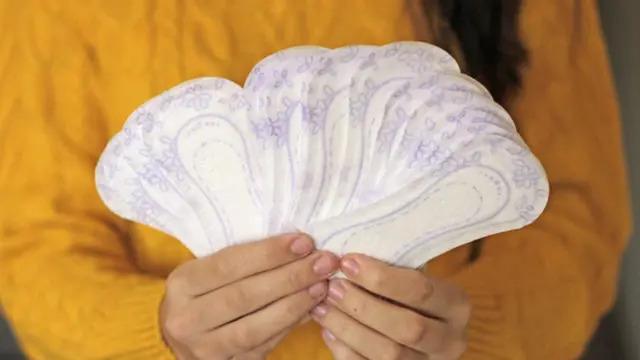
“Tax On Dignity”: The Fight Against Period Poverty And The Pink Tax In Pakistan
(MENAFN- Tribal News Network) -->
The West has long projected itself as a champion of women's freedom and rights, yet the reality tells a different story. Women have often been treated as inferior, valued as decorative objects or sources of entertainment for men. The clearest evidence of this contradiction can be seen in the gender pay gap and the higher prices of female-specific products in Western countries.
Although similar inequality exists in Pakistan, it was not widely challenged until lawyer and women's rights activist Mah Noor Umar filed a petition against the government. She argued that the unfair taxation on sanitary pads violates women's fundamental human rights. The government has classified sanitary pads as luxury items rather than basic necessities, imposing an 18% sales tax and, in some cases, additional customs and import duties ranging from 25% to 40%.
According to the petition, this taxation places a financial burden on a biological process over which women have no control. Statistics reveal that only about 12% of women in Pakistan can afford commercially produced sanitary pads, while the rest are forced to use unsafe alternatives. The petition states that this situation violates Article 25 (Right to Equality) and Article 14 (Right to Dignity and Privacy) of the Constitution of Pakistan.
Also Read: Saffron Cultivation Successfully Introduced for the First Time in Upper DirGlobally, women-specific products are often more expensive than those for men. This disparity is not just about pricing or branding but reflects a deeper social and economic injustice. This phenomenon is widely known as the“period tax” or“pink tax”, where women's biological needs are treated as commercial opportunities and subjected to extra taxes and costs.
This issue is not limited to taxation alone; it is tied to basic health, social attitudes, and gender justice. Forcing women to pay a tax simply to fulfill a biological need-one that men are not subjected to-amounts to institutional discrimination. Women worldwide face this double standard, where men's products are often taxed less and supported more, pushing women further into a secondary status both economically and socially.
Taxes on sanitary pads create not only financial pressure but also social shame. In a country like Pakistan, where a large number of women live in rural areas with limited resources, high prices expose them to serious health risks. Many resort to using cloth or other unsafe substitutes, leading to infections and other diseases.
Mah Noor Umar stated in an interview that during her school days, she used to hide sanitary pads under her arms because society has taught women that talking about menstruation is shameful. This silence becomes even more dangerous when the government reinforces it by taxing these products as if they were unnecessary luxuries. The reality is that menstruation is not a flaw or shameful act, but a natural and essential part of women's health, and it is the state's responsibility to provide support-not additional financial burden.
Several countries around the world have already taken action. Scotland became the world's first country in 2020 to make menstrual products free. Kenya abolished taxes on sanitary pads in 2004, becoming the first African country to do so. Australia and Canada removed Value Added Tax (VAT) in 2018 to relieve women of this burden.
In India, public pressure led to the removal of GST on sanitary products in 2018, and these items are now included in the list of basic necessities. In contrast, Pakistan has continued this taxation system up to 2025, with rates significantly higher than those applied to other essential goods.
The government may view this purely as a revenue issue, but the reality is that such policies directly impact women's health, education, and employment. Experts point out that in areas where sanitary products are expensive, school-going girls often miss classes during menstruation. Reports by the World Health Organization and UNICEF also highlight that lack of access to hygiene products affects women's educational and professional opportunities.
This legal case could become a milestone for Pakistan's movement toward gender equality. If the court rules in favor of Mah Noor Umar, it will not only be a constitutional victory but also a practical step forward for women's health rights. Such a decision would increase pressure on the government to reassess its tax policies and eliminate gender-based financial discrimination.
However, the path is not without obstacles. The government may argue that the tax system is uniform and cannot provide special exemptions. But this is not an ordinary tax matter-it is a question of gender justice. Across the world, the struggle against the pink tax and the period tax continues.
Countries like France, the United Kingdom, Canada, Australia, India, Kenya, and several European nations have already abolished such taxes due to public pressure. These examples show that when governments take the issue seriously, not only do women benefit, but social awareness and respect also improve. Where silence and shame dominate, women's issues remain buried.
The need of the hour is for the government and society to understand that women's basic biological needs are not a luxury. Media, educational institutions, and civil society must bring this issue into the open so that words like“periods” and“sanitary products” are no longer treated as shameful or taboo. A woman is not a product-she is the backbone of society. And until we treat her natural needs with dignity and importance, we cannot truly progress.

Legal Disclaimer:
MENAFN provides the
information “as is” without warranty of any kind. We do not accept
any responsibility or liability for the accuracy, content, images,
videos, licenses, completeness, legality, or reliability of the information
contained in this article. If you have any complaints or copyright
issues related to this article, kindly contact the provider above.
Most popular stories
Market Research

More Story






Comments
No comment