




403
Sorry!!
Error! We're sorry, but the page you were looking for doesn't exist.
Temperatures In A Patch Of Antarctic Moss Can Vary As Much As An Entire Mountain Range
Author: Krystal Randall
(MENAFN- The Conversation) If you were to wander along the parts of Antarctica that are ice-free, you might be surprised to see something soft and luxurious growing right at your feet: deep green carpets of moss that look like draped green velvet nestled between rocks.
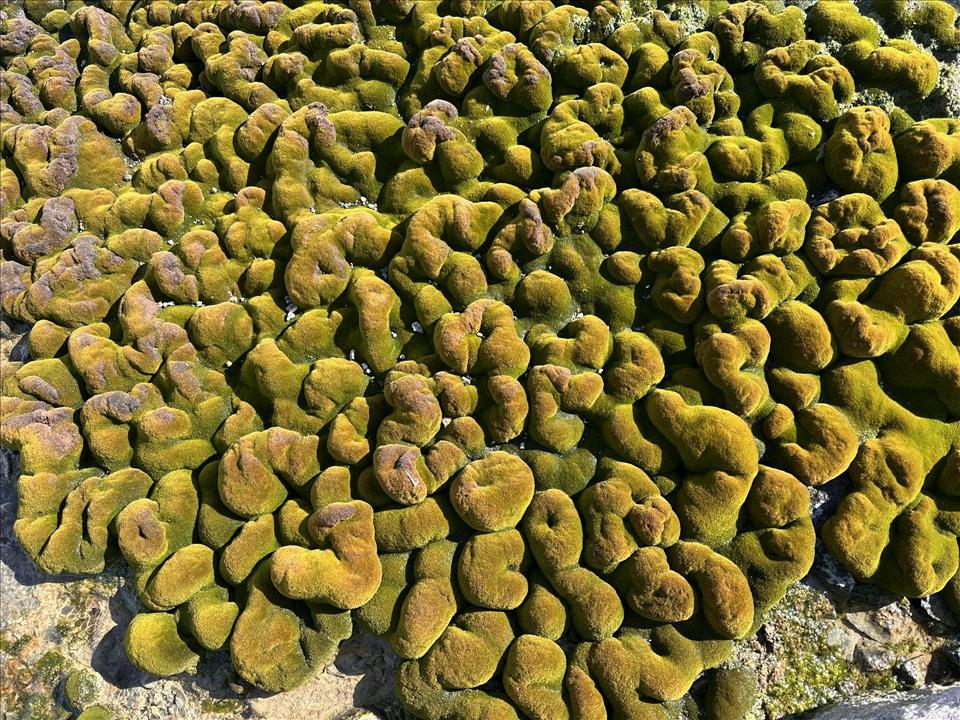
A green moss bed in Antarctica showing a brain-like structure of miniature hills and valleys. Krystal Randall, Author provided (no reuse) Long-term declines
A sample of Antarctic moss showing the numerous individual shoots tightly packed together that form the moss carpet. Krystal Randall, Author provided (no reuse) Measuring and modelling mosses![A patch of moss between rocks, variously coloured brown and green.]()
An Antarctic moss bed showing variations in health at a fine spatial scale. Krystal Randall, Author provided (no reuse)![A small sensor and and various wires sitting on top of a brown and green moss patch.]()
Temperature sensors in different positions of the moss bed show large variation in temperature. Krystal Randall, Author provided (no reuse) Mosses are reaching their limit

These moss beds, often called the“Daintree of Antarctica”, are like miniature forests.
From above, these velvet-like carpets rise and fall in gentle curves, forming a brain-like structure of miniature ridges and valleys. Up close, countless tiny shoots packed tightly together make the moss appear plush, with tiny green leaves catching the light.
What you can't see – but might be able to feel – are the huge variations in temperature in these moss beds. In fact, as new research I led, published in Global Ecology and Biogeography, shows, one small patch of moss in Antarctica can create as much temperature variation as an entire mountain range elsewhere on the planet.
This discovery reveals how small-scale terrain shapes life in extreme environments – and why Antarctic heatwaves could threaten these fragile ecosystems.
A green moss bed in Antarctica showing a brain-like structure of miniature hills and valleys. Krystal Randall, Author provided (no reuse) Long-term declines
Field observations have shown that moss beds in East Antarctica are changing.
Long-term declines in moss health closely follow the spatial structure of the miniature ridges and valleys within the moss beds – or, in technical terms, the“micro-topography”.
Mosses living in the valleys have remained consistently healthy. This is shown by their vibrant green colour. However, mosses growing on ridges are more likely to become stressed and eventually die.
Our new research offers an explanation for why this is happening.
A sample of Antarctic moss showing the numerous individual shoots tightly packed together that form the moss carpet. Krystal Randall, Author provided (no reuse) Measuring and modelling mosses
Over three research expeditions, colleagues and I spent time camping on a remote island in the Maritime Antarctic region below South America, and stayed at Australia's Casey Station in East Antarctica, approximately 3,800 kilometres south of Perth.
Both regions, on opposite sides of Antarctica, have experienced different climatic changes in recent decades. The former has warmed, while the latter has become windier and drier.
However, both regions host expansive and ecologically significant moss beds.
To understand what's driving biological patterns at the moss micro-scale, we placed a series of tiny sensors at different positions throughout the moss beds. We also collected imagery to generate high resolution digital models of the moss surface.
Specific features of the moss surface were derived from the models, such as vertical elevation, slope angles and direction angles. These features were used in mathematical models of solar radiation, telling us how much light the moss surface receives each day and how this differs based on a moss's position within the moss bed.
An Antarctic moss bed showing variations in health at a fine spatial scale. Krystal Randall, Author provided (no reuse)
Read more: Photos from the field: spying on Antarctic moss using drones, MossCam, smart sensors and AI
From a moss bed to a mountain rangeWe found that Antarctic mosses create their own miniature climates, and these can vary dramatically in a single square metre.
Mosses living just centimetres apart can differ by 15°C in their daily maximum temperatures and by more than 2°C in their average temperatures over the growing season.
Some micro-scale positions in the moss bed heat rapidly in sunlight, reaching nearly 30°C despite freezing air temperatures, while neighbouring patches may never rise above 10°C.
To illustrate how extreme this is, we compared these moss-scale differences to land surface temperatures from mountainous regions worldwide. The temperature range within a single square-metre moss patch was equivalent to the change you'd experience by climbing one to two kilometres up a mountain.
In other words: a moss bed the size of a coffee table can contain as much thermal variation as an entire mountain range.
These differences are caused by a range of factors, including complex interactions between moss micro-topography and seasonal shifts in the sun's elevation angle. In some locations in the moss beds, heat released from surrounding mosses can be trapped, which adds to the warming.
Tiny ridges were the warmest places for mosses to live in January. But these became the coldest in February as lower solar angles favoured steep slopes between ridges and valleys.
Ridges also experienced the most dramatic daily swings, with heating well above air temperature followed by rapid freezing – conditions that are stressful for plants. In contrast, mosses in small, sheltered valleys remained shaded. But these consistently had the warmest and most stable temperatures, showing that trapped heat released by surrounding mosses can outweigh direct sunlight.
Temperature sensors in different positions of the moss bed show large variation in temperature. Krystal Randall, Author provided (no reuse) Mosses are reaching their limit
Understanding this fine-scale complexity is crucial for predicting how Antarctic mosses will respond to climate change and the growing risk of heatwaves.
This matters most for mosses living at the cold limits of life, as temperature controls when they can photosynthesise and grow. Mosses must warm up to stay active in freezing conditions, but they also begin to experience physiological stress above about 30°C.
We found that mosses in the warmest micro-habitats are already approaching this threshold. The same warming ability that helps them survive the cold may soon become a liability under increased warming and heatwave events, where air temperatures up to 18°C in Maritime Antarctica and 9°C in East Antarctica have already occurred.
In a landscape dominated by ice, Antarctica's moss beds remind us that life persists through subtle strategies. But our work shows that plants living in coldest places on Earth could be approaching their heat limits.
As Antarctic heatwaves become more common, the strategies that once benefited them could instead push them beyond their limits, and a mosses position within the moss bed will likely influence how these events impact them.
Institution:University of Wollongong

Legal Disclaimer:
MENAFN provides the
information “as is” without warranty of any kind. We do not accept
any responsibility or liability for the accuracy, content, images,
videos, licenses, completeness, legality, or reliability of the information
contained in this article. If you have any complaints or copyright
issues related to this article, kindly contact the provider above.
Most popular stories
Market Research

More Story







Comments
No comment