





403
Sorry!!
Error! We're sorry, but the page you were looking for doesn't exist.
Britain's Ponds Are Disappearing Here's Why Restoring Them Is Vital For Wildlife And Climate Resilience
Author: Lucy Clarke
(MENAFN- The Conversation) Across Britain, ponds are quietly vanishing. Pouring over historic maps from the 1900s to trace old pond sites, I was struck by how many once dotted the landscape. Today, more than half have disappeared, a loss that threatens wildlife and our ability to cope with a changing climate.
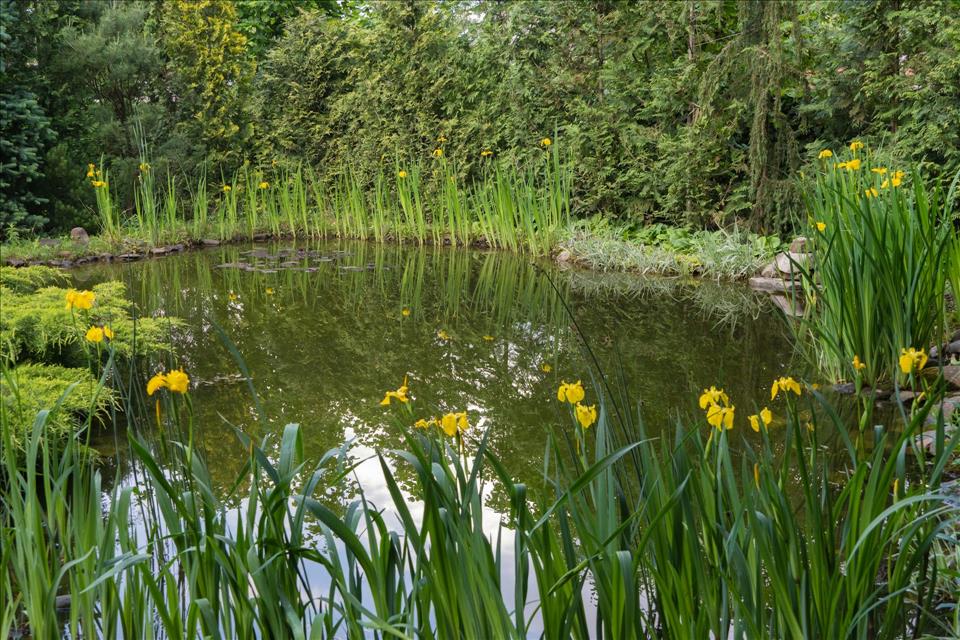
A freshwater pond surrounded by grassland and trees can become a wildlife haven and build climate resilience. Lucy Clarke/NTU, Author provided (no reuse)![Imagine weekly climate newsletter]()

That may be surprising as ponds seem small and insignificant. We talk about rivers, reservoirs and wetlands but ponds get very little mention, yet they punch far above their weight in ecological value. They store water, support biodiversity and help buffer floods and droughts. Losing them undermines both nature and our ability to adapt to climate extremes.
Restoring ponds – old and new, rural and urban – is one of the simplest, most effective steps we can take. Every pond counts, from a farm hollow to a garden bowl. Together, they form networks that wildlife needs to survive and make our landscapes more resilient to climate change.
The takeaway? Ponds do far more than look good. They link habitats, boost biodiversity and strengthen climate resilience. Restoring them is a practical, low-cost solution that begins with something as basic as adding water.
For wildlife, ponds are vital ecosystems and support far more than aquatic species. They provide water, food and habitat for pollinating insects, birds, bats and other mammals. Crucially, amphibians such as frogs and newts rely on networks of ponds close enough for them to move between. Lose that network or“pondscape”, and species vanish.
A freshwater pond surrounded by grassland and trees can become a wildlife haven and build climate resilience. Lucy Clarke/NTU, Author provided (no reuse)
The consequences extend beyond biodiversity. Ponds act as natural buffers against climate extremes. Ponds act like natural sponges. During heavy rain, they slow water running across the ground and store this to reduce flood peaks. In periods of drought, they store water for plants and animals when streams run dry. They can also lock away carbon and filter pollutants, improving water quality.
Urban ponds in parks, school grounds and people's gardens can provide vital biodiversity hotspots and local cooling during heatwaves. They help manage stormwater when we have heavy rains, reducing pressure on drains. And they can help connect people with nature, something proven to boost wellbeing.
Historic maps reveal a dense network of ponds that once dotted the landscape, but more than half of Britain's ponds have disappeared since 1900. Research that I was involved in found that 58% of ponds present in 1900 were lost by 2019 in the Severn Vale region of the UK, and this went hand in hand with a decline in pond density with a 25m increase in the average distance between contemporary ponds.
The decline in ponds can be seen worldwide, driven by changes in agriculture and the growth in urban areas. As agriculture has intensified, these small waterbodies were seen as obstacles to efficiency. Farmers filled them in to create larger, machine-friendly fields, while improved drainage systems and water abstraction dried out many more. Expanding urban areas also replaced ponds with roads, housing and hard surfaces.
Bringing ponds back to lifeRestoring ponds is one of the simplest, most effective ways to boost biodiversity and climate resilience. Whether it's reviving forgotten waterbodies or creating new ones, these small habitats deliver big benefits for wildlife and communities.
The first step is knowing where ponds are and where they're missing. Mapping today's ponds shows the gaps, helping us plan new ones to link habitats and build a healthy pond network. Historic maps reveal lost ponds that can potentially be restored. Many ponds survive as“ghosts”.
Read more: Why I'm bringing centuries-old 'ghost ponds' back to life
Digging them out and restoring these is surprisingly effective. Seeds buried for decades can germinate once water returns, reviving plants thought extinct locally. In Norfolk, farmers and conservationists have restored dozens of ghost ponds, and within months they teem with life.
However, you don't need a big conservation project to make a difference. Start small. A garden pond, even the size of a washing-up bowl, can attract frogs, insects and birds. Community groups can work with councils to revive neglected ponds in parks, public gardens or village greens. If you've got a garden, or even a wheelbarrow or large pot, you can help rebuild the pond network.
The Royal Horticultural Society, the UK gardening charity, has great guidance on how to create a successful wildlife pond. Every pond counts and together they create the networks wildlife needs to survive and provide vital water storage.
Britain's ponds are disappearing fast, but every new or restored pond helps reverse that trend. Restoring old ponds and creating new ones, even in gardens and parks, is one of the simplest, most effective steps we can take to protect wildlife and adapt to climate extremes.
Don't have time to read about climate change as much as you'd like?
Get a weekly roundup in your inbox instead. Every Wednesday, The Conversation's environment editor writes Imagine, a short email that goes a little deeper into just one climate issue. Join the 47,000+ readers who've subscribed so far.
Institution:Nottingham Trent University

Legal Disclaimer:
MENAFN provides the
information “as is” without warranty of any kind. We do not accept
any responsibility or liability for the accuracy, content, images,
videos, licenses, completeness, legality, or reliability of the information
contained in this article. If you have any complaints or copyright
issues related to this article, kindly contact the provider above.
Most popular stories
Market Research

More Story








Comments
No comment