







403
Sorry!!
Error! We're sorry, but the page you were looking for doesn't exist.
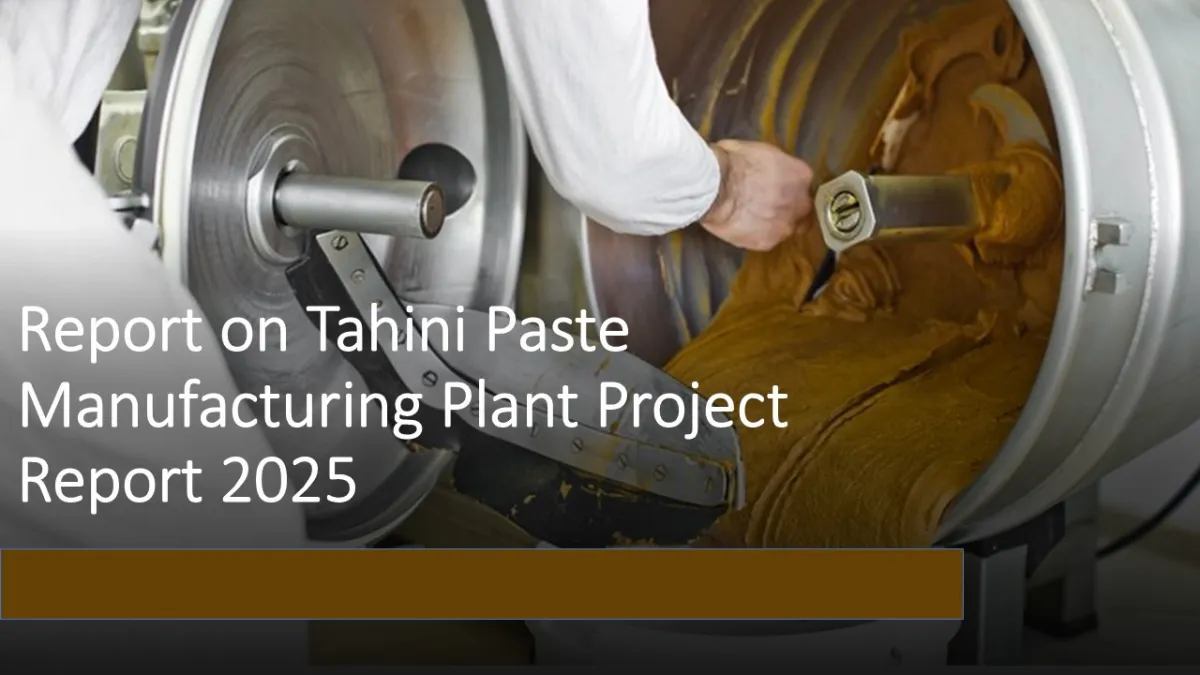
Tahini Paste Manufacturing Plant Feasibility Report 2025: Cost, Setup With Profitability Forecasts
(MENAFN- IMARC Group)
A tahini paste is a specialized food product designed to provide nutrition and flavor for culinary applications, ensuring smooth texture and extended shelf life. This paste is typically made from hulled sesame seeds that are roasted and ground into a smooth, creamy consistency that balances taste profile with nutritional density to support dietary requirements, recipe versatility, and consumer satisfaction. Its quality directly influences taste, texture, and overall culinary performance.
Setting up a tahini paste manufacturing plant involves establishing facilities for seed processing, grinding, and packaging while adhering to strict food safety and quality standards. The process requires advanced machinery, skilled labor, raw material sourcing, and compliance with food safety regulations.
IMARC Group's report, titled “Tahini Paste Manufacturing Plant Project Report 2025: Industry Trends, Plant Setup, Machinery, Raw Materials, Investment Opportunities, Cost and Revenue,” provides a complete roadmap for setting up a tahini paste manufacturing plant. It covers a comprehensive market overview to micro-level information such as unit operations involved, raw material requirements, utility requirements, infrastructure requirements, machinery and technology requirements, manpower requirements, packaging requirements, transportation requirements, etc.
Request for a Sample Report : https://www.imarcgroup.com/tahini-paste-manufacturing-plant-project-report/requestsample
Tahini Paste Industry Outlook 2025:
The tahini paste industry outlook for 2025 reflects strong growth driven by rising adoption of Middle Eastern cuisine across commercial, retail, and foodservice applications. Increasing demand for longer shelf life, smoother texture, and higher nutritional content is fueling advancements in roasting, grinding, and preservation technologies. Expanding use cases in bakery, confectionery, health foods, and gourmet cooking are boosting production volumes and innovation. Governments and private players are investing in research and sustainable manufacturing practices to address food safety and environmental concerns. With technological breakthroughs and wider commercialization, the industry is expected to achieve significant expansion and enhanced competitiveness in 2025.
Key Insights for Tahini Paste Manufacturing Plant Setup:
Detailed Process Flow:
-
Product Overview
Unit Operations Involved
Mass Balance and Raw Material Requirements
Quality Assurance Criteria
Technical Tests
Project Details, Requirements and Costs Involved:
-
Land, Location and Site Development
Plant Layout
Machinery Requirements and Costs
Raw Material Requirements and Costs
Packaging Requirements and Costs
Transportation Requirements and Costs
Utility Requirements and Costs
Human Resource Requirements and Costs
Capital Expenditure (CapEx) and Operational Expenditure (OpEx) Analysis:
Project Economics:
-
Capital Investments
Operating Costs
Expenditure Projections
Revenue Projections
Taxation and Depreciation
Profit Projections
Financial Analysis
Profitability Analysis:
-
Total Income
Total Expenditure
Gross Profit
Gross Margin
Net Profit
Net Margin
Key Cost Components of Setting Up a Tahini Paste Plant:
-
Land and Infrastructure: Acquisition of land, construction of factory buildings, and utility installations.
Machinery and Equipment: Investment in roasting units, grinding lines, mixing equipment, and packaging systems.
Raw Materials: Procurement of sesame seeds, salt, stabilizers, preservatives, and packaging materials.
Labor and Workforce: Hiring skilled food technologists, operators, and quality control staff along with training costs.
Research and Development: Expenses for product innovation, texture improvements, and flavor testing.
Regulatory Compliance: Certifications, food safety protocols, and quality management systems.
Working Capital: Inventory management, logistics, and day-to-day operational expenses.
Economic Trends Influencing Tahini Paste Plant Setup Costs 2025:
-
Raw Material Price Volatility: Fluctuations in sesame seed, packaging, and additive prices impact overall production costs.
Energy Costs: Rising electricity prices and demand for renewable power sources increase operational expenses.
Supply Chain Disruptions: Global logistics challenges and material shortages affect procurement and lead times.
Inflationary Pressures: Higher construction, labor, and equipment costs due to inflation raise capital requirements.
Government Incentives: Subsidies, tax benefits, and food industry policies help offset setup costs.
Technological Advancements: Automation and efficiency improvements reduce long-term expenses despite higher initial investments.
Speak to an Analyst for Customized Report : https://www.imarcgroup.com/request?type=report&id=10125&flag=E
Challenges and Considerations for Investors in Tahini Paste Plant Projects:
-
High Capital Intensity: Significant upfront investment required for infrastructure, technology, and skilled workforce.
Raw Material Dependency: Reliance on quality sesame seeds, subject to agricultural and global supply risks.
Technological Uncertainty: Rapid advancements in grinding and preservation technologies may shorten equipment lifecycles.
Regulatory Compliance: Strict food safety, labeling, and quality standards add complexity and costs.
Market Competition: Growing number of entrants in specialty food manufacturing intensifies price and margin pressures.
Sustainability Concerns: Need for eco-friendly production methods and sustainable sourcing to meet consumer expectations.
Conclusion:
The tahini paste industry in 2025 presents significant opportunities driven by expanding culinary applications and rapid technological advancements. Establishing a manufacturing plant requires careful consideration of capital investment, raw material security, regulatory compliance, and evolving market demands. While rising costs, supply chain constraints, and sustainability challenges pose risks, supportive government policies and innovations in food processing technology provide strong growth prospects. Investors who strategically plan for efficiency, innovation, and environmental responsibility can position themselves competitively in this fast-growing sector, aligning with the increasing global demand for authentic and high-quality Middle Eastern food products.
About Us:
IMARC Group is a global management consulting firm that helps the world's most ambitious changemakers to create a lasting impact. The company excel in understanding its client's business priorities and delivering tailored solutions that drive meaningful outcomes. We provide a comprehensive suite of market entry and expansion services. Our offerings include thorough market assessment, feasibility studies, company incorporation assistance, factory setup support, regulatory approvals and licensing navigation, branding, marketing and sales strategies, competitive landscape, and benchmarking analyses, pricing and cost research, and procurement research.
Contact Us:
IMARC Group
134 N 4th St. Brooklyn, NY 11249, USA
Email: sales[@]imarcgroup.com
Tel No:(D) +91 120 433 0800
United States: (+1-201971-6302)

Legal Disclaimer:
MENAFN provides the
information “as is” without warranty of any kind. We do not accept
any responsibility or liability for the accuracy, content, images,
videos, licenses, completeness, legality, or reliability of the information
contained in this article. If you have any complaints or copyright
issues related to this article, kindly contact the provider above.
Most popular stories
Market Research

More Story








Comments
No comment