(MENAFN- The Conversation) In South Africa's from 1948 to 1994, the executive arm of government dominated over parliament. In any system, this allows a small group of politicians to dominate the larger body of elected representatives from which they are drawn, with no effective limitations. Corruption and abuse of power almost always follow directly.
At the start of the new democratic era, the drafters of the changed this. The constitution gives the legislature the authority and the obligation to oversee the exercise of public power, and hold the executive accountable.
The constitution contains nearly 40 provisions to do this. Chief among these provisions is :
The foundational values of“” in section 1(d) of the constitution demanded a radical change in parliament's relationship with the executive.
In 1994, the Speaker of Parliament began a range of initiatives to get the change under way. I undertook three projects at her request between 1996 and 1999:
a system of mandatory disclosure of financial interests by every MP and their immediate family members a system of parliament scrutinising every piece of subordinate legislation made by the executive to test it for constitutional compliance setting out parliament's obligations under section 55 of the constitution. This is now known as the . I wrote this report with two colleagues.
The report recommended legislation to set standards of accountability and institutional independence. It proposed new rules about how the two houses of parliament should report to parliamentary committees. And it suggested there should be a Standing Committee on Constitutional Institutions, essentially what the constitution calls the State Institutions supporting Constitutional Democracy, . These include the Public Protector, the Human Rights Commission and the Auditor-general.
Parliament responded only partially and ineffectively. It referred the matter to the Rules Committee, which changed some portfolio committee processes. But the changes did not embrace the spirit of the constitutional obligations.
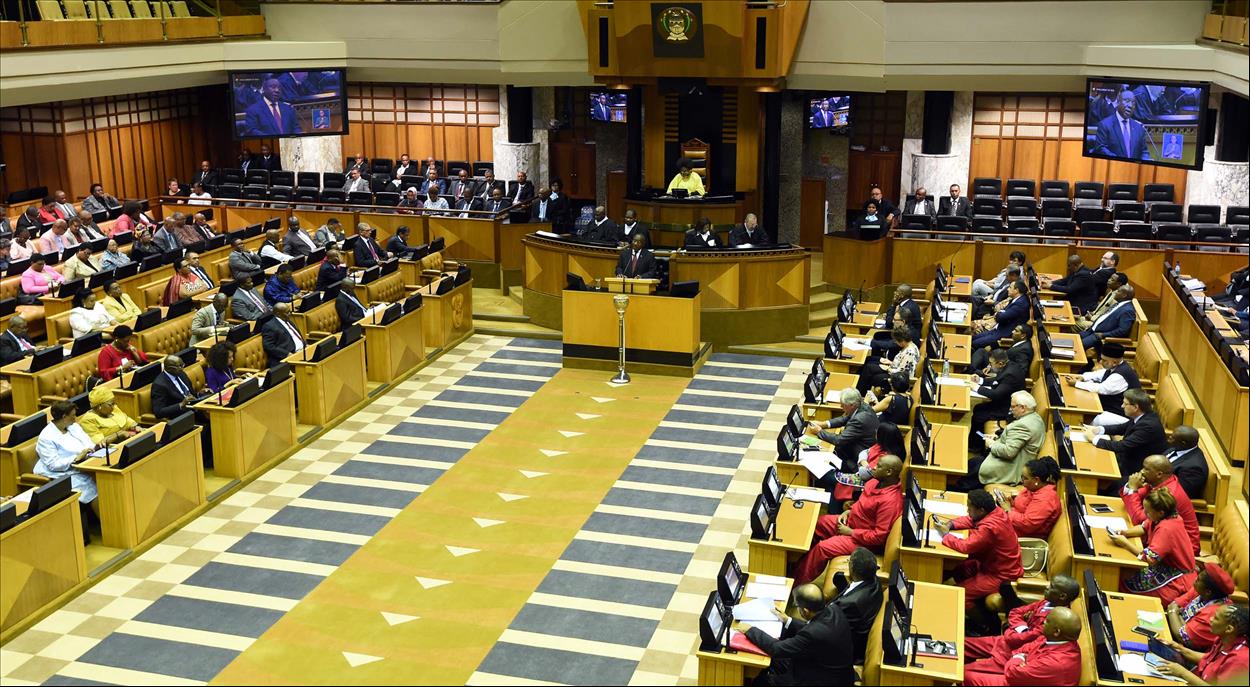
Parliament failed to live up to its constitutional mandate. This failure was noted by the as having contributed to the relative ease with which the administration of former president Jacob Zuma, and its fellow travellers, could .
The absence of standards of accountability and the fact that portfolio committees are not independent, are the reasons parliament is failing in its constitutional mandate to hold the executive accountable.
This matters because the lack of parliamentary vigilance has a number of consequences. The first is that the executive and public administration will succumb to the temptations that their power gives them. The second is that the electorate is failed by its direct representatives. Thirdly, that the organs of state which must secure integrity (the courts and ) are placed under undue stress. And finally, it falls to civil society and public-spirited individuals to take on the burden of challenging the abuse of power.
History of accountability
A condition of the exercise of power in a constitutional democracy is that the administration or executive is checked by being held accountable to an organ of government distinct from it.
Accountability means explaining decisions or actions, making amends for any fault and taking steps to prevent a recurrence.
The has been the foundation stone of democratic government since the 17th century. Public power was divided among the executive, judicial, and legislative branches of government. Methods of mutual checking and balancing were established.
During the 20th century, executive power expanded so as to meet the needs of growing populations in a changing world.
The executive branch thus came to dominate the legislature. The judicial authority rose in prominence after 1945. This, as bills of fundamental rights and an increasing emphasis on the lawful exercise of public power made their way into national constitutions.
African experience
Almost all African countries experienced these developments in their formal liberation from European imperialism in the .
The pattern of allocating power began to shift in the early 1990s, with freedom coming finally to and . This coincided with the collapse of the , and a rash of constitution-making in central and eastern Europe. This soon followed in mainly Anglophone Africa.
These new constitutions typically gave pride of place to bills of rights. They gave the superior courts the authority to test whether rights had been infringed and whether government decisions and actions were lawful and constitutional. The judicial branch of government rose in political prominence. This, in turn, focused attention on judges' independence and accountability.
Given the experience in the developed world, the drafters of these new constitutions recognised that politicians would put pressure on the courts. So the inclusion of what the calls took hold.
Most modern constitutions in Africa followed suit. They established bodies such as the or and and .
, , and also came into being. These bodies, collectively known as the integrity branch of government, complement the review powers of the courts in holding the executive to account.
How have these arrangements translated into practice?
The general picture across Africa is patchy. There are only isolated examples of the legislature demanding answers from the president and cabinet. This results in the denial of constitutional rights. It puts even more pressure on the courts to come to the rescue and exposes the judiciary to .
The South African legislature is no exception.
Failure of accountability
There are many reasons why the South African parliament has failed to hold the executive accountable.
Foremost is the control that political party bosses exercise over members of parliament. This is due to the country's electoral system.
The majority party in parliament (the African National Congress) has held that position since 1994. It chairs all but one of the portfolio and standing committees, which are the chief mechanisms for accountability.
Where the party whip demands unquestioning obedience, , parliamentary committees ask few questions and fail to hold the executive to account. This, despite the best intentions of opposition (and even some governing) MPs.
It forces people to use or other less open means of exposing the abuse of power or maladministration.
For this reason, the has advised that the and some aspects of the committee functions should be reviewed. This would weaken the grip of the party on its MPs.
Given the , the ANC is unlikely to promote any steps that undermine the influence of its leadership cohort.
All those who value the responsible exercise of public power in a constitutional democracy will support such a recommendation. But few will be holding their breath.

















Comments
No comment