




403
Sorry!!
Error! We're sorry, but the page you were looking for doesn't exist.
Commentary: How Strait Of Hormuz Is Trapped Between Geopolitics And Legal Vacuum
(MENAFN- Khaleej Times) The author is president of UAE Safety and Emergency Security Association and professor of sustainable development at the American University of Sharjah. He is former UAE Minister of Climate Change and Environment and former Minister of Infrastructure. He authored two books on climate change that influenced academic and international reforms.
What pushed me to revisit the issue of the double siege on the Strait of Hormuz was not only the gravity of the current geopolitical moment but also the extent of the confusion surrounding the strait's legal status.
Recommended For YouIt has become increasingly common to hear analysts cite provisions of the United Nations Convention on the Law of the Sea (UNCLOS) as if they automatically apply to Hormuz, despite the fact that neither Iran nor the United States is a party to the convention. This alone strips those provisions of any binding force in this context.
Worse still, some commentators invoke treaties that simply do not exist in maritime law, such as the so-called Gomika Treaty, or rely on texts unrelated to international straits in an attempt to give political or military positions a veneer of legal legitimacy.
Stay up to date with the latest news. Follow KT on WhatsApp Channels.
This confusion between law and reality, between texts and facts, creates a misleading public picture and makes it necessary to present a precise reading grounded in what actually exists: A legal vacuum, a double siege, a maritime organisation with no enforcement tools, and a global economy suspended between fear and anticipation.
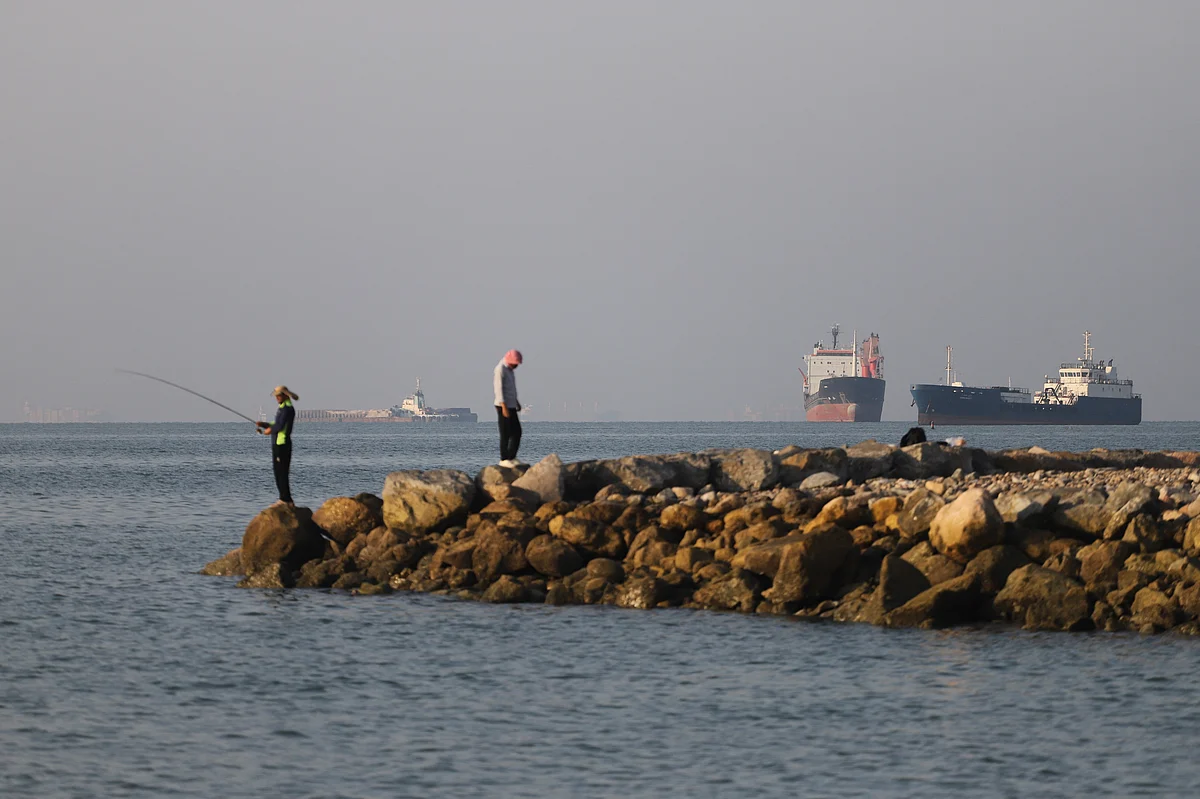
In a historical moment where geography intersects with power, and law dissolves into emptiness, the world finds itself facing an unprecedented maritime scene: the Strait of Hormuz - the artery through which a fifth of global energy flows - has turned into a theatre of dual pressure from inside and outside.
Maritime choke pointAs regional and international powers exchange signals of escalation, global markets stand on edge, and the international economy lives in a state of fear and vigilance, wary that this maritime choke point could trigger an uncontrollable global energy crisis.
Nearly 20 million barrels per day of oil and petroleum liquids pass through the strait - around 20 per cent of global consumption - in addition to 20 per cent of global LNG trade. It is the artery on which Asia, led by China, relies to feed its heavy and petrochemical industries and to maintain energy price stability. With Iran's internal pressure and the broader American pressure from the outside, the world faces an unprecedented situation: The most critical energy strait on earth caught between two states that are not parties to the Law of the Sea, under the watch of a maritime organization with no enforcement authority.
The absence of Iranian and American commitment to UNCLOS means that the principle of“transit passage”, which protects navigation in international straits, cannot be invoked legally. Nor is it possible to resort to the International Tribunal for the Law of the Sea, while the International Court of Justice requires the consent of both parties, which is an unlikely scenario. This leaves customary international law - far less defined - as the only reference, opening the door to conflicting interpretations and turning the strait into a space governed by power rather than law.
Within this legal vacuum, the International Maritime Organization (IMO) faces a crisis beyond its mandate. It has no naval forces, no sanctions regime, and no ability to compel a state to open a strait or prevent another from imposing a blockade. Its tools are limited to navigational warnings, technical recommendations, condemnation of attacks on ships, and reminders of obligations under safety, pollution, and ship‐security conventions.
Immediate and severe impactThe real penalty does not come from the organisation itself, but from the reaction of the global maritime system: Insurers raise premiums or halt coverage, ports tighten procedures on certain flags, and shipping companies reroute their fleets - all of which translate into additional costs for states that ignore international standards. It is a form of soft pressure, but it is no substitute for the hard enforcement power held by the Security Council or military coalitions.
The economic impact of closure is immediate and severe. The disappearance of 8–10 million barrels per day of accessible supply - due to the limited alternatives offered by pipelines - triggers sharp price spikes, supply‐chain disruptions, and soaring shipping and insurance costs.
Markets react not only to actual volumes, but to the fear of the unknown: How long will the closure last? Could the conflict expand? This is where the real nervousness emerges: Violent swings in equity markets, pressure on the currencies of energy‐importing states, rising air and sea transport costs, and heightened stress across economic confidence indicators.
It is also important to correct the widespread belief that rising oil and gas prices benefit exporting states. In reality, Gulf exporters face direct and immediate losses, because the problem is not the price - it is the inability to export.
As tankers stop moving, storage fills quickly, forcing states into involuntary production cuts, meaning large daily revenue losses even if global prices rise. Shipping and insurance costs surge, risk premiums multiply, and some vessels refuse to enter the region altogether. Condensates are even more sensitive than crude as they cannot be stored in large quantities, and halting their export disrupts gas‐processing units, affecting electricity generation, domestic gas supply, and LNG output.
The result is clear – higher prices do not compensate for lost volumes, and exporting states face a mix of declining revenues, rising costs, domestic market disruptions, and eroding international confidence in supply stability.
Strait of chronic tensionAlthough the situation appears unprecedented, history offers parallels showing that maritime straits have always been strategic vulnerabilities. The closure of the Suez Canal between 1967 and 1975 - the longest shutdown of a global waterway - forced ships around the Cape of Good Hope, raised shipping costs, and left the“Yellow Fleet” stranded for eight years.
The Bab al‐Mandeb strait saw partial closure in 1973, affecting oil flows to Europe. During World War I, the Ottoman Empire used the Bosporus and Dardanelles as pressure points against Russia. Even Hormuz itself has known similar episodes: Portuguese control in the 16th century, and British pressure on Iran in the mid‐20th century. These precedents are not identical to today's situation, but they confirm that straits have always been theatres of conflict, and that international law alone is insufficient when geography intersects with power.
What makes the current moment unique is the convergence of three rare elements: A double siege from inside and outside, an almost complete absence of a binding legal framework governing international straits, and a global dependence on Hormuz far greater than that of any other strait in history.
Under this equation, markets will remain in a state of chronic tension, and China - along with the rest of Asia - will continue searching for a new formula to reduce its economic exposure to a single narrow corridor, perpetually open to escalation.
ALSO READ- Commentary: Dissecting US-China relations from Taiwan Strait to Hormuz Commentary: Why Strait of Hormuz has no alternative despite new Red Sea links Commentary: The region needs more than an ambiguous ceasefire to end the conflict

Legal Disclaimer:
MENAFN provides the
information “as is” without warranty of any kind. We do not accept
any responsibility or liability for the accuracy, content, images,
videos, licenses, completeness, legality, or reliability of the information
contained in this article. If you have any complaints or copyright
issues related to this article, kindly contact the provider above.
Most popular stories
Market Research

More Story






Comments
No comment