


Risks To Agri Markets Look Underpriced As Hormuz Crisis Drags On


The impact of the conflict in the Middle East on fertiliser and agri markets is probably best described as a tragedy unfolding in slow motion. A major part of global fertiliser and fertiliser feedstock remains exposed. While an extension of the ceasefire could see a resumption in flows, the outlook is likely to remain fragile as a more permanent deal could be challenging to secure.
The global risks were highlighted again recently, with the Food and Agriculture Organization warning of 'the beginning of a systemic agrifood shock that could trigger a severe global food price crisis '. The UN Agency is specifically concerned about countries in Africa and parts of Asia. In our view, the situation is less severe for Europe, although it is clear that risks persist for European companies over the next 12 months. While current market conditions suggest limited risk of an immediate price spike, underlying pressures may still build over time if supply constraints persist.
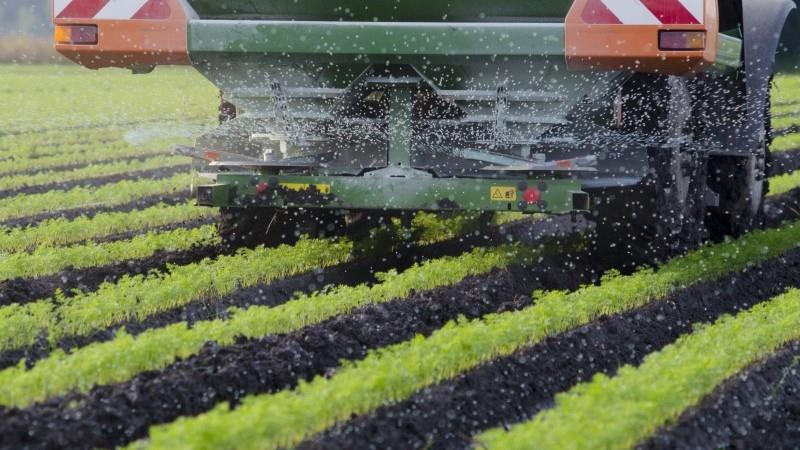
Both farmers and policymakers react to fertiliser shockThe key concern is that higher fertiliser prices will reduce usage, which could weigh on crop yields and tighten agricultural supply over time.
Compared to 2022, fertiliser affordability (the ratio between fertiliser and crop prices) has deteriorated sharply, creating a stronger incentive for farmers to reduce application rates. As a result, the International Fertilizer Association expects usage to decline in the 2026/27 season.
The impact is unlikely to be uniform, however, as farmers use different types of fertiliser to support yields, reproduction and resilience. Previous shocks show that demand for nitrogen-based fertiliser tends to be more inelastic than potash and phosphate.
Also, farmers in developing countries are generally more sensitive to prices, while farmers in developed economies (including the EU) tend to have more options to mitigate the risks.
Use of nitrogen-based fertilisers is more stable compared to phosphate and potashAnnual change in use
Source: IFA, ING Research">
The disruption to fertiliser markets is exacerbated by the implementation of export quotas and restrictions by other major exporters, including Russia and China. That further exposes vulnerabilities in key importing regions like Australia, Brazil, India and the EU. On the other hand, governments in these countries and regions are stepping up their actions to secure supplies for domestic farmers or alleviate part of the cost pressure. The Australian government, which is usually quite market-orientated, has already intervened to secure nitrogen and urea shipments. Meanwhile, the EU recently published its Fertiliser Action Plan, which included commitments to support the most affected farmers.
IFA expects 1-2% decline in global Nitrogen-based fertiliser if Iran war lasts 3-6 monthsGlobal use of nitrogen-based fertilisers in three scenarios, in million tonnes
Source: IFA, ING Research"> Commodity market fundamentals favourable, for nowFor commodity markets, the current geopolitical conditions are clearly negative. However, fundamentals such as supply, demand, stocks and broader economic factors remain more favourable, according to the International Food Policy Research Institute (IFPR ). This helps to limit the likelihood of immediate price spikes compared with previous shocks in 2007, 2010 and 2020.
A number of agri commodities heading into the 2026/27 marketing year are well supplied following strong output in 2025/26 amid record yields. This has left inventories at comfortable levels, helping to ease supply concerns.
The expectation for 2026/27 has been that while markets are expected to tighten (with yields falling back from record levels), they are likely to remain comfortable, suggesting only moderate strength in prices this year.
-
Admittedly, US wheat prices have seen more significant strength due to the terrible condition of the domestic winter wheat crop. However, the global wheat market is expected to remain largely comfortable this season, suggesting that the market should see a pullback.
Our expectation is that the corn market will trade in a largely $4.50-5/bu range through the latter half of the year, with a reduction in area, leading to a year-on-year decline in output, and as a result, tighter global stocks YoY.
As for soybeans, the increase in area this year and higher output mean that global stocks are expected to remain broadly unchanged YoY, suggesting that prices may come under some relative pressure over the latter part of the year. We see soybean prices trading in a largely US$11-12/bu range.
Up until now, forecasts have not taken into consideration the potential impact of more persistent fertiliser shortages. Our forecasts have seen marginal changes since the start of the year. This is partly due to uncertainty over the duration of supply disruptions from the Persian Gulf. Also, while there is a broad relationship between fertiliser consumption and agricultural yields, it is not guaranteed that lower fertiliser usage will hit yields directly. Other variables, such as weather, are also important here.
Essentially, the impact of developments in the Middle East is more indirect and therefore more difficult to gauge in terms of its effect on agricultural prices. This contrasts with 2022, when there was a clear direct impact on agri market supply following Russia's invasion of Ukraine.
Global corn ending stocks to edge lower in 2026/27, while little change expected for wheat and soybeansin million tonnes
Source: USDA, ING Research"> Market attention shifts towards Southern Hemisphere
The impact of potential shortages varies across regions. Southern Hemisphere farmers are more vulnerable than those in the Northern Hemisphere. In the Northern Hemisphere, the impact is likely to be more limited, as farmers have already planted their spring crops and pre-booked inputs for the season. As a result, we do not expect any significant changes in crop areas or yields for most of these producers.
The bigger risk is for Southern Hemisphere producers and their winter crops, which are currently being planted. Risks will grow for spring crops (September to December plantings) if fertiliser disruptions persist into the third and fourth quarters of this year. This is particularly the case for key growing regions like South America, which are heavily dependent on fertiliser imports. Brazil, for example, imports in the region of 85% of its fertiliser needs. Obviously, the immediate impact is farmers facing rising prices and tighter margins, but a prolonged disruption could also feed through to physical shortages of fertiliser for Brazilian farmers. Shortages not only pose a risk to yields, but farmers in agri powerhouse Brazil could also decide to shift area from corn to soybeans, given the latter has a lower fertiliser intensity. This would lead to a further tightening in the global corn market, a market which was already set to tighten this year, with farmers in the US increasing soybean plantings at the expense of corn due to pricing dynamics. Given the importance of these crops as input for animal feed, this is something that the feed and animal protein sectors will monitor closely.
The concern for agri markets is that they are facing this uncertainty at a time when it is looking increasingly likely that we will see an El-Nino weather event this year. The National Oceanic and Atmospheric Administration is forecasting an 82% chance of El-Nino conditions emerging in May-June 2026 and a 96% chance that these conditions will continue through the 2026/27 Northern Hemisphere winter. El Niño can bring challenging weather conditions for some regions, including drier weather across large parts of Asia. In the 2023/24 season, which was an El Niño period, we saw agricultural yields in Brazil negatively impacted. This poses another layer of upside risk to agri prices this year.
What about the fertiliser situation in Europe?The EU imports 25%-30% of the nitrogen fertiliser it needs, 35-45% of potash and around 70% of phosphate. There are no immediate concerns around fertiliser availability. Suppliers of nitrogen fertiliser had ample stocks available at the start of 2026 in anticipation of the introduction of higher levies on imported carbon intensive goods (CBAM). Since January, imports have dropped, meaning that companies have been drawing down inventories. In terms of domestic production, recent market data shows that production of nitrogen fertiliser has been relatively stable since the start of the Iran war. European producers have seen gas prices increase but selling prices of fertiliser products have also improved, meaning margins remain positive. Meanwhile, imports of phosphate have remained relatively stable.
EU started 2026 well supplied as nitrogen-based fertiliser imports spiked ahead of new carbon related levyImports of ammonia and nitrogen-based fertilizer in tonnes
Source: European Commission, ING Research"> The impact on EU crop farmers - several factors soften the blowFor crop farmers, fertiliser is a key input. In the EU, it typically accounts for about 15 to 20% of total production costs. Fertiliser prices have been highly volatile in recent years because the market is very exposed to geopolitical developments. In response, many farmers tend to lock in prices ahead of the season, either individually or through groups such as cooperatives, meaning that the fertiliser that's being used on the fields today was often bought at pre-war prices.
For now, this is helping to cushion the blow, but the longer fertiliser prices remain elevated, the more farmers will be exposed to higher market prices. Meanwhile, higher fuel costs, which account for roughly 5% of total production costs, are passed through more quickly, adding to both actual and expected cost pressures. Any increase in agricultural commodity prices would help to reduce pressure on farmers' margins. While the situation will vary across producers, the roughly 10% increase in EU wheat prices since the onset of the war suggests that margin pressures may be less severe than initially feared, as higher output prices are helping to offset rising input costs.
Key risks and how to deal with themThe key supply chain risks for food & agribusinesses linked to the current energy and fertiliser shock are more skewed towards the second half of 2026 and first half of 2027.
Financial stress and consolidation. Greater financial pressure on farmers reduces their ability to invest in equipment and makes them more price-conscious when buying farm inputs. Over the medium to long term, the ongoing pressure on profitability along with an ageing farmer population act as drivers for consolidation in the farming sector. Tighter supply and higher input costs. Companies sourcing from farmers are likely to face growing pressure to pay higher prices for agricultural products as input costs rise. There is a clear risk that prices of agricultural inputs will exceed initial projections, particularly if a strong El Niño reduces yields and triggers a supply shock. Rising working capital requirements. Higher prices would increase working capital needs for businesses. This is not an immediate risk, but one that companies could start to prepare for over coming quarters. Greater market volatility. Increased volatility in markets leaves agribusinesses facing a more challenging environment. Firms can address this by creating more certainty through hedging their exposure. This could include inputs (fuel and fertiliser) as well as outputs and could be in the form of hedging in derivative markets or through securing longer-term supply/offtake agreements. Policy and export restriction risk. Restrictions on exports of key food commodities become more likely if lower fertiliser application rates tighten domestic food supplies towards the end of the year. This could prompt governments to protect domestic supply and contain inflation. To mitigate risks, procurement teams could review supply chains for over-reliance on staple crops from specific countries. Imports from India, for example, carry higher risk given its history of protectionist measures. Export restrictions are still mainly focused on energy and fertilisers not on food Source: FAO, ING Research">Taken together, while current market conditions remain supportive and limit the likelihood of a 2022-style price spike, fertiliser-related risks are likely underappreciated given their delayed and difficult-to-quantify impact. Rather than an immediate shock, the pressure is more likely to build gradually, feeding through higher input costs, lower application rates and, ultimately, tighter supply.
For food and agribusinesses, this points to a more uncertain outlook beyond the near term, with risks increasingly concentrated in late 2026 and into 2027 as supply constraints, volatility and policy responses begin to materialise.

Legal Disclaimer:
MENAFN provides the
information “as is” without warranty of any kind. We do not accept
any responsibility or liability for the accuracy, content, images,
videos, licenses, completeness, legality, or reliability of the information
contained in this article. If you have any complaints or copyright
issues related to this article, kindly contact the provider above.


Comments
No comment