





403
Sorry!!
Error! We're sorry, but the page you were looking for doesn't exist.
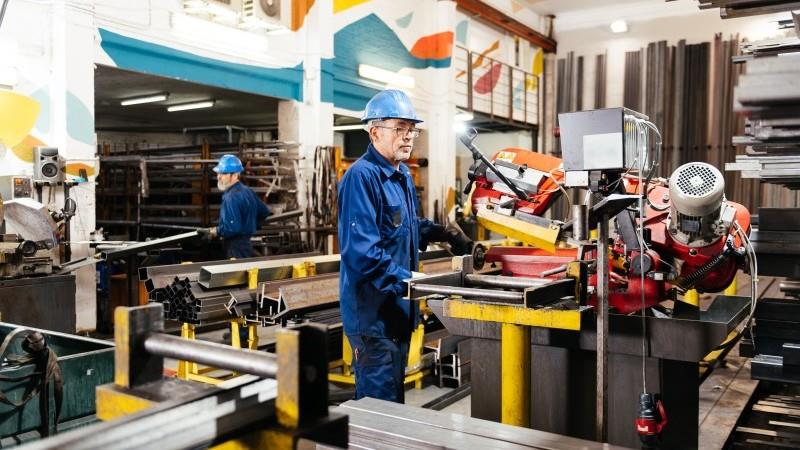
Czech Industry Shows Resilience
(MENAFN- ING)
Maintaining expansionary appetite
Czech PMI softened a bit in May but remained well above the expansion threshold. The reading was more robust than the markets had expected. Indeed, Czech manufacturing continues to show resilience and is in line with our recent marginal improvement in the growth outlook. Overall, May's PMI outcome is not a significant surprise.
Holding the line in expansion zone Source: S&P Global, Macrobond">
Rising energy and other input costs have pushed up intermediate goods prices, and with demand holding up, producers are increasingly able to pass these on to final prices. That follows more than two years of pricing pressure in manufacturing, with PPI broadly stagnant since mid-2023.
Competitive pressures at the global level have exerted long-term pressure on margins, resulting in cost-cutting measures that have manifested in more than three years of continuous layoffs in industry.
No wonder then that producers pass the costs on to customers whenever possible. And yes, this will reach consumers' wallets and lift inflation if consumer spending remains strong. PPI is one of the exogenous variables in our core inflation equation, so the producer price impact on the consumer price level is implicitly included in our econometric model.
Producer and consumer prices co-move in a rather loose wayProducer and consumer prices are clearly linked, with a correlation coefficient of around 0.4 based on monthly growth rates. This suggests that PPI and core inflation tend to move in the same direction over time. The two series are also cointegrated, pointing to a long-term equilibrium relationship when the two variables never drift apart for too long. However, the Granger causality test does not show a clear one-way influence from one series to the other, pointing to a more general connection via other forces that affect both measures.
Producer and consumer prices are not always friends Source: CZSO, ING, Macrobond">The ambiguous result of the Granger test is also illustrated by a long-term view graph. When measured in annual dynamics, producer prices move in the opposite direction compared to core inflation over many periods.
The two time series have similar long-term development when looking at levels, which is confirmed by the co-integration test: they're both tracking prices after all. However, my interpretation is that the two series are rather loosely connected, driven mainly by wider economic forces that tend to affect producers and consumers at different times and to varying degrees.
PPI may start closing the gap Source: CZSO, ING, Macrobond">And still, looking at levels should always be the start of any serious time series analysis, with some things being simply revealed at first glance. For instance, we see clearly that producer prices remained broadly stagnant between mid-2023 and the onset of the recent energy shock. Meanwhile, core consumer prices crawled up, driven by price increases in the services segment.
Sure, we all know this is the case, yet seeing the disparity directly is a different experience. Indeed, it will take time for producer prices to catch up and close the gap. Whether we will see a strong effect on core consumer prices soon enough is another question. And I believe the answer is not as straightforward as it seems, as this rather boils down to factors such as the structure of domestic demand, the fitness of the global economy, and cross-border competition. In any case, time will tell. Stay tuned.

Legal Disclaimer:
MENAFN provides the
information “as is” without warranty of any kind. We do not accept
any responsibility or liability for the accuracy, content, images,
videos, licenses, completeness, legality, or reliability of the information
contained in this article. If you have any complaints or copyright
issues related to this article, kindly contact the provider above.
Most popular stories
Market Research

More Story







Comments
No comment