





403
Sorry!!
Error! We're sorry, but the page you were looking for doesn't exist.
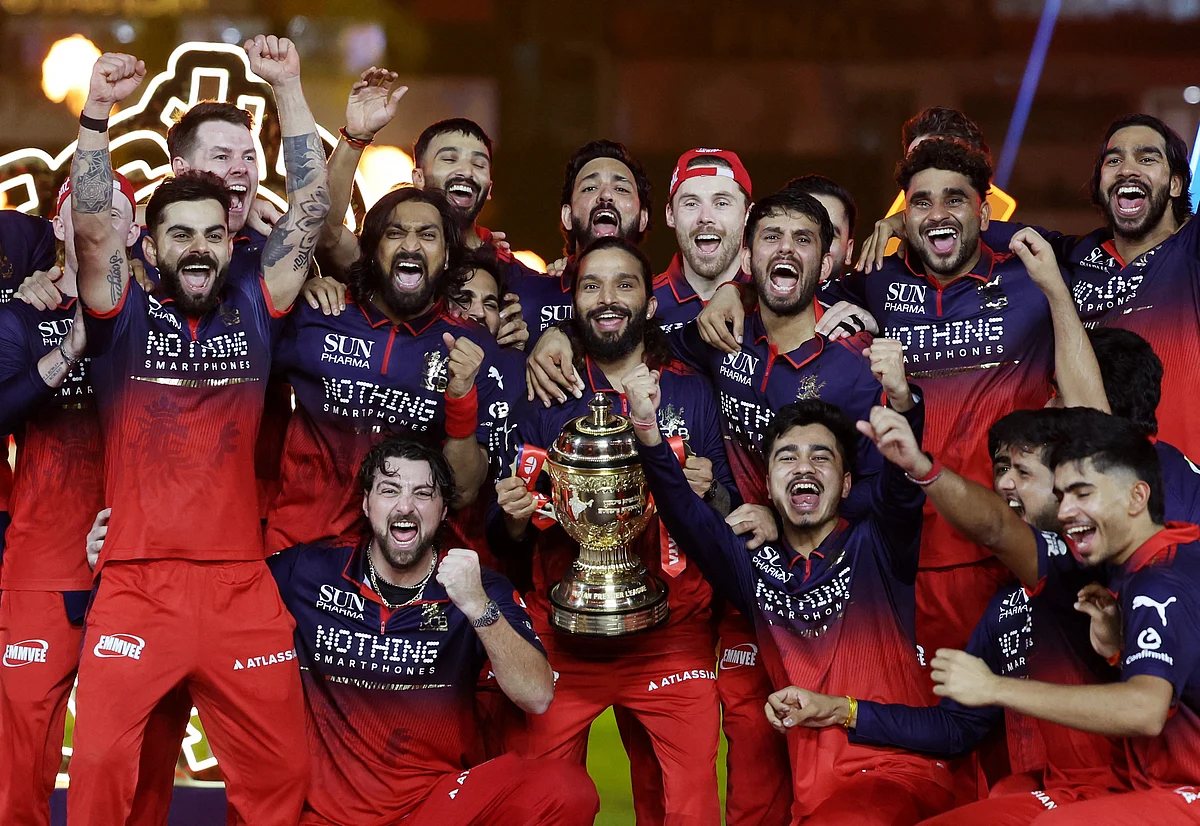
The IPL Effect: Is International Cricket Under Threat?
(MENAFN- Khaleej Times) IPL's financial power is reshaping cricket, transforming domestic pathways, player ambitions, and raising questions about the future of international bilateral cricket
- By: Rituraj Borkakoty
More than two decades ago, two of India's greatest cricketers of all time found themselves at a crossroads.
One was VVS Laxman, the elegant batsman from Hyderabad who could turn a cricket ground into his canvas.
Recommended For You US military disables Gambia-flagged ship attempting to reach Iranian portAnd the other was Harbhajan Singh, a wily off-spinner from Punjab capable of bringing the best of the batters to their knees with his guile and turn.
Yet Laxman and Harbhajan once faced a very tough decision - whether to continue playing cricket or leave the game for good.
Despite making it to the Indian team on the back of their prolific domestic seasons, Laxman and Harbhajan remained on the fringes, unable to hold on to their spots.
Laxman's parents - both doctors - gave him one more year to try and cement his place in the Indian team as they saw no future for their son just by toiling at empty stadiums in domestic cricket.
Backed by his uncle, the lanky batter accepted the challenge, forced his way back into the Indian team before scripting an epic 281 against a ruthless Australian team in 2001, which not just turned his fortunes around, but also transformed the way India played cricket.
In the same Test at the Eden Gardens in Kolkata, India's other big hero was Harbhajan, who took 13 wickets, including a first-innings hat-trick.
If Harbhajan were not backed by skipper Sourav Ganguly, who fought with the selectors for his inclusion, life would have taken a very different turn for the Punjab player.
After the death of his father in 2000, with his India career hitting a roadblock, Harbhajan was seriously considering leaving India for the US to become a truck driver and support his family.
India's cricket system was very different back in the day when some of the most talented players faded into oblivion. Unlike Laxman and Harbhajan, they didn't get the chance at the right time.
Today, the same country owns the second richest sports league in the world - the Indian Premier League (IPL).
Valued at $18 billion, the IPL trails only the NFL (National Football League) in terms of revenues. And it ranks higher than the NBA, MLB (Major League Baseball) and the English Premier League.
In 19 years of its existence, the IPL has surpassed sports leagues that have been around for several decades.
The biggest money-spinner has not only forced the world to take notice of its growth, but it has also quietly transformed the domestic cricket system in India.
In 2026, it's highly unlikely that an Indian player would need to make a tough decision on his cricket career if he doesn't make it to the national team.
Today, a big IPL contract can be a ticket to a good life, while even domestic cricketers enjoy salaries and facilities that previous generations could not even dream of.
"The IPL's money has strengthened the entire domestic structure. There are more tournaments, better salaries, improved facilities and greater professionalism. The BCCI deserves credit for distributing the money generated from the IPL to state associations to improve the game at the grassroots level," said senior Indian journalist Nikhil Naz told the Khaleej Times.
There was a time when an Indian cricketer - even if he was Sachin Tendulkar - needed to share his hotel room with a teammate on international duty.
“Now players don't even have to share rooms anymore, even in domestic cricket,” Naz said.
Not just the domestic cricket ecosystem, the explosion of the IPL has also changed the ambition of many cricketers for India.
"I also think aspirations have changed. Many players may never say this publicly because people could question their commitment or patriotism, but some youngsters would be perfectly happy with a successful IPL career. They are not going to lose sleep if they don't make the Indian team because they know a lucrative IPL deal can still transform their lives,” Naz said.
"The IPL can make players overnight stars. It gives them financial security, recognition and the opportunity to buy the cars, homes and lifestyle they dream of. That is the reality of modern cricket.
"At the same time, credit must go to the BCCI. It has built such a strong cricketing ecosystem that even talented domestic players now enjoy a level of financial freedom that previous generations could only dream about. Not every player will represent India, but many can still make a very good career out of the game."
Robust coaching systemAmid the success stories fuelled by the IPL's financial power, perhaps the most inspiring ones are those of youngsters who have emerged from humble backgrounds in India's heartland.
Vaibhav Sooryavanshi, Rajasthan Royals' 15-year-old opener, has become the toast of the cricket world with his freakish batting exploits this season.
But it was only a few years ago that Sooryavanshi's father had to sell a plot of land to help him chase his cricket dreams.
Spotted early by talent scouts, Sooryavanshi earned a trial at Rajasthan Royals where his shot-making ability stunned the coaches. The Bihar boy was then picked by them in the 2024 auction when he was only 13.
Another young talent, Sakib Hussain, made headlines for Sunrisers Hyderabad this season with his impressive bowling spells. But the 21-year-old didn't even have the money to buy boots when he was playing cricket in Bihar.
Joy Bhattacharya, the former Team Director of Kolkata Knight Riders, credits a robust coaching system for unearthing these talents.
“A vast coaching ecosystem has emerged across India. Specialist academies and coaches are working with young cricketers whose dream is to make it to the IPL. At the same time, every franchise has scouts operating at the grassroots level, identifying talent and reporting back to team management. In many ways, it has become a highly merit-based system,” Bhattacharya told the Khaleej Times.
"And once a player enters an IPL setup, even if he doesn't get a game, the exposure is invaluable. He gets access to world-class coaches, elite training facilities and the opportunity to learn alongside some of the best players in the world. That experience alone can transform a young cricketer.
"So when you look at players such as Vaibhav Sooryavanshi or Sakib Hussain, it's not just a story of good scouting. It's also about the enormous effort franchises put into developing talent. They invest in these players, nurture them and help them grow as cricketers."
Club vs countryWhen the IPL started in 2008 with billionaires and film stars making their foray into the cricket business, the rest of the cricketing world could barely make sense of the carnival-like atmosphere that it created in every match.
Now, 19 years of glorious success, the T20 league also posed a threat to international cricket.
It's the IPL that has become the cash cow for broadcasters and advertisers as its matches generate more money than most World Cup games.
The 2023-2027 IPL broadcast rights were sold for $6.4 billion dollars, which is far bigger than the ICC events rights (World Cups, Champions Trophies) - $3 billion - for the same period.
Chandresh Narayanan, who was the content head for the IPL website in 2000-2010, explained why India's T20 league is valued more by the broadcasters than the World Cups.
"The IPL's profitability can be explained by a very simple principle: every day, India wins during the IPL,” Narayanan told the Khaleej Times.
"In a World Cup, India may win on eight, nine or perhaps 11 days throughout the tournament. Take the 2023 ODI World Cup as an example. India played nine league matches, a semifinal and the final - 11 matches in total. When broadcasters invest heavily in ICC events, they calculate how many days India will be visible on screen because that is what drives value in the Indian market.
"For the ICC, the World Cup is a global event designed to grow the game across different regions. But broadcasters in India are primarily focused on the Indian audience. Matches involving smaller teams do not generate the same viewership or commercial returns.
"But the IPL is different. Every day, an Indian team wins - whether it is Mumbai, Chennai, Delhi, Punjab, Rajasthan or Hyderabad. Indian players are involved in every match, which means Indian fans have a reason to watch every day. When that happens, broadcasters win as well because the audience remains consistently engaged throughout the tournament.”
Narayanan believes the incredible commercial success the IPL could eventually harm the health of international cricket.
"I predicted many years ago that the IPL could eventually become a six- or even eight-month competition. People may find that difficult to imagine today, but the direction of travel is obvious,” he said.
"Don't be surprised if, in the future, overseas cricketers begin moving their base to cities like Mumbai or Goa because so much of the cricket economy revolves around the IPL ecosystem.
"Many IPL franchise owners already own teams in leagues around the world. They are becoming the motherships of global T20 cricket. A player who enters one of these franchise networks could spend the entire year within the same group - playing in India, then moving on to tournaments in the United States, the UAE and South Africa.
"The game is increasingly moving towards a franchise-based ecosystem, and the IPL sits right at the centre of it."
The ripple effects, according to Pakistani journalist Sanaullah Khan, are already visible.
"Australia have sent a second-string team for the Pakistan white-ball series because most of their star players were playing in the IPL,” Khan told the Khaleej Times.
"If this trend continues, cricket boards will face significant financial challenges. Bilateral series may not be ICC events, but they are still the lifeblood of international cricket. If Australia's biggest stars, for example, do not turn up for a tour of Pakistan, television ratings, sponsorship revenue and advertising income will inevitably suffer because it is those players who attract viewers.”
While it's still too early to speculate whether the IPL would pose a serious threat to international cricket, what cannot be denied is its success in transforming the game in India.
It's no longer a country where an elite player needs to make heartbreaking decisions about his cricket dreams.
“This (IPL) is the league where people like Mukesh Ambani and Shahrukh Khan came to buy teams; they brought their intelligence, their marketing ability and their financial knowledge into the system,” Joy Bhattacharya said.
“So this league benefited by getting some of the best brains in the country. When it started in 2008, the whole country was galvanised. Brendon McCullum played that stunning knock (158 off 73 balls) in the first match. He was hitting sixes for fun, Shahrukh Khan was watching, cheerleaders were dancing, it just took the breath away. So that was the grand start that the league got, and it never looked back.”
ALSO READ- Watch: Virat Kohli, Anushka Sharma celebrate IPL win with dance; video wins hearts 'I don't have words...': Patidar hails Kohli after RCB's IPL triumph

Legal Disclaimer:
MENAFN provides the
information “as is” without warranty of any kind. We do not accept
any responsibility or liability for the accuracy, content, images,
videos, licenses, completeness, legality, or reliability of the information
contained in this article. If you have any complaints or copyright
issues related to this article, kindly contact the provider above.
Most popular stories
Market Research

More Story






Comments
No comment