

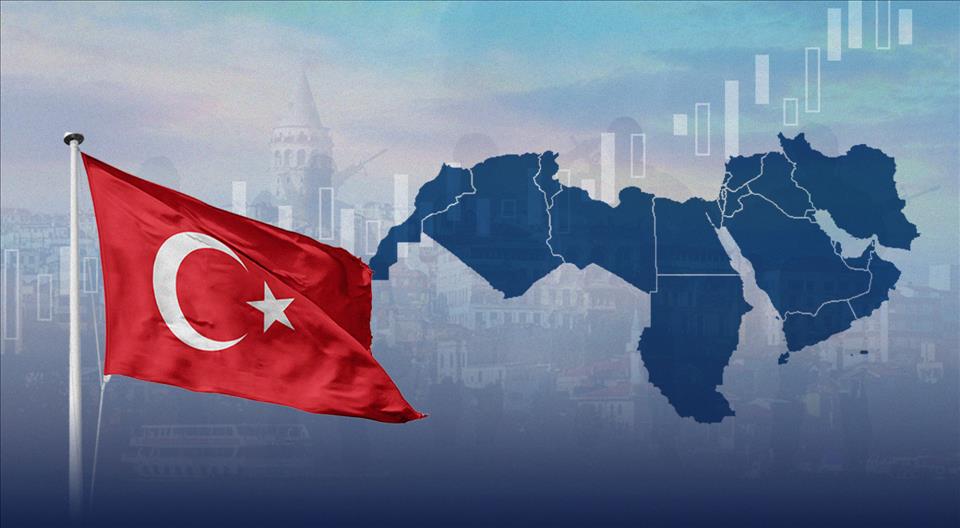
Türkiye's Regional Vision Seeks To Reshape Middle Eastern Security, But Can It Really?


Turkish Foreign Minister Hakan Fidan has proposed a new regional security architecture stretching from Pakistan to the Persian Gulf, describing it as a“golden opportunity” for Middle Eastern nations to strengthen cooperation based on mutual recognition of sovereignty and territorial integrity.
Fidan suggested the framework could include Pakistan, Türkiye, Saudi Arabia, Egypt, and Gulf states, with the possibility of Iran joining at a later stage.
He also indicated that Israel could eventually become part of the arrangement if it recognizes a Palestinian state based on the 1967 borders.
Perhaps, the Turkish diplomat's initiative is both courageous and exciting, presenting a real chance to bring about meaningful change and positively impact our future.
Talking to AzerNEWS, Geopolitical analyst Irina Tsukerman said Iran's geographic and political weight makes it impossible to build a sustainable regional security system while treating Tehran as merely an optional participant.
“Iran's position within the Middle East makes it impossible to separate the question of regional security from the question of Iranian participation. Tehran remains deeply connected to developments across the Gulf, Iraq, Syria, Lebanon, Yemen, and the broader maritime environment linking the Persian Gulf to the Red Sea. Any effort to construct a durable security framework inevitably encounters Iranian interests, capabilities, and networks. For that reason, Fidan's comments are best understood as an attempt to define the initial political geography of cooperation rather than a final institutional design.
The countries identified by Fidan already possess substantial incentives to work together. Saudi Arabia, Türkiye, Egypt, Pakistan, and the Gulf states share concerns regarding maritime security, trade corridors, economic development, energy infrastructure, counterterrorism, and regional stability. Their governments increasingly recognize that regional crises spill across borders and that coordination among major states has become more important as external powers demonstrate varying degrees of engagement and commitment. A framework built around those common interests could emerge without waiting for every regional actor to reach consensus on every strategic issue.”
Tsukerman argued that Iran occupies a unique position in the emerging framework, particularly as Saudi Arabia attempts to balance diplomatic engagement with long-standing strategic distrust toward Tehran.
“Saudi Arabia continues to pursue diplomatic engagement with Tehran while simultaneously viewing Iranian regional activities through the lens of long-term competition. Years of confrontation, proxy conflicts, and mutual suspicion have left a deep imprint on the strategic thinking of both governments. Diplomatic normalization has reduced tensions, opened channels of communication, and lowered the risk of direct confrontation, yet it has not erased the underlying concerns that continue to shape security calculations in Riyadh.
Türkiye's relationship with Iran reflects a similarly complex reality. Geography has compelled both countries to maintain functional relations despite recurring disagreements. Their interactions across Syria, Iraq, energy markets, regional diplomacy, and trade have produced a pattern of coexistence in which cooperation and competition frequently operate side by side. Turkish policymakers understand that excluding Iran from regional discussions does not eliminate Iranian influence. They also understand that granting Tehran a decisive role in defining regional institutions would generate resistance among many Arab partners.”
According to Tsukerman, the architecture envisioned by Fidan appears to rest on a smaller core bloc establishing common principles before expanding further across the region.
“As a result, the architecture Fidan appears to envision rests on the creation of a core group capable of establishing common principles and mechanisms of cooperation before broader regional expansion takes place. Sovereignty, territorial integrity, economic connectivity, and state-centered security cooperation provide the foundation for that effort. Those principles carry particular significance because they address many of the concerns repeatedly raised by Gulf states regarding regional interference and instability.
The future of such a framework ultimately depends on whether Iran finds value in participating under those conditions. Economic integration, infrastructure development, trade expansion, and regional stability could create incentives for engagement. Strategic mistrust, competing regional ambitions, and unresolved conflicts could just as easily limit Tehran's enthusiasm. Any lasting regional architecture will eventually require some level of Iranian participation, yet the process of building that architecture is likely to begin among countries whose interests already overlap to a greater degree than their differences divide them.”
On the Palestinian issue, Tsukerman said Fidan's proposal mirrors the diplomatic logic that has shaped Arab policy toward Israel since the Arab Peace Initiative of 2002.
“Fidan's formulation draws directly from a diplomatic tradition that has shaped Arab policy toward Israel for more than two decades. The Arab Peace Initiative introduced by then Crown Prince Abdullah in 2002 established a framework under which normalization with Israel would accompany the creation of a Palestinian state based on the 1967 lines and a negotiated resolution of the broader conflict. Throughout major regional upheavals, changing leaderships, shifting alliances, and evolving geopolitical realities, Saudi Arabia has maintained that framework as the foundation of its official position.
Recent developments have given the initiative renewed strategic importance. Saudi Arabia increasingly presents the proposal as evidence that a recognized pathway toward regional acceptance has existed for years. Through this approach, Riyadh seeks to demonstrate that the obstacles to comprehensive regional integration stem from unresolved political questions surrounding Palestinian statehood rather than from an absence of Arab willingness to engage.”
She also argued that Türkiye's growing alignment with Saudi Arabia reflects broader geopolitical shifts unfolding across the Middle East.
“Türkiye's alignment with this position reflects broader changes in regional politics. Decades of diplomatic relations, trade ties, and periods of security cooperation created a substantial foundation between Ankara and Jerusalem. At the same time, Turkish policymakers have become increasingly focused on strengthening ties with Saudi Arabia and other Gulf states across defense, economic, political, and strategic domains. Shared concerns regarding regional influence, emerging security arrangements, and long-term geopolitical positioning have encouraged greater convergence between Ankara and Riyadh on several major issues.
Participation in a broader regional bloc led by influential Muslim-majority states enhances Türkiye's diplomatic standing and expands opportunities for defense cooperation, economic coordination, and political consultation. The Palestinian issue provides a unifying platform around which diverse regional actors can organize collective positions despite their differences on many other matters.”
Tsukerman said Israel's expanding ties across the Gulf and wider regions have also reshaped Ankara's calculations.
“Israel's growing relationships across the Gulf, the Eastern Mediterranean, Africa, and parts of Asia have also altered the regional landscape. Those developments have expanded Israel's diplomatic reach and increased its appeal as a security and technology partner. For Ankara, the emergence of new regional alignments involving Israel intersects directly with Türkiye's own ambitions to function as a leading political, economic, and strategic actor. Closer coordination with Saudi Arabia creates additional opportunities to shape regional agendas and influence the terms under which broader regional cooperation develops.
Current political realities inside Israel make acceptance of the 1967-based framework highly unlikely in the near future. Fidan's proposal nevertheless allows the broader architecture to proceed independently of Israeli participation while preserving a clearly defined pathway for future inclusion. The practical effect is the creation of a regional structure rooted in Arab and Islamic cooperation whose membership criteria are established collectively by participating states.”
Turning to Pakistan's proposed inclusion in the framework, Tsukerman said the issue introduces a difficult balancing act for Gulf states that have significantly expanded ties with India in recent years.
“Any attempt to extend a Middle Eastern security framework eastward to Pakistan immediately encounters a reality that did not exist to the same extent a decade ago: the Gulf's strategic and economic future is now increasingly intertwined with India. While Pakistan has traditionally occupied a privileged place within the security calculations of several Gulf monarchies, particularly Saudi Arabia, the extraordinary growth of Gulf-India relations has fundamentally altered the diplomatic landscape.
The challenge lies in determining how a regional architecture can incorporate Pakistan without creating concerns in New Delhi that Gulf security arrangements are drifting toward a geopolitical alignment that privileges one South Asian partner over another.”
She noted that Saudi Arabia and the United Arab Emirates increasingly approach South Asia through different strategic priorities.
“For Saudi Arabia, Pakistan continues to occupy a place in strategic thinking that extends well beyond economics. Decades of military cooperation, defense consultations, training programs, and political engagement have created a level of institutional familiarity that remains difficult to replicate. Pakistani military capabilities, geographic position, and historical role as a trusted security partner continue to carry considerable weight in Riyadh.
A somewhat different picture emerges in Abu Dhabi, where economic statecraft increasingly serves as the organizing principle of foreign policy. The UAE's ambitions to become a leading global center for trade, finance, technology, logistics, artificial intelligence, and advanced manufacturing have elevated certain partnerships above others, and none has benefited more from this shift than India.”
Tsukerman stressed that India has become deeply embedded within the UAE's long-term economic strategy, making relations with New Delhi strategically indispensable.
“What makes this evolution particularly significant is the extent to which Emirati policymakers increasingly view India as a long-term pillar of their national development strategy. Indian capital, expertise, technology, labor, consumer markets, and business networks are deeply embedded within the UAE's economic future. High-level political engagement between Abu Dhabi and New Delhi has become increasingly frequent, while major bilateral initiatives reflect a relationship characterized by long-term planning rather than transactional cooperation.
Within that context, preserving trust with India has become a strategic imperative rather than simply a diplomatic objective.”
She concluded that the success of Fidan's proposed architecture would depend on ensuring that Middle Eastern security cooperation does not become entangled in India-Pakistan rivalries.
“For that reason, the success of Fidan's proposal would likely depend on maintaining a clear distinction between Middle Eastern security objectives and South Asian rivalries. Maritime security, infrastructure protection, counterterrorism cooperation, energy transit routes, economic resilience, and regional crisis management offer areas where Pakistan can contribute meaningfully without transforming the architecture into an arena for India-Pakistan competition.
Such an approach would allow Gulf states to preserve valuable security relationships with Islamabad while continuing to deepen one of the most important strategic partnerships of the twenty-first century with New Delhi. The delicate balancing act required to achieve that outcome reflects the broader transformation of the Gulf itself, where economic interdependence, geopolitical ambition, and regional security have become increasingly interconnected.”
Ankasam International Relations Specialist Goktuğ Çalışkan, on the other hand, argues that Iran's delayed inclusion should not be viewed as unrealistic or exclusionary, but rather as part of a phased regional integration strategy.
“Viewing Iran as a potential later addition to this architecture doesn't, in my opinion, represent an unrealistic approach. On the contrary, most regional security architectures begin with a limited core, then expand through confidence-building mechanisms. Iran's position here is delicate. Because Gulf security cannot be permanently established by excluding Iran. However, Iran's inclusion as a founding element from day one could also create serious security concerns in Gulf countries, particularly Saudi Arabia.
Therefore, I don't interpret Fidan's approach as an exclusionary move. Rather, I see it as a logic of gradual integration. Türkiye, as a country that can talk to Iran, deepen its relations with Gulf countries, and establish contact with actors like Pakistan and Egypt, is taking a balancing position here.”
Çalışkan noted that ongoing tensions between Tehran and Riyadh, alongside disagreements between Türkiye and Iran in Syria and elsewhere, make it difficult to place Iran at the center of a new security framework from the very beginning.
“It is known that Türkiye and Iran do not agree on every issue in the Syrian arena. There are also serious doubts between Tehran and Riyadh on issues such as Iraq, Lebanon, Yemen, Gulf security, and energy routes. Under these circumstances, placing Iran at the center of the initial table could complicate the process before it even begins. However, a security arrangement that excludes Iran is also incompatible with regional realities.
Therefore, in my opinion, the most rational model is this: In the first stage, a core foundation can be established between Türkiye, Pakistan, Saudi Arabia, Egypt, and the Gulf countries on issues such as crisis management, respect for sovereignty, border security, protection of energy lines, and diplomatic coordination against external interventions. In the second stage, mutually trust-building channels can be opened with Iran. In the third stage, Tehran can become a crisis-reducing part of this architecture.”
According to Çalışkan, the proposal reflects Türkiye's broader diplomatic strategy of avoiding rigid regional blocs while positioning itself as a balancing power capable of communicating with all sides.
“This is also an approach that demonstrates Türkiye's diplomatic capacity. Instead of creating sharp divisions between blocs in the region, Ankara is putting forward an idea that reduces the possibility of conflict, centers state sovereignty, and opens up space for all actors. For Iran, this architecture, if managed correctly, can turn into an opportunity to reduce the perception of encirclement.”
On the issue of Israel's participation, Çalışkan argued that Fidan's condition regarding recognition of a Palestinian state should not be interpreted as a simple diplomatic obstacle, but rather as an attempt to place the Palestinian question at the core of any future regional order.
“Making Israel's participation in this architecture conditional on recognizing a Palestinian state based on the 1967 borders seems like a rather difficult goal at first glance. Considering Israel's current domestic politics, coalition structure, and security rhetoric, such a step doesn't seem easy to take in the short term. However, Fidan's move shouldn't be interpreted as a narrow diplomatic condition. This is a strategic message that places the Palestinian issue at the center of regional security.
I believe Fidan is saying this: Israel's security cannot be sustained in a system where Palestinians are left without a state. If the Arab and Islamic countries in the region are to contribute to Israel's long-term security, the basis for this must be a just and recognizable Palestinian state.”
Çalışkan said the proposal does not completely close the door on Israel, but instead links future participation to internationally recognized legal principles surrounding Palestinian statehood.
“This approach doesn't completely close the door on Israel; it leaves the door open, but it ties the key to that door to the Palestinian issue. This condition can be seen not as an element that hinders the architecture, but rather as a principle that establishes the moral and political backbone of the platform. Because establishing a large-scale security order in the Middle East without resolving the Palestinian issue will always be incomplete.
Israel may not accept this condition today. But the condition itself generates diplomatic pressure on Israel. It also sends a message to Western actors: Regional countries no longer want to address security through plans imposed from outside. They want to define their own principles, priorities, and red lines.”
He also rejected the idea that the proposal represents the formation of an anti-Israel bloc, arguing instead that it reflects an effort by regional countries to take greater responsibility for their own security architecture.
“Therefore, I don't see this as the construction of an anti-Israel bloc. Rather, I interpret it primarily as the Arab and Islamic world assuming responsibility for security, followed by opening a path for Israel's participation based on international law. This is an extremely balanced position for Türkiye. Ankara both maintains its principled stance on the Palestinian issue and prevents the regional security architecture from becoming completely exclusionary.
The important point here is that the current Israeli government may not be ready for this vision. However, regional security architectures are designed to be more long-lasting than the daily political atmosphere. A condition that seems distant today may become a more realistic option tomorrow due to changing domestic politics, international pressure, and regional fatigue. Fidan's proposal addresses the search for order tomorrow as much as it addresses today's crisis.”
Turning to Pakistan's role within the framework, Çalışkan argued that its inclusion should not automatically be interpreted through the lens of India-Pakistan rivalry.
“At first glance, Pakistan's inclusion in this architecture might seem like it will extend South Asian rivalry to Middle Eastern security. However, I believe a careful distinction is necessary here. If Pakistan's inclusion is framed as a move against India, it will create a difficult situation for the Gulf states to manage. However, if Pakistan's role is defined through regional deterrence, military capacity, crisis management, and strategic weight within the Islamic world, this will not directly damage relations with India.”
According to Çalışkan, Gulf countries such as Saudi Arabia and the United Arab Emirates have significantly deepened ties with India in recent years, making it unlikely they would frame security cooperation with Pakistan as part of an anti-India alignment.
“Saudi Arabia and the UAE have significantly deepened their relations with India in recent years. New Delhi has become an important partner for the Gulf in energy, technology, defense industry, ports, logistics, food security, and investment. Given this reality, it is not expected that the Gulf states will present their security engagement with Pakistan as an anti-India stance.
Indeed, the most prominent feature of Gulf diplomacy in recent years has been its ability to act in multiple directions. Riyadh and Abu Dhabi can work with one actor in the security field while developing deep partnerships with another in the economic, technological, and energy sectors.”
Çalışkan stressed that the wording and scope of the proposed architecture would be critical in preventing perceptions that it is directed against India.
“In this context, if Pakistan's role is correctly defined, a balance can be achieved. For example, it could be clearly emphasized in the texts of this architecture that there is no orientation against any third country. The focus could be defined as sovereignty, territorial integrity, energy routes, maritime security, counter-terrorism, diplomatic contact in times of crisis, and regional deterrence. Such a formula would weaken the perception of a security alliance directly targeting India.”
He also emphasized Pakistan's broader strategic value within the proposed framework.
“Pakistan's contribution should also not be underestimated. Pakistan has a strong army, nuclear deterrence, historical military ties with the Gulf, and symbolic weight in the Islamic world. Defense relations with Saudi Arabia are not a newly established relationship. This bond has existed for a long time and is now gaining a more institutional character. However, while managing this relationship, the Gulf countries will take care to maintain their economic and strategic partnerships with India.”
Çalışkan further argued that Türkiye could play an important balancing role given its ties with Pakistan, the Gulf, and India simultaneously.
“I also see an important diplomatic opportunity here for Türkiye. Türkiye is an actor that has close relations with Pakistan, is developing its relations with the Gulf countries, and has the capacity to maintain balanced contact with India. Ankara's approach should therefore not be based on a polarizing reading of South Asia. On the contrary, the inclusion of Pakistan should be presented as an element that adds military depth and solidarity capacity in times of crisis to Middle Eastern security.
Ultimately, the Gulf countries do not want to lose India. Nor do they want to completely exclude Pakistan from the security equation. Therefore, the balance will be established in language and scope.”
Çalışkan concluded that Fidan's proposal should ultimately be viewed as an effort to shift the future of Middle Eastern security away from external powers and toward greater regional ownership.
“If the architecture is described as an extension of the India-Pakistan rivalry, problems will arise. If it is explained in terms of regional stability, respect for sovereignty, energy security, and crisis management, the Gulf countries can maintain their relations with New Delhi while continuing security cooperation with Pakistan.
Overall, Fidan's proposal should be read as an attempt to move the future of Middle Eastern security from the initiative of external actors to the responsibility of the countries in the region. This idea may not immediately transform into a fully institutional structure. However, considering the conditions in the region, it is an extremely timely, strategic, and forward-thinking move.
Türkiye is not in a position to escalate the crisis here. On the contrary, it presents itself as a central country that calls for regional reason through sovereignty, territorial integrity, diplomatic coordination, and a realistic pursuit of peace.”

Legal Disclaimer:
MENAFN provides the
information “as is” without warranty of any kind. We do not accept any
responsibility or liability for the accuracy, content, images, videos,
licenses, completeness, legality, or reliability of the information
contained in this article. If you have any complaints or copyright issues
related to this article, kindly contact the provider above.
Comments
No comment