





403
Sorry!!
Error! We're sorry, but the page you were looking for doesn't exist.
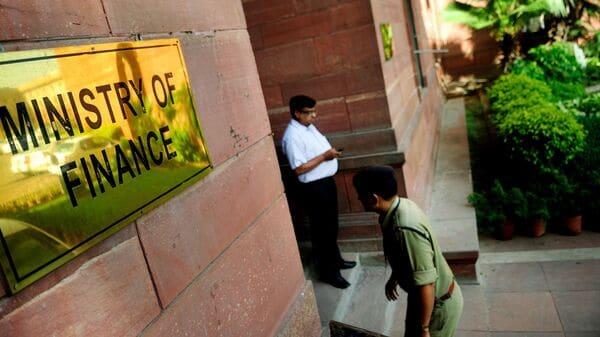
India's Fiscal Deficit Surges In April As Receipts Drop, Spending Jumps
(MENAFN- Live Mint) New Delhi: India's fiscal deficit surged to ₹3.62 trillion in April, nearly doubling from a year earlier, driven by a sharp decline in revenue receipts and a jump in expenditure in the first month of the ongoing financial year.
The decline in receipts followed the Centre's decision in March to cut excise duty on petrol and diesel by ₹10 per litre each to shield consumers from elevated global crude prices due to the war in West Asia, resulting in a revenue loss of nearly ₹14,000 crore.
The fiscal deficit in April, reflecting the gap between expenditure and revenue financed by borrowing, reached 21.4% of the ₹16.96 trillion budget target for FY27, according to the latest accounts released by the Controller General of Accounts (CGA) on Monday.
Fiscal deficit in April 2025 stood at ₹1.86 trillion.
Also Read | Govt to help 150,000 farmers access machinery, curb stubble burningThe deterioration was driven primarily by a steep fall in government receipts. Total receipts, excluding borrowings, declined 23.8% year-on-year to ₹2.13 trillion in April from ₹2.79 trillion a year earlier. Revenue receipts fell to ₹2.03 trillion from ₹2.57 trillion, while net tax revenue declined to ₹1.78 trillion from ₹1.90 trillion. Non-tax revenue witnessed an even sharper drop, falling to ₹24,293 crore from ₹67,160 crore in April 2025, the CGA data showed.
At the same time, government spending rose significantly. Total expenditure increased 23.5% year-on-year to ₹5.75 trillion in April from ₹4.66 trillion in the year-ago period. Revenue expenditure rose to ₹3.85 trillion from ₹3.06 trillion, while capital expenditure increased nearly 19% to ₹1.90 trillion from ₹1.60 trillion.
The government has budgeted a fiscal deficit of 4.3% of gross domestic product, or about ₹16.96 trillion, for FY27 and and is expected to rely on stronger tax collections and non-tax receipts in the coming months to keep the deficit within the target.
Combination effectThe April fiscal position reflects a combination of weaker receipts and front-loaded expenditure at the start of the financial year. Experts, however, caution against reading too much into the first month's data as direct tax collections, dividends from the Reserve Bank of India and public sector enterprises, and GST settlements are unevenly distributed throughout the year.
"Fiscal deficit was lowered in absolute terms to ₹15.2 trillion in 2025-26 from ₹15.8 lakh crore in 2024-25, reflecting continued fiscal consolidation. This was achieved despite gross tax buoyancy moderating to 0.7 due to personal income tax and GST reforms. Going forward, meeting the 2026-27 fiscal deficit target of 4.3% of GDP may be supported by enhancing tax revenue buoyancy and accelerating capital expenditure growth, underscoring the government's commitment to sustaining economic momentum," said D.K. Srivastava, chief policy advisor, EY India.
Also Read | India turns to Canada potash asset as West Asia war fuels supply concernsThe food subsidy expenditure increased nearly 50% year-on-year to ₹21,600 crore in April from ₹14,423 crore in the corresponding month last year. The outgo accounted for about 9% of the FY27 budget allocation of ₹2.28 trillion, underscoring the government's continued focus on food security programmes. Urea subsidy spending also rose 57% to ₹19,796 crore from ₹12,646 crore a year ago, with 17% of the annual allocation already utilised in the first month of the fiscal year.
Significant increaseThe increase in capital expenditure is significant as the government continues to rely on public investment to support economic growth. Front-loading of capital spending in the initial months of the fiscal year is generally viewed positively because it creates demand, crowds in private investment and supports infrastructure creation.
Also Read | Textiles ministry plans ₹1,000-crore corpus to boost silk production, exportsA notable feature of the April accounts was the sharp rise in interest payments. The Centre spent ₹1.10 trillion on servicing debt during the month, compared with ₹93,460 crore a year ago, reflecting the growing burden of public debt. Interest payments alone accounted for more than 54% of revenue receipts during April, compared with around 36% in the same month last year.
The revenue deficit widened sharply to ₹1.82 trillion from ₹49,001 crore a year ago. Similarly, the primary deficit, which excludes interest payments, rose to ₹2.53 trillion from ₹92,872 crore.

Legal Disclaimer:
MENAFN provides the
information “as is” without warranty of any kind. We do not accept
any responsibility or liability for the accuracy, content, images,
videos, licenses, completeness, legality, or reliability of the information
contained in this article. If you have any complaints or copyright
issues related to this article, kindly contact the provider above.
Most popular stories
Market Research

More Story





Comments
No comment