





403
Sorry!!
Error! We're sorry, but the page you were looking for doesn't exist.
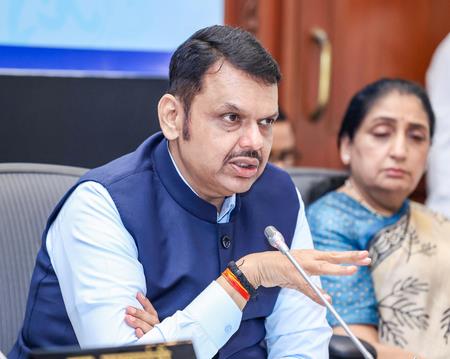
The Rs 36,000-Crore Tightrope: Mahayuti's Strategy To Keep Ladki Bahin Yojana Fiscally Sustainable
(MENAFN- IANS) Mumbai, June 1 (IANS) The Mukhya Mantri Majhi Ladki Bahin Yojana, which served as the political bedrock for the Mahayuti alliance's decisive victory, is currently navigating its most critical governance phase. Having successfully delivered immediate political dividends, the scheme is undergoing an aggressive mid-course correction driven by immense fiscal pressures, changing its trajectory from an“all-inclusive handout” to a highly rationalised targeted assistance programme.
The fiscal architecture of the scheme has changed dramatically over the last few months. Following a rigorous verification exercise and mandatory e-KYC drive that concluded on April 30, 2026, the state government has significantly pruned its database to curb duplicate, fraudulent and ineligible entries.
Active beneficiaries have declined from a peak of 2.43-2.46 crore in late 2025 to approximately 1.66-1.70 crore. Nearly 73 lakh to 80 lakh women have been removed from the payout cycle. This has led to a verbal duel between the ruling Mahayuti alliance and the opposition Maha Vikas Aghadi.
Around 50 lakh applicants were omitted because they failed to complete the verification process or update their records by the April 30 deadline.
Roughly 12 lakh women were flagged for exceeding the annual family income ceiling of Rs 2.5 lakh, while a significant number of government employees were also identified during the verification process.
RTO data integration successfully weeded out nearly 5 lakh women whose families owned registered four-wheelers. More than 5 lakh women were debarred due to overlapping monetary benefits from parallel agricultural or social security schemes such as the Namo Shetkari Yojana. Additionally, over 14,000 cases of men allegedly misrepresenting their identities to siphon off the Rs 1,500 monthly stipend were detected and stopped.
Senior government officials have ruled out any further extensions to the e-KYC window or fresh enrolments, meaning the current beneficiary base is effectively capped to control the ballooning financial outgo.
Amid the ongoing debate, Deputy Chief Minister and Shiv Sena leader Eknath Shinde said the government's flagship Ladki Bahin Yojana would continue, while Minister for Women and Child Development Aditi Tatkare clarified that no beneficiary's application under the scheme had been rejected.
However, NCP-SP Working President and MP Supriya Sule demanded that an independent financial and administrative audit of the scheme be conducted.
“The money of the honest tax-paying people of Maharashtra - exactly how and to whom was it diverted improperly, who is responsible for this, and who the actual beneficiaries were - all this information must be brought transparently before Maharashtra. This is our firm demand,” she said.
Against this backdrop, especially in view of the annual financial burden of Rs 36,000 crore, the fate of the Ladki Bahin Yojana hinges on a delicate balancing act between political compulsion and fiscal survival.
The recent e-KYC verification exercise is being viewed as an explicit strategy to trim excess expenditure so that the core beneficiary base remains financially manageable. By keeping the beneficiary pool strictly capped at around 1.6 crore eligible women, the state can project fiscal discipline while attempting to keep its core welfare commitment intact.
Over the next few fiscal cycles, some social sector experts believe that the state may integrate the Ladki Bahin Yojana with long-standing social security schemes such as the Sanjay Gandhi Niradhar Yojana or the Shravanbal Yojana for elderly and destitute groups to streamline administrative expenditure.
The transition, however, has not been smooth. The abrupt deletion of names has triggered significant grassroots friction. Ground-level workers, including Anganwadi staff, report widespread anger among rural women who missed the e-KYC deadline or were allegedly flagged incorrectly by automated systems.
The Opposition has used the issue to target the government, accusing it of adopting a“use and throw” approach after the elections and questioning accountability for the estimated Rs 288 crore reportedly distributed to unverified accounts before the e-KYC drive.
According to observers, the Mahayuti government is likely to protect cash transfers for the current 1.66 crore beneficiaries to avoid a public backlash. However, it may have to do so at the cost of compressed capital expenditure, delays in industrial infrastructure payouts and increasing pressure on developmental allocations across other state departments.
(Sanjay Jog can be contacted at...)

Legal Disclaimer:
MENAFN provides the
information “as is” without warranty of any kind. We do not accept
any responsibility or liability for the accuracy, content, images,
videos, licenses, completeness, legality, or reliability of the information
contained in this article. If you have any complaints or copyright
issues related to this article, kindly contact the provider above.
Most popular stories
Market Research

More Story





Comments
No comment