





403
Sorry!!
Error! We're sorry, but the page you were looking for doesn't exist.
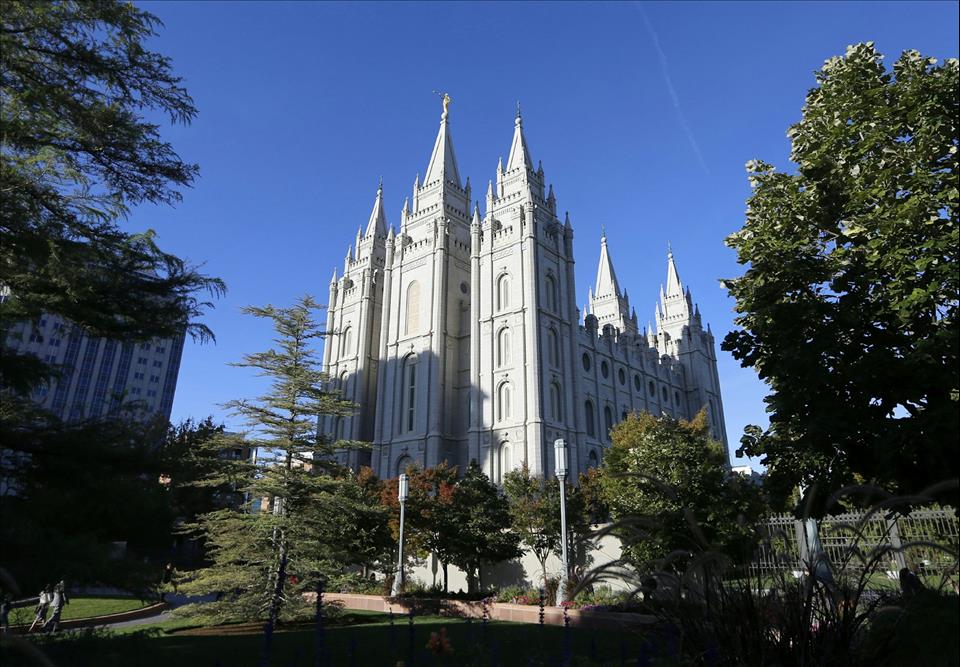
For 2 Centuries, Latter-Day Saints Have Revered Religious Freedom But Their Definition Is Evolving
Author: Benjamin Park
(MENAFN- The Conversation) On July 5, 2026, the Church of Jesus Christ of Latter-day Saints is encouraging its American members to participate in a special fast: a day to“express gratitude for religious liberty and to pray that it be strengthened throughout the world,” in the words of its top three leaders.

The fast will coincide with the United States' semiquincentennial celebrations. For Latter-day Saints, the 250th anniversary commemorations are not merely a historic milestone for the country, but an opportunity to reflect on their faith's relationship to the American experiment. In the church's early decades, that relationship often tested the boundaries of religious liberty – and the church's own understanding of that principle has been evolving ever since.
Divine planFrom the faith's beginnings in the 1830s, founder Joseph Smith frequently emphasized the significance of religious liberty. In one 1843 sermon, for example, Smith explained that“civil and religious liberty... were diffused into my soul by my grandfathers,” both of whom had fought in the war of independence.
Smith's personal connection to the Revolution and the nation's founding documents were central to the faith's developing theology. Latter-day Saints believe that their church is a restoration of Jesus'“only true and living church,” and that America's founding helped make that possible. In other words, Mormonism exists because of the United States, specifically its tradition of religious freedom enshrined in the Constitution's First Amendment.
According to this logic, America's founding was a crucial part of God's divine plan, accomplished by chosen servants. Its founding documents are treated with reverence, especially the Constitution.
One of Smith's own revelations declared that God“established the Constitution of this land, by the hands of wise men whom I raised up unto this very purpose,” suggesting divine intervention.
'Kingdom of God'However, Latter-day Saints soon came to doubt whether the United States was truly a land of religious freedom.
Early on, the small Mormon church faced persecution – especially in Missouri and Illinois, where state-sanctioned mobs forced members to flee. After Smith was lynched in 1844, his successor, Brigham Young, decided to lead Latter-day Saints outside the country's borders into present-day Utah, which was then northern Mexico.
Yet on their path to the Great Basin region, the federal government enlisted a group of church members to serve in the Mexican-American War. Known as the Mormon Battalion, they marched into Mexican territory under an American flag with only 13 stars. It was a symbolic protest: the U.S. they hoped to represent was the one that existed during the American Revolution, not the one with 28 states that had chased them out. They saw their own church, not the current government, as the revolutionaries' true inheritor.
Once the war was over, the U.S. annexed much of Mexico's land, including the Utah region. For about two decades the church had latitude to establish what it called its“Kingdom of God” in the West, in line with church doctrine. But the federal government soon cracked down, particularly on the church's commitment at the time to polygamy and theocracy: beliefs that Mormons insisted were protected by the First Amendment.
The ensuing legal and political battles lasted for four decades, testing the boundaries of American religious liberty. Only after the Supreme Court ruled against a church member with two wives in 1879, and Congress passed legislation to further enforce anti-polygamy laws, did the church publicly forfeit the practice in 1890.
Yet even amid these struggles, Latter-day Saint devotion to the founding generation continued. In 1877, for example, Wilford Woodruff, who later became president of the church, declared that he had received a vision of the signers of the Declaration of Independence. The signers“gathered around me, wanting to know why we did not redeem them” by offering them Latter-day Saint ordinances for the deceased.
Though Woodruff's vision has become the subject of Mormon folklore, it represents how deeply a certain strain of Americanism became woven into church culture in the 19th century. Just as Smith's revelations had done a generation before, this vision and the sentiments behind it elevated the Declaration of Independence and the U.S. Constitution to quasi-scripture.
Shifting focusDuring the 20th century the church continued to“Americanize,” such as by embracing U.S. capitalism and participating in the two-party system. Talk about religious freedom shifted away from primarily seeking protection for religious minorities toward protection for their own theological commitments as part of a Christian mainstream.
By the mid-1900s, church leaders had embraced a conservative view of politics and law that championed limited government. Paralleling broader American attitudes during the Cold War, which pitted“godless” Soviet communism against American democracy and freedom of religion, Latter-day Saints used the language of religious freedom to advocate for their own interpretations of religion's role in the public square.
Latter-day Saint leaders' list of perceived threats evolved from New Deal legislation and civil rights protections to abortion, the Equal Rights Amendment and, finally, homosexuality – similar to other conservative Christian groups' concerns. The church got involved in a number of legal cases and campaigns opposing same-sex unions.
Since the 2015 Supreme Court decision in Obergefell v. Hodges, which legalized same-sex marriage across the United States, the church's public policy stance has focused on compromise, balancing protection of religious liberties with protection against discrimination for LGBTQ+ people in housing and employment.
A global churchWhat becomes clear across the past two centuries is that definitions of religious freedom have substantially changed, including for Latter-day Saints. In the 19th century, church members focused on protecting all minority religious groups like themselves against the Protestant majority. Today, the church's messaging on religious freedom, at least in the United States, usually concerns protecting beliefs that clash with secular progressivism and LGBTQ+ protections. Overall, its approach has largely aligned with the religious right.
Equally significant, a majority of the church's members now live outside the United States, and it is eager to present an image that is less American and more universal. Instead of elevating the Declaration of Independence and the Constitution as quasi-scripture, leaders tend to highlight principles of religious freedom that are applicable across the globe.
The July fast will highlight“the importance of the Declaration of Independence and the Constitution and how these documents support religious freedom,” but it will also call for expanding liberty around the world. The day will be an opportunity for Latter-day Saints to reflect on their own place in the American story – a place that is still being defined.
Institution:Sam Houston State University

Legal Disclaimer:
MENAFN provides the
information “as is” without warranty of any kind. We do not accept
any responsibility or liability for the accuracy, content, images,
videos, licenses, completeness, legality, or reliability of the information
contained in this article. If you have any complaints or copyright
issues related to this article, kindly contact the provider above.
Most popular stories
Market Research

More Story








Comments
No comment