





403
Sorry!!
Error! We're sorry, but the page you were looking for doesn't exist.
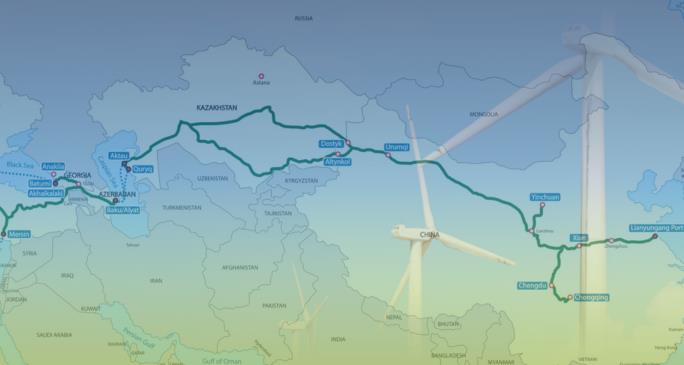
Azerbaijan Seeks To Anchor Eurasia's Future Through Green Energy Corridors
(MENAFN- AzerNews)
Ulviyya Poladova
Read more
Azerbaijan is increasingly positioning itself as a strategic hub of connectivity across Eurasia, where energy, transport, and digital infrastructure are becoming tightly interlinked. Speaking at the 13th World Urban Forum (WUF13) in Baku, Energy Minister Parviz Shahbazov highlighted the country's evolving role not only in ensuring energy security but also in advancing green transition, sustainable urban development, and regional integration.
The global system is currently undergoing a profound restructuring. The war in Ukraine and the Middle East, disruptions in supply chains, Europe's energy crisis, and intensifying competition among global powers have forced countries to seek alternative trade routes, diversify energy supplies, and form new regional partnerships.
It is no coincidence that Shahbazov emphasised the growing importance of energy lines, transport corridors, fibre-optic networks, and electricity interconnectors, describing them as the new "arteries" of the global system. In the modern world, geopolitical influence is no longer defined solely by military power or natural resources. Increasingly, it depends on a country's ability to provide stable connectivity, facilitate economic integration, and ensure secure flows of energy, goods, and information.
At the heart of this strategy is the recognition that, in today's geopolitical and geoeconomic environment, connectivity itself is strategic infrastructure. Pipelines, power interconnectors, fibre-optic routes, and multimodal transport corridors. For Azerbaijan, this translates into reinforcing the Middle Corridor (Trans-Caspian International Transport Route) with parallel "green energy corridors".
One of the most significant aspects of this strategy is the development of "green energy corridors" alongside the Middle Corridor transport route. The Middle Corridor, connecting China and Central Asia to Europe via the Caspian region and the South Caucasus, is rapidly gaining prominence as an alternative to traditional trade routes. Geopolitical instability in other regions has increased international interest in diversified logistics networks, giving Azerbaijan a unique opportunity to become a strategic transit hub for Eurasian commerce.
Through the "green" energy corridors Caspian-Black Sea-Europe, Azerbaijan-Türkiye-Europe, as well as through the Trans-Caspian and East-West, the renewable energy potential of Azerbaijan and Central Asia is integrated into a single system. Combined with fiber-optic components, these projects will create a long-term, diversified electrical and information bridge with Europe.
What makes Azerbaijan's approach particularly notable is that renewable energy development is viewed not simply as an environmental initiative, but as a core element of national economic and geopolitical strategy. The country's plans to create 8 GW of renewable energy capacity demonstrate its intention to adapt to the global energy transition while simultaneously strengthening its strategic importance. According to Shahbazov, around 2 GW of renewable capacity will be integrated into the national energy system as early as next year.
This transition carries implications far beyond increased electricity generation. It represents a structural transformation of Azerbaijan's economy, including industrial modernization, energy diversification, and reduced carbon emissions. The minister has also noted that these projects could cut annual emissions by approximately 2.4 million tons while supporting the development of green urbanization and sustainable infrastructure.
Earlier in an interview with Euronews, President Ilham Aliyev stated that Azerbaijan has presented large-scale projects on "smart cities" and "green energy" across the territories of Karabakh and East Zangezur, which were previously affected by conflict. According to him, these regions have become a unique example of reconstruction and development from scratch, where modern urban planning, digital infrastructure, and renewable energy are being introduced simultaneously.
Energy infrastructure plays a central role in this transformation. As the President noted, 307 megawatts of hydroelectric capacity have already been commissioned in Karabakh and East Zangezur. In addition, solar power plants with a total capacity of 340 megawatts are currently under construction. These projects are designed to ensure that the region is not only energy self-sufficient but also integrated into Azerbaijan's wider energy system.
It must be noted that, driven by the visionary policies and strong cooperation among the leaders of Kazakhstan, Uzbekistan, and Azerbaijan, the "Green Corridor" initiative is now being implemented. The project, which began with a Memorandum of Understanding in May 2024, was further consolidated through a strategic partnership agreement signed by the presidents of the three countries during the COP29 summit in Baku in November of the same year. This landmark document marked the beginning of a new phase, not only in energy generation but also in the cross-border transmission of energy.
Azerbaijan's evolving role as a connectivity hub rests on more than geography. By fusing renewable buildout with smart urban systems and regional interconnectors, the country can move up the value chain from energy transit to an orchestrator of integrated infrastructure. If it can deliver on grid modernization, investment frameworks, and human capital, Azerbaijan will not only decarbonize portions of its own economy but also supply the connective tissue that enables cities and industries across Eurasia to thrive with less energy and lower emissions.

Legal Disclaimer:
MENAFN provides the
information “as is” without warranty of any kind. We do not accept
any responsibility or liability for the accuracy, content, images,
videos, licenses, completeness, legality, or reliability of the information
contained in this article. If you have any complaints or copyright
issues related to this article, kindly contact the provider above.
Most popular stories
Market Research

More Story


Comments
No comment