

Jordanian Exporters Prepare For EU Carbon Border Rules As Industry Pushes Green Transition


Amman, June 1 (Petra) -- Jordan's industrial sector is stepping up preparations to meet new European Union carbon-emissions requirements that are expected to reshape export procedures for a range of products entering the bloc, as manufacturers seek to preserve their competitiveness in one of the Kingdom's key markets.
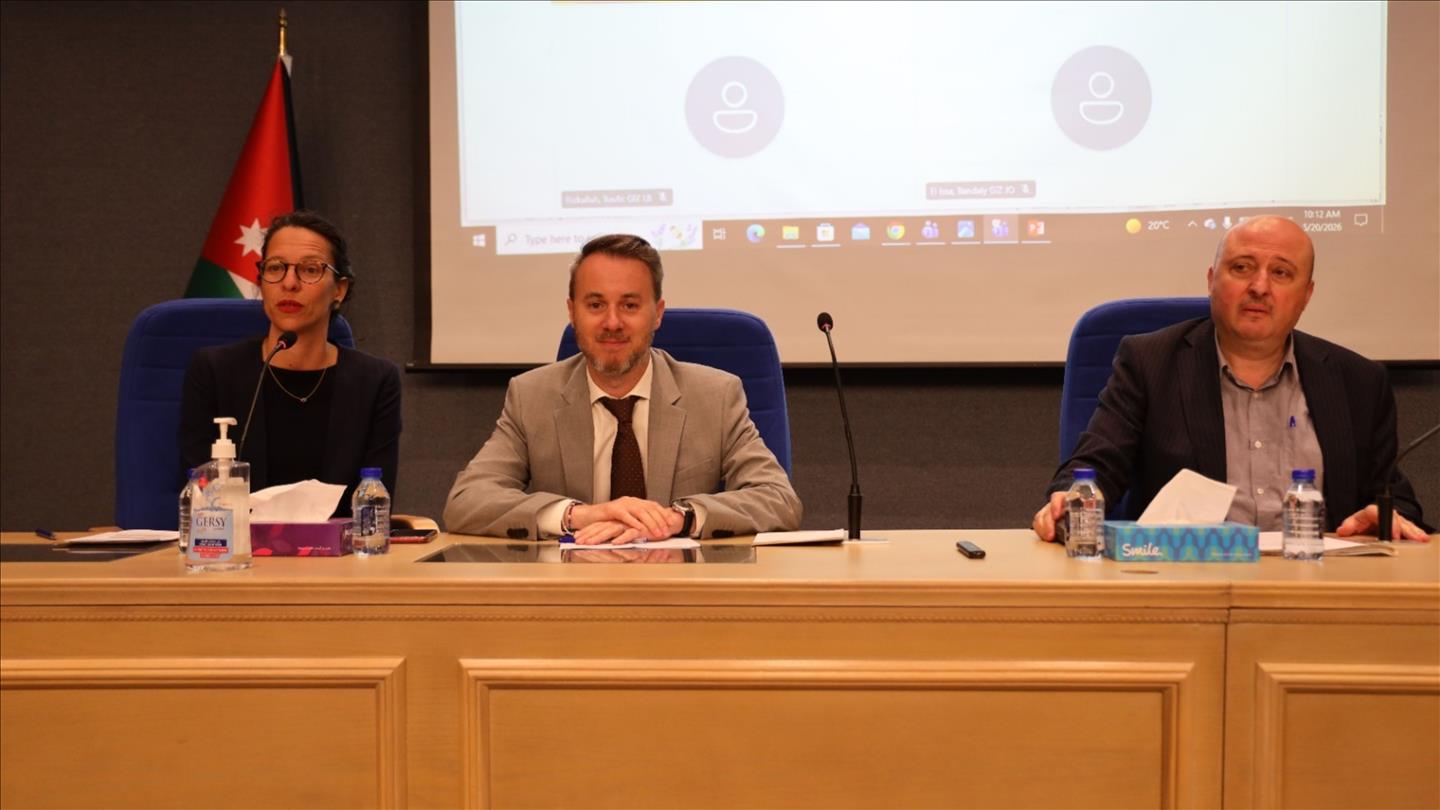
The issue was the focus of a consultative session organized by the Amman Chamber of Industry in cooperation with the Ministry of Industry, Trade and Supply and the European Union Delegation to Jordan, bringing together industrial companies, government institutions, energy-auditing firms and international development partners.
The discussions centered on compliance with the European Union's Carbon Border Adjustment Mechanism (CBAM), which requires exporters in selected sectors to report and verify the carbon emissions associated with their products.
Experts from the European Union and international donor organizations briefed participants on the latest developments related to the mechanism and its implementation requirements, particularly for sectors currently covered by the regulations, including fertilizers, aluminium, iron and steel, cement, hydrogen and electricity.
Participants were presented with detailed explanations of how additional financial obligations linked to carbon emissions will be calculated based on emissions generated throughout the manufacturing process, including those associated with raw materials and production inputs.
The session also addressed procedures for accrediting entities responsible for verifying carbon-emissions data submitted by industrial facilities, a requirement that will play a central role in future compliance with European regulations.
As industries adapt to the evolving regulatory environment, the Amman Chamber of Industry announced that it is developing a Green Guidance Platform as part of an expansion of its Industrial Waste Exchange Platform launched last year.
The new platform is expected to provide advisory services covering green industrial transformation, resource-efficiency practices, sustainability standards, circular-economy models, responsible business practices and compliance with environmental regulations.
Representatives of the German Agency for International Cooperation (GIZ), the German Development Bank (KfW), the United Nations Industrial Development Organization (UNIDO) and the European Bank for Reconstruction and Development (EBRD) outlined support programs designed to enhance industrial competitiveness and assist manufacturers in reducing carbon emissions and advancing green-transition initiatives.
Participants emphasized that the European regulations, while presenting new compliance challenges, could also create opportunities for Jordanian manufacturers to strengthen their position in international markets through greater efficiency and sustainability.
They called for integrated technical and financial support to help industrial companies modernize production processes, improve energy efficiency, expand renewable-energy use and adopt advanced manufacturing technologies capable of reducing carbon emissions and enhancing export competitiveness.
The session reflected growing efforts by both the public and private sectors to position Jordanian industry for a global trading environment in which environmental performance and carbon accountability are becoming increasingly important determinants of market access.
//Petra// RZ

Legal Disclaimer:
MENAFN provides the
information “as is” without warranty of any kind. We do not accept any
responsibility or liability for the accuracy, content, images, videos,
licenses, completeness, legality, or reliability of the information
contained in this article. If you have any complaints or copyright issues
related to this article, kindly contact the provider above.
Comments
No comment