




403
Sorry!!
Error! We're sorry, but the page you were looking for doesn't exist.
UAE Turns Desert Into High-Tech Farms To Secure Food Supply And Export Climate-Smart Agriculture
(MENAFN- Khaleej Times) For decades, food security in the Gulf was framed as a logistical challenge. Countries with limited arable land and harsh climatic conditions depended heavily on imports, making supply chains central to national stability. The UAE was no exception. Today, nearly 90% of the country's food supply is imported, a reality shaped by desert terrain, limited freshwater resources, and rising climate pressures.
Yet rather than attempting to replicate traditional agricultural systems unsuited to its environment, the UAE has begun pursuing a fundamentally different approach. The country is increasingly positioning itself as a testing ground for controlled-environment agriculture, where food production is driven less by rainfall and soil quality and more by engineering, automation, and climate-controlled systems. The shift is not purely agricultural. It is strategic. Food security in the UAE is now being treated as a national resilience issue tied directly to technology, sustainability, and long-term economic diversification.
Recommended For You US military disables Gambia-flagged ship attempting to reach Iranian portThe UAE is not trying to imitate traditional farming models developed in temperate climates. It is attempting to redefine how food can be produced under environmental constraint and, in doing so, create systems that may eventually be exportable to other climate-vulnerable regions.
Agriculture without seasons
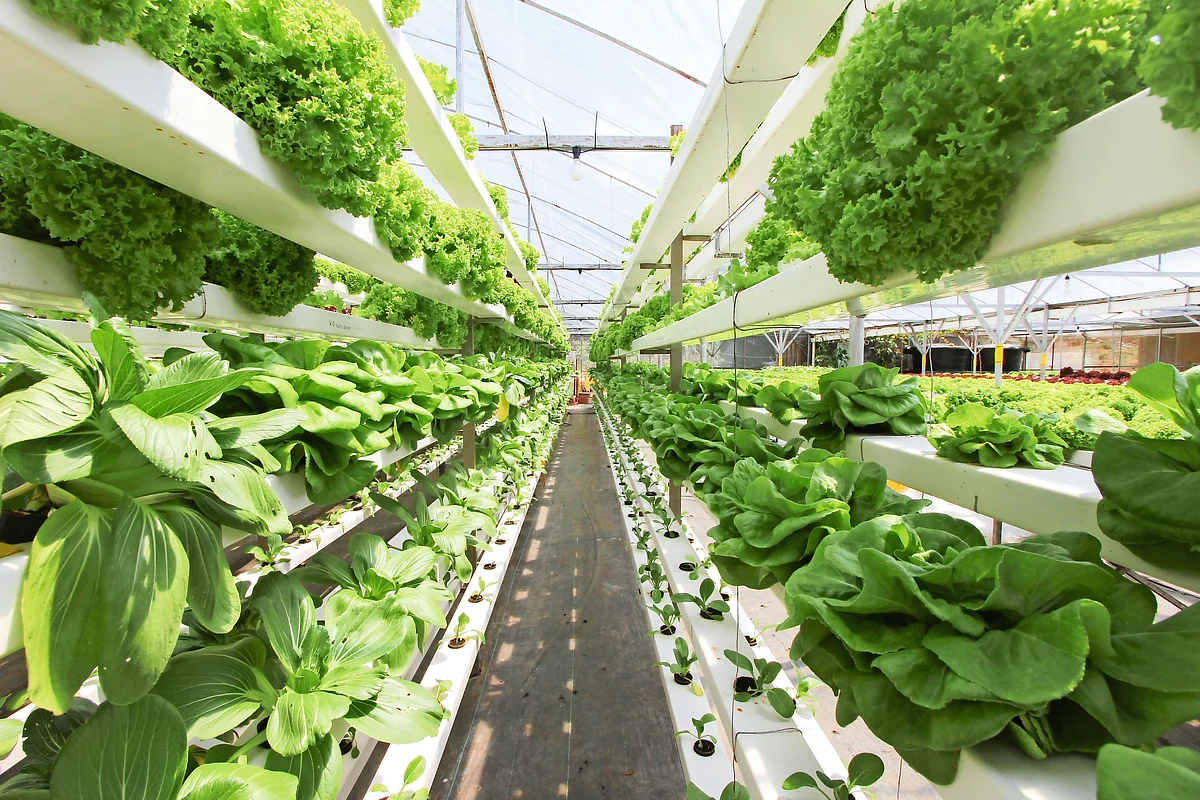
One of the clearest signs of this transition is the rapid expansion of vertical farming and hydroponic agriculture across the country. These systems allow crops to be cultivated indoors within fully controlled environments, where temperature, humidity, lighting, nutrient delivery, and airflow are regulated through data-driven systems.
In practical terms, this means farms are no longer dependent on seasons or external climate conditions. Production can continue year-round, even during peak summer temperatures when conventional agriculture becomes increasingly difficult.
Dubai-based vertical farming company Greeneration reflects this new agricultural direction. The company has expanded its production of edible flowers, microgreens, rare herbs, and specialty leaves for the UAE's hospitality sector using advanced hydroponic systems housed within controlled environments.
Its product range includes globally recognised ingredients such as Shiso Green, Lemon Verbena, Huacatay, and Oxalis leaves, varieties traditionally imported from markets including Japan, Peru, and Europe. Rather than relying on international sourcing, the company is localising cultivation within the UAE itself.
According to Roman Ulyanov, Founder and Managing Partner, Greeneration, the objective is not only freshness, but supply chain proximity and consistency.“We were inspired by the cultural significance of these crops in various cuisines around the world,” he explained.“Our goal is to localise production and increase the quality of these globally beloved ingredients by bringing these closer to home.”
The significance of projects like this extends beyond premium dining. Vertical farming allows agricultural production to move closer to urban centres, reducing transportation distances, spoilage, and import dependency. In markets where freshness windows matter, particularly hospitality and fine dining, localisation also improves quality control.
Greeneration currently produces more than 70 varieties of crops using hydroponic systems supported by tightly regulated lighting and climate conditions. The company says its infrastructure can support supply to more than 1,000 restaurants across the UAE while maintaining same-day harvesting and rapid delivery cycles.
More importantly, these farms use substantially less water than conventional farming systems, a critical factor in one of the world's most water-stressed regions.
Constraint as a catalyst
What makes the UAE's agricultural strategy distinctive is that environmental limitation itself has become the driver of innovation. Countries with abundant farmland often improve agriculture incrementally. The UAE does not have that luxury. Extreme heat, saline soil conditions, and limited freshwater availability force the country to rethink production models entirely.
As a result, technologies once considered experimental are becoming commercially viable at scale. This includes hydroponics, vertical farming, AI-assisted climate management systems, sensor-based nutrient monitoring, automated irrigation, and IoT-enabled environmental controls.
The newly launched UNS Vertical Farms facility in Al Ain illustrates how rapidly these systems are evolving. Developed by UAE-based Speedex Group, the 10,000-square-metre tomato farm is expected to produce around 150,000 kilograms of tomatoes annually using controlled-environment agriculture technologies.
“Food security today goes beyond availability, it is about building a resilient, sustainable, and future-ready UAE food ecosystem,” said Mehlam Murtaza, Director of UNS Vertical Farms.“This facility reflects our commitment to supporting the UAE's national vision by delivering consistent, high-quality produce grown locally with precision and care.”
The facility integrates hydroponics with AI and data-driven systems that continuously regulate variables including humidity, carbon dioxide levels, lighting intensity, irrigation cycles, and airflow.
This precision-based approach allows farms to optimise output while significantly reducing resource consumption. According to the company, water usage can be reduced by up to 90% compared to traditional agricultural methods. That efficiency matters not only environmentally, but economically.
In conventional agriculture, variability is often unavoidable. Weather patterns shift, water access fluctuates, and crop quality changes seasonally. Controlled-environment farming reduces many of those variables, creating more predictable production systems capable of operating continuously.
For retailers and hospitality operators, predictability has commercial value. Produce can move from harvest to shelves within 24 to 48 hours, reducing storage time and waste while improving freshness. The UAE's food strategy is therefore becoming increasingly interconnected with logistics, supply chain efficiency, and digital infrastructure.
Policy support and national strategy
This transition is not occurring in isolation. It is supported by broader national policy frameworks focused on food resilience and localised production capacity.
Over recent years, the UAE government has accelerated initiatives tied to sustainable agriculture, water conservation, and food security innovation. Institutions including the Ministry of Climate Change and Environment have increasingly prioritised agricultural technologies capable of operating within arid conditions.
The country's National Food Security Strategy 2051 aims to strengthen domestic food production while reducing vulnerability to global supply disruptions. The strategy places emphasis on modern farming technologies, research and development, supply chain resilience, and public-private partnerships.
Global disruptions over the past several years have reinforced the urgency of those efforts. Pandemic-related shipping delays, geopolitical instability, rising transportation costs, and climate-driven agricultural shocks exposed the fragility of heavily import-dependent food systems worldwide.
For Gulf economies, the lesson was clear: food security could no longer rely solely on purchasing power and import access. The UAE's response has been to invest not just in food reserves, but in production capability itself.
Increasingly, this also includes industrial partnerships that strengthen local agricultural ecosystems beyond farming alone. At Make it in the Emirates 2026, Borouge signed a Memorandum of Understanding with Al Ain Farms Group to supply approximately 3,500 tonnes of high-density polyethylene annually for food packaging operations. The agreement supports local packaging production tied to dairy and juice supply chains while reducing reliance on external sourcing.
“Local sourcing is fundamental to how we operate, and our partnership with Borouge demonstrates our commitment to working with UAE-based businesses to support national capability,” said Hassan Safi, Group CEO of Al Ain Farms Group.
“Our expanded collaboration allows us to strengthen the local supply chain that supports our products. This supports UAE's in-country value as well as the UAE's ambition to produce more of what it consumes within its own borders contributing to local self-sufficiency targets.”
This reflects a broader shift in how food security is being understood within the UAE. The focus is no longer limited to farming alone. It increasingly includes manufacturing, packaging, cold-chain logistics, automation, and supply continuity.
From buyers to builders
Perhaps the most significant aspect of the UAE's agricultural transformation is that its ambitions extend beyond domestic consumption. The country is gradually positioning itself as a centre for arid-climate agricultural innovation, developing expertise that may eventually hold value internationally.
Controlled-environment agriculture is particularly relevant as climate volatility intensifies globally. Rising temperatures, water shortages, and declining agricultural productivity are becoming concerns across multiple regions, not only the Middle East. The technologies currently being refined in the UAE may therefore become increasingly transferable to other climate-challenged markets. This changes the narrative surrounding Gulf agriculture.
Historically, the region was viewed primarily as a food importer constrained by geography. Today, the UAE is attempting to turn that same environmental pressure into a competitive advantage. In effect, scarcity is becoming a laboratory for innovation. The UAE's agricultural future will likely never resemble traditional farming economies built around vast open land and rainfall-dependent production. That is not the objective. The country's model is instead centred on efficiency, controlled production, technological integration, and resilience under extreme conditions.
In many ways, that makes the UAE one of the most important real-world case studies in the future of climate-adaptive agriculture. The question is no longer whether food can be grown in the desert. The UAE is demonstrating that, with enough technological integration and policy coordination, deserts themselves may become platforms for the next generation of agricultural systems.
ALSO READ- 1.6kg onion, grapes in Al Ain desert: How agriculture thrives in UAE Cloud seeding can help solve water scarcity in Arab region to achieve food security, says official Vertical farming in the UAE: Fresh, clean, and grown by code

Legal Disclaimer:
MENAFN provides the
information “as is” without warranty of any kind. We do not accept
any responsibility or liability for the accuracy, content, images,
videos, licenses, completeness, legality, or reliability of the information
contained in this article. If you have any complaints or copyright
issues related to this article, kindly contact the provider above.
Most popular stories
Market Research

More Story





Comments
No comment