




403
Sorry!!
Error! We're sorry, but the page you were looking for doesn't exist.
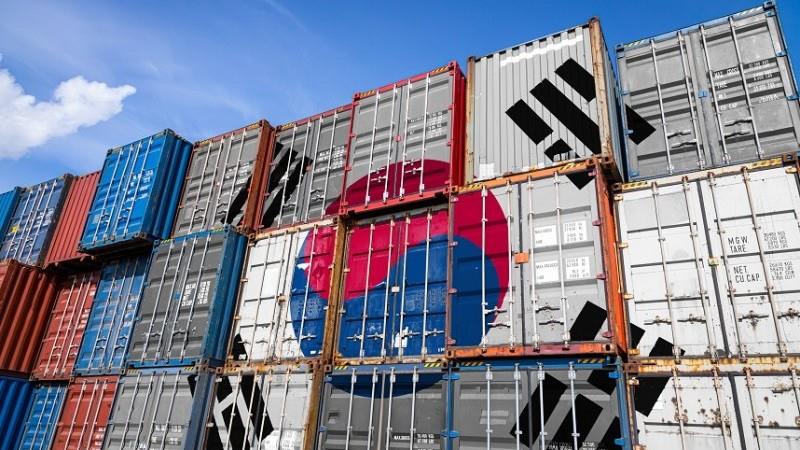
South Korea Trade Remains Strong, But Currency Pressures Persist
| 53.2% | Exports (%YoY) Imports rose 20.8% |
| Higher than expected |
South Korea's exports increased a greater-than-expected 53.2% year-on-year in May (vs 48.0% in April, 49.3% market consensus, 52% ING). Despite the ongoing conflict in the Middle East, export growth accelerated, with working day-adjusted shipments jumping 60.7%. Exports for the first five months rose 43.4%, compared to 40.9% year-to-date in April.
Semiconductor exports surged by 169.4%, driven by strong global investment in the AI sector. It accounts for 42.3% of total exports. Other AI-related products – computers (290.7%), wireless equipment (12.6%), and displays (9.4%)- all gained.
The growth momentum will likely accelerate throughout 2026 as the structural supply shortage of chips continues. Exports should benefit not only from rising US investment in AI, but also from the surge in Chinese AI spending - both engines are set to lift demand for Korea's goods. By destination, shipments to the US increased by 59.1% with chip and computer exports rising 651% and 675%, respectively. Exports to China rose by an even steeper 80.9%, with semiconductor exports (243%) accounting for the majority of this growth.
For other major exports, car exports fell 5.9% due to US tariffs and logistics disruptions caused by the war in the Middle East, while ship exports increased by 16.7%. Energy supply shocks had mixed effects on Korean exports as petroleum product exports increased in value (46.6%) but decreased in volume (-23.8%). The government has imposed an export ban on oil and petrochemical products. This should continue to weigh on these exports.
Export performance is proving strong not only in the chip sector but also in other sectors Source: CEIC"> Imports up firmly amid higher energy prices and capital goods imports
Imports rose 20.8% in May (16.7% in April, 21.5% market consensus; 25% ING), mostly driven by higher energy prices. Energy import volume dropped, but the value increased 15.9%. Non-energy imports also grew, with semiconductor manufacturing equipment notably rising 71%. We believe that strong global chip demand will boost domestic facility investments.
The trade surplus has widened thanks to strong price effects. Yet, in volume terms, both exports and imports softened, mostly due to decreases in energy imports and the government's energy export bans. We expect exports to be a main growth driver of second-quarter GDP, but the contribution to overall growth should be smaller in 2Q26 than 1Q26.
AI boom boost Korean exports to the US, ASEAN, and China Source: CEIC">| 54.8 | Manufacturing PMI |
Similar to what local business surveys suggested last week, the manufacturing PMI advanced again, rising to 54.8 in May from 53.6 in April. This is the highest reading since March 2021. Not just output, but new orders rose, signalling that growth in manufacturing is likely to continue in the near term. Within the region, manufacturing PMI has gained recently in Korea and Japan. We believe that despite energy shocks, major Asian manufacturers remained in an expansionary phase, likely due to strong overall IT demand.
Manufacturing PMI advanced, signalling positive outlook for growth Source: CEIC"> Despite widening trade surplus, KRW remained quite weak
The trade surplus for the first five months accumulated $101 billion, recording the largest surplus in history. However, the KRW weakness continues. We believe geopolitical uncertainty is a major driver of the KRW's weakness. But Korean-specific factors also weigh on the currency. Ironically, KOSPI's strong performance (+110% YTD) is fueling the weakening of the won. As the proportion of Korea-related assets in foreign investors' portfolios has risen sharply, rebalancing is now required. This is leading to a reduction in foreign investors' holdings of domestic equities, which is believed to be contributing to the weakening of the won.
Foreigners' net selling of KOSPI is a main reason for KRW weakness Source: CEIC"> KRW appreciation should be gradualIf geopolitical risk eases, then the USDKRW is expected to trade below the 1,500 level. Also, we expect the Bank of Korea to move ahead of the Federal Reserve, with a narrowing policy rate gap likely to support the KRW. Thus, the USDKRW is expected to go down to around 1,450.
Considering the larger current account surplus and narrowing the yield gap, 1,450 is still far weaker than the long-term average. We believe there are factors that limit further KRW gain.
Last week, the National Pension Service (NPS) decided to raise the target allocation for domestic equity from the current 14.9% to 20.8%. This was largely in line with our estimation of 19.9%. Also, NPS decided to widen the Strategic Asset Allocation (SAA) buffer range to respond to market volatilities. It decided not to disclose the size of the buffer. This will give more flexibility in managing the portfolio to the NPS. As such, the NPS is not likely to reduce its domestic equity weight aggressively in the near term. However, this implies that the allocation to assets other than domestic equity must be increased.
Under this year's plan, foreign equity allocation increased to 35.6% (from 34.7%), and domestic bond allocation was reduced to 21.8% (from 23.1%). Although the NPS has increased its FX hedge ratio, it is unlikely to fully hedge its overseas investments, so further investment in foreign asset markets should continue to put pressure on KRW, in our view.
Not only portfolio investment but also direct investment to overseas will increase. As part of the Korea-US trade negotiations, provisions on direct investment in the US will be finalised in the second half of 2026. It's expected that investment by Korean companies in the US will increase for an extended period.
For these reasons, despite a strong increase in the trade surplus and the outperformance of KOSPI, we expect USDKRW to remain above 1,450 by the end of 2026.

Legal Disclaimer:
MENAFN provides the
information “as is” without warranty of any kind. We do not accept
any responsibility or liability for the accuracy, content, images,
videos, licenses, completeness, legality, or reliability of the information
contained in this article. If you have any complaints or copyright
issues related to this article, kindly contact the provider above.
Most popular stories
Market Research

More Story






Comments
No comment