




403
Sorry!!
Error! We're sorry, but the page you were looking for doesn't exist.
The Quad's New Agenda: Ports, Cables And Minerals
(MENAFN- Asia Times)
The most consequential Indo-Pacific development last week may not have been the speeches delivered at the Shangri-La Dialogue in Singapore.
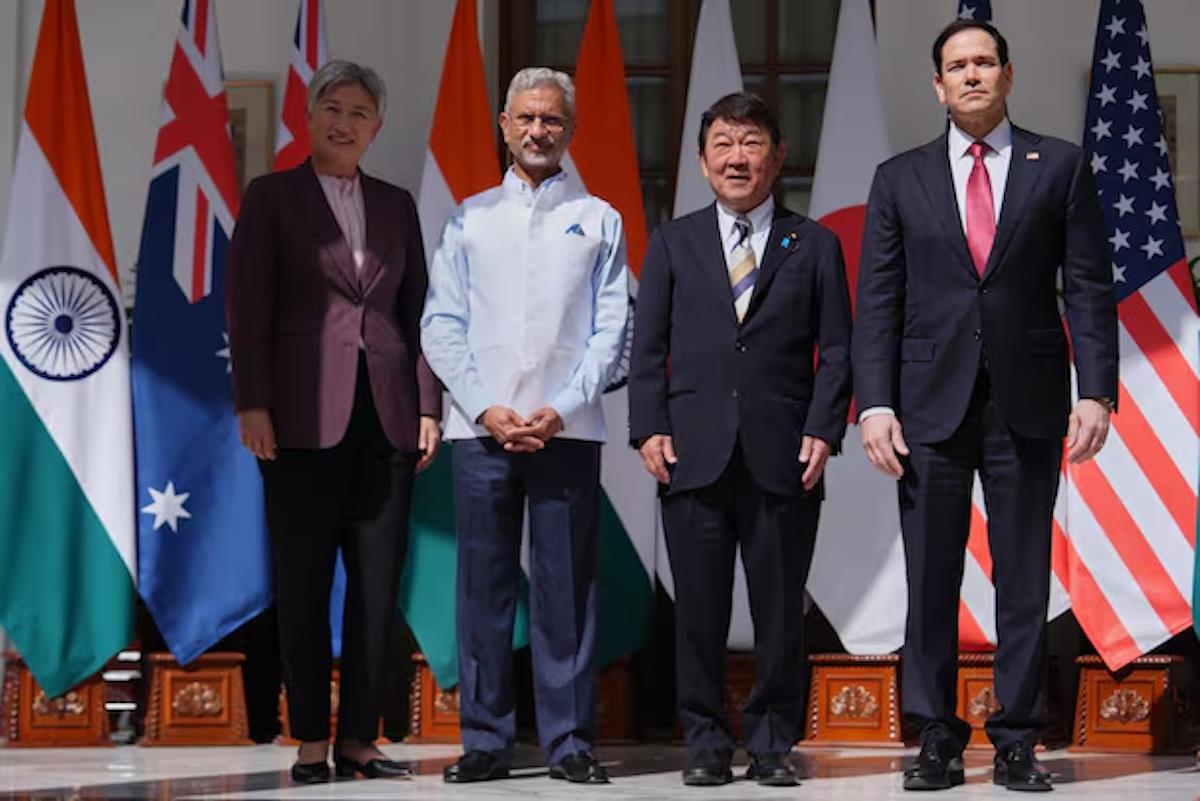
More significant were the decisions announced days earlier at the Quad foreign ministers' meeting in New Delhi, where India, Japan, Australia and the United States unveiled new initiatives on Pacific infrastructure like a port in Fiji, maritime surveillance and maritime domain awareness, critical mineral partnerships and more.
While military competition dominated discussions at the Shangri-La Dialogue, the Quad's emphasis on Fiji pointed to a broader development across the Indo-Pacific.
Strategic competition is increasingly extending beyond military balances to encompass the infrastructure, logistics networks and maritime corridors that support trade, energy flows and connectivity.
The initiatives announced in New Delhi reflected this shift, underscoring the extent to which economic geography is once again becoming a central factor in regional power dynamics.
The focus on Fiji, alongside India's Great Nicobar project in the eastern Indian Ocean, reflects a strategic logic that spans the Indo-Pacific from the Indian Ocean to the Pacific. This shift reflects changes in the structure of the Indo-Pacific economy itself.
According to UNCTAD, around 80% of global trade by volume moves by sea. Much of Asia's growth depends on maritime routes stretching from the Persian Gulf through the Indian Ocean, the Malacca Strait and the South China Sea into the Pacific.
The economic importance of the South China Sea extends far beyond the region itself. Approximately one-third of global maritime trade, worth over US$ 3 trillion annually, passes through its sea lanes.
The waterway also carries more than 30% of global maritime crude oil trade and almost 40% of global liquefied natural gas shipments, making it one of the world's most consequential energy transit routes.
As trade and supply chains have become increasingly concentrated around a relatively small number of maritime routes and chokepoints, infrastructure has acquired greater strategic significance.

Legal Disclaimer:
MENAFN provides the
information “as is” without warranty of any kind. We do not accept
any responsibility or liability for the accuracy, content, images,
videos, licenses, completeness, legality, or reliability of the information
contained in this article. If you have any complaints or copyright
issues related to this article, kindly contact the provider above.
Most popular stories
Market Research

More Story







Comments
No comment