




403
Sorry!!
Error! We're sorry, but the page you were looking for doesn't exist.
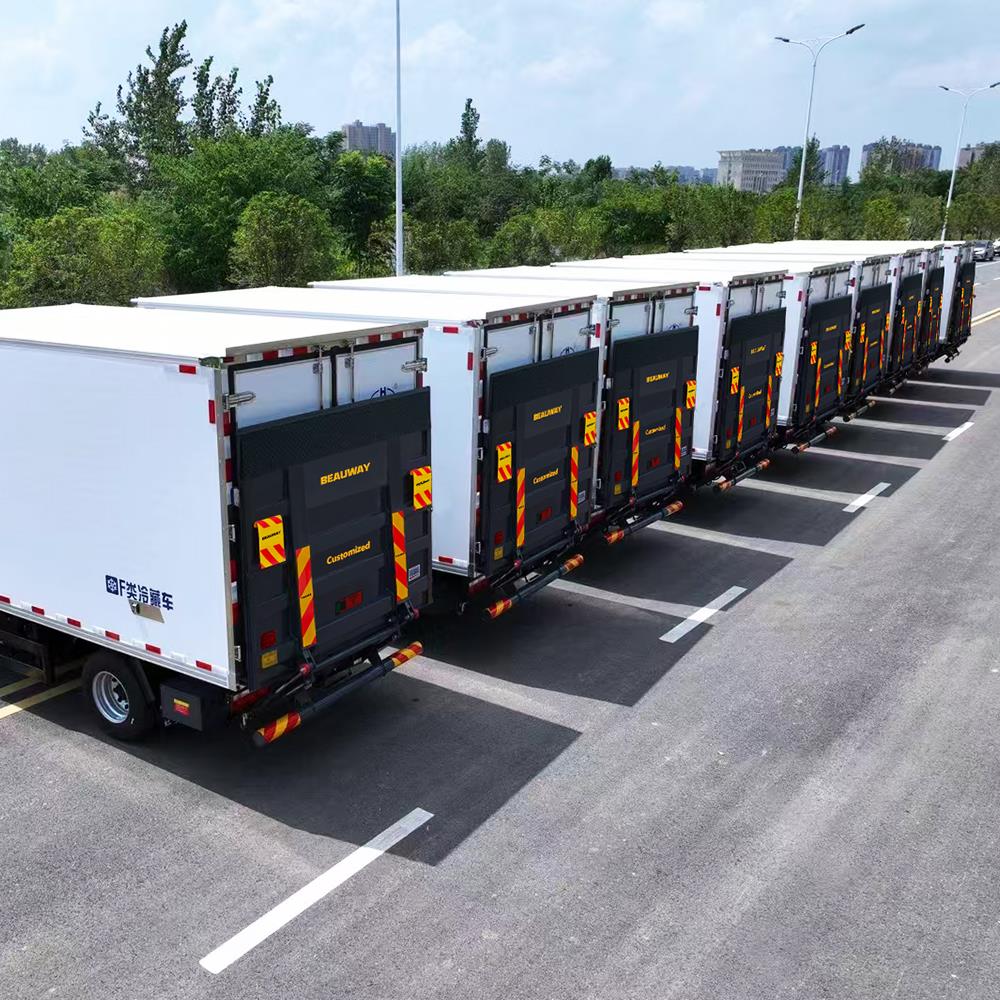
How to Choose the Right Tail Lift for Your Fleet in 2026
(MENAFN- MENAFNEditorial) How to Choose the Right Tail Lift for Your Fleet in 2026
In 2026, selecting a tail lift is no longer a simple equipment purchase. For most fleet operators, this decision directly affects delivery efficiency, labor costs, vehicle utilization, and daily operational stability. Problems usually do not appear immediately; they emerge later in the form of delays, breakdowns, or inefficient loading cycles, making the choice of tail lift critical for long-term fleet performance.
Tail lifts, or hydraulic loading systems, are widely used across delivery fleets, refrigerated transport, retail logistics, and industrial cargo operations. Despite their prevalence, many decisions are driven by price or basic specifications rather than operational reality. A lift that looks adequate on paper may not meet the practical challenges of repetitive stops, uneven cargo, or constrained urban spaces.
Understanding how your fleet actually operates is the first step. Urban delivery vehicles with high-frequency stops behave very differently from vehicles transporting heavy industrial cargo over long distances. The former requires rapid operation and efficiency, while the latter demands stability and consistent performance under heavy loads. Evaluating operational details such as the type of cargo handled most often, the speed of loading required per stop, whether drivers operate alone or with assistance, the ground conditions at delivery points, and the variability of pallet or cargo sizes will determine the type of tail lift needed. A lift optimized for speed will serve a busy urban fleet better, whereas a more robust heavy-duty system will suit industrial or irregular load operations.
Load capacity should reflect future usage rather than just current demand. Many fleets select equipment based solely on today’s cargo weight, which can lead to limitations as business scales. Tail lifts commonly come in capacities ranging from 500 kilograms to over 2000 kilograms. The critical factor is not the number itself but how consistently that load will be encountered. Operating a lift near its maximum capacity on a daily basis accelerates wear on the hydraulic system, increases component fatigue, and raises the frequency of maintenance. Over time, these factors create hidden operational costs that often outweigh the savings from choosing a lower-capacity unit.
The structure of a tail lift significantly influences its performance in real-world use. Cantilever tail lifts are widely adopted for their stable lifting behavior, large platform area, and reliability in handling palletized cargo. Folding tail lifts are typically selected for urban logistics where space behind the vehicle is limited. Their ability to fold under the chassis ensures the vehicle remains maneuverable without sacrificing functionality. Column tail lifts are preferred in applications that demand extreme stability and strength, such as industrial transport or irregularly shaped heavy loads. Each structure type comes with trade-offs between efficiency, space utilization, and load handling, which should align with the fleet’s specific operational requirements.
The quality of the hydraulic system determines long-term performance. While structural design is visible, most operational problems originate from hydraulic components subjected to continuous stress. A properly engineered system, including power units, hydraulic cylinders, valve assemblies, control electronics, and connecting lines, ensures smooth and predictable lifting even under frequent use. Poor-quality hydraulic systems can result in slow lifts, uneven platform motion, oil leakage, or pressure instability, which may gradually reduce operational efficiency and increase downtime risk.
Safety has become an essential operational consideration. Modern tail lifts are expected to incorporate features such as anti-slip platforms, overload protection, emergency stop functions, hydraulic locking mechanisms, automatic leveling, and warning indicators. These safety systems are designed for routine operations, where human error or fatigue is most likely to occur. For large fleets, even minor incidents can cascade into scheduling delays and increased labor costs, making safety features a critical element of the selection process.
Compatibility with the vehicle is often overlooked but is crucial. Even high-quality tail lifts can underperform if the chassis geometry, rear overhang, electrical systems, or installation space do not align with the vehicle. Experienced fleet operators treat installation as a design decision rather than a final step, ensuring that the lift integrates seamlessly with the vehicle and operates reliably in the field.
Considering lifecycle costs is equally important. The purchase price represents only a fraction of total expenses. Maintenance frequency, spare part availability, downtime impact, and hydraulic wear all contribute to the long-term cost of ownership. A lower-priced lift that fails frequently may appear economical initially but often generates higher operational costs over time. Fleet reliability is directly tied to overall logistics efficiency, so understanding the total lifecycle cost is more valuable than focusing solely on upfront investment.
Tail lift technology is evolving alongside broader trends in logistics. Lighter designs, smarter control systems, improved compatibility with electric vehicles, more energy-efficient hydraulics, and semi-automated loading concepts are increasingly relevant. Selecting tail lifts with upgrade potential allows fleets to adapt to future demands while maintaining operational efficiency and competitiveness.
In conclusion, choosing the right tail lift in 2026 involves aligning the equipment with real operational conditions rather than relying solely on specifications or price. Factors such as cargo type, load capacity, structural design, hydraulic quality, safety systems, vehicle compatibility, and maintenance considerations must be weighed collectively. The most effective fleets are not necessarily those with the most expensive equipment, but those whose tail lifts fit the way they operate in practice, enabling higher efficiency, lower labor costs, and sustained performance.
Beauway has long been involved in logistics loading and handling equipment, offering a full range of products including tail lifts, dock levelers, and lifting platforms. For tailored solutions based on real working conditions, technical consultation is available upon request.
In 2026, selecting a tail lift is no longer a simple equipment purchase. For most fleet operators, this decision directly affects delivery efficiency, labor costs, vehicle utilization, and daily operational stability. Problems usually do not appear immediately; they emerge later in the form of delays, breakdowns, or inefficient loading cycles, making the choice of tail lift critical for long-term fleet performance.
Tail lifts, or hydraulic loading systems, are widely used across delivery fleets, refrigerated transport, retail logistics, and industrial cargo operations. Despite their prevalence, many decisions are driven by price or basic specifications rather than operational reality. A lift that looks adequate on paper may not meet the practical challenges of repetitive stops, uneven cargo, or constrained urban spaces.
Understanding how your fleet actually operates is the first step. Urban delivery vehicles with high-frequency stops behave very differently from vehicles transporting heavy industrial cargo over long distances. The former requires rapid operation and efficiency, while the latter demands stability and consistent performance under heavy loads. Evaluating operational details such as the type of cargo handled most often, the speed of loading required per stop, whether drivers operate alone or with assistance, the ground conditions at delivery points, and the variability of pallet or cargo sizes will determine the type of tail lift needed. A lift optimized for speed will serve a busy urban fleet better, whereas a more robust heavy-duty system will suit industrial or irregular load operations.
Load capacity should reflect future usage rather than just current demand. Many fleets select equipment based solely on today’s cargo weight, which can lead to limitations as business scales. Tail lifts commonly come in capacities ranging from 500 kilograms to over 2000 kilograms. The critical factor is not the number itself but how consistently that load will be encountered. Operating a lift near its maximum capacity on a daily basis accelerates wear on the hydraulic system, increases component fatigue, and raises the frequency of maintenance. Over time, these factors create hidden operational costs that often outweigh the savings from choosing a lower-capacity unit.
The structure of a tail lift significantly influences its performance in real-world use. Cantilever tail lifts are widely adopted for their stable lifting behavior, large platform area, and reliability in handling palletized cargo. Folding tail lifts are typically selected for urban logistics where space behind the vehicle is limited. Their ability to fold under the chassis ensures the vehicle remains maneuverable without sacrificing functionality. Column tail lifts are preferred in applications that demand extreme stability and strength, such as industrial transport or irregularly shaped heavy loads. Each structure type comes with trade-offs between efficiency, space utilization, and load handling, which should align with the fleet’s specific operational requirements.
The quality of the hydraulic system determines long-term performance. While structural design is visible, most operational problems originate from hydraulic components subjected to continuous stress. A properly engineered system, including power units, hydraulic cylinders, valve assemblies, control electronics, and connecting lines, ensures smooth and predictable lifting even under frequent use. Poor-quality hydraulic systems can result in slow lifts, uneven platform motion, oil leakage, or pressure instability, which may gradually reduce operational efficiency and increase downtime risk.
Safety has become an essential operational consideration. Modern tail lifts are expected to incorporate features such as anti-slip platforms, overload protection, emergency stop functions, hydraulic locking mechanisms, automatic leveling, and warning indicators. These safety systems are designed for routine operations, where human error or fatigue is most likely to occur. For large fleets, even minor incidents can cascade into scheduling delays and increased labor costs, making safety features a critical element of the selection process.
Compatibility with the vehicle is often overlooked but is crucial. Even high-quality tail lifts can underperform if the chassis geometry, rear overhang, electrical systems, or installation space do not align with the vehicle. Experienced fleet operators treat installation as a design decision rather than a final step, ensuring that the lift integrates seamlessly with the vehicle and operates reliably in the field.
Considering lifecycle costs is equally important. The purchase price represents only a fraction of total expenses. Maintenance frequency, spare part availability, downtime impact, and hydraulic wear all contribute to the long-term cost of ownership. A lower-priced lift that fails frequently may appear economical initially but often generates higher operational costs over time. Fleet reliability is directly tied to overall logistics efficiency, so understanding the total lifecycle cost is more valuable than focusing solely on upfront investment.
Tail lift technology is evolving alongside broader trends in logistics. Lighter designs, smarter control systems, improved compatibility with electric vehicles, more energy-efficient hydraulics, and semi-automated loading concepts are increasingly relevant. Selecting tail lifts with upgrade potential allows fleets to adapt to future demands while maintaining operational efficiency and competitiveness.
In conclusion, choosing the right tail lift in 2026 involves aligning the equipment with real operational conditions rather than relying solely on specifications or price. Factors such as cargo type, load capacity, structural design, hydraulic quality, safety systems, vehicle compatibility, and maintenance considerations must be weighed collectively. The most effective fleets are not necessarily those with the most expensive equipment, but those whose tail lifts fit the way they operate in practice, enabling higher efficiency, lower labor costs, and sustained performance.
Beauway has long been involved in logistics loading and handling equipment, offering a full range of products including tail lifts, dock levelers, and lifting platforms. For tailored solutions based on real working conditions, technical consultation is available upon request.

Legal Disclaimer:
MENAFN provides the
information “as is” without warranty of any kind. We do not accept
any responsibility or liability for the accuracy, content, images,
videos, licenses, completeness, legality, or reliability of the information
contained in this article. If you have any complaints or copyright
issues related to this article, kindly contact the provider above.
Most popular stories
Market Research

More Story








Comments
No comment