




403
Sorry!!
Error! We're sorry, but the page you were looking for doesn't exist.
How Compact Tablets Like Huawei Matepad Mini Are Reshaping Work On The Go In 2024
(MENAFN- Khaleej Times) In a world increasingly defined by flexibility, work has moved well beyond physical boundaries. Yet for many, the tools that support productivity still feel unnecessarily heavy.
Consider the familiar trade-off: the tactile satisfaction and memory retention of a physical notebook versus the speed and accessibility of digital notetaking. Or the weight of a traditional laptop compared to the portability of a modern tablet. This is no longer just about preference; it's about reconciling established habits with new efficiencies.
Recommended For YouAs work continues to evolve, the tools that support it must evolve too, enabling a more seamless and adaptable way of working.
The 'Work on the Go' Reality
Across industries, the modern professional now navigates a workday that spans offices, cars, and airports. Hybrid work, now a cornerstone of the professional landscape, brings new demands, from adapting to diverse environments to maintaining seamless communication on the move. Workplace technology studies indicate that nearly 75% of employees consider mobile devices essential to their workflows, while 27% of global workforces in leading industries are provided with tablets as a primary tool for work-on-the-go. This is no longer just a technological upgrade; it reflects a gradual change in how work is structured and experienced. Professionals are carrying less, moving more, and increasingly expecting their tools to adapt to fluid routines.
This shift is increasingly visible across industries. Work is no longer confined to a desk; it now often unfolds across changing environments and fragmented moments. A university professor may review notes between lectures, a lawyer might scan documents en route to a meeting, and a senior executive may be required to make decisions in real time across boardrooms and airports, often without access to a fixed setup. In these contexts, productivity takes on a more flexible form, embedded within movement rather than anchored to place. As a result, lighter, more adaptable technology is increasingly seen as a practical response to these evolving ways of working, reflecting a broader move toward tools that reduce friction rather than add to it.
The Necessity of Focused Productivity
The most striking statistical point underpinning this need for focused, portable efficiency is often overlooked: the cost of distraction. A 2024 Insightful study revealed 62% of employees find smartphone notifications interfere with their concentration. This underscores a growing challenge in modern workflows, where the very devices that enable constant connectivity can also fragment attention. It also points to the need for more focused digital environments. Unlike smartphones, which are often designed around frequent alerts and multitasking, dedicated productivity devices such as tablets can offer a more intentional workspace for reading, writing, and reviewing content, helping professionals stay engaged without the same level of interruption.
Digital tools, when designed correctly, offer powerful accessibility, collaboration, real-time information access, and efficiency in task execution. The goal isn't simply to digitise, but to optimise the flow of work. productivity in that context, a survey from an employee-focused software provider found that 62% of 1,500 employees agreed that tablets and mobile devices play a key role in increasing productivity at work.
The Rise of Lighter, Adaptive Technology
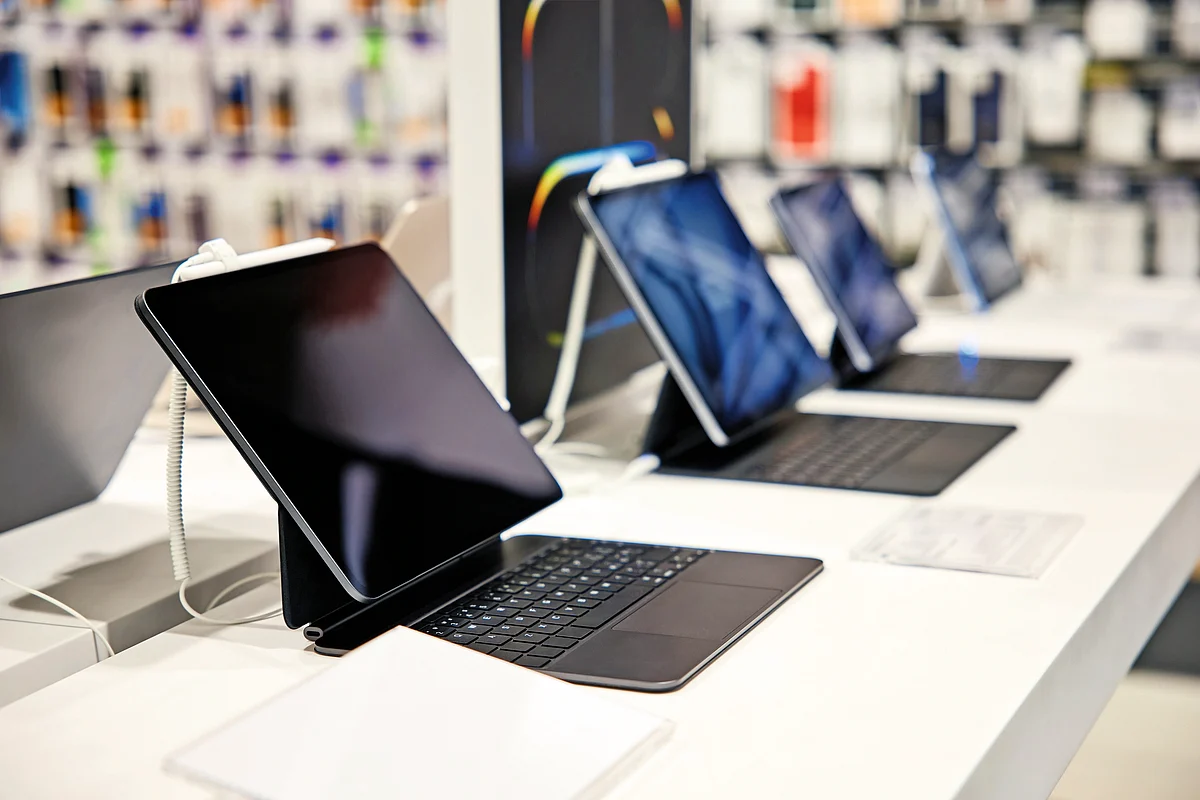
This growing preference has created space for a new category of compact devices, built not on compromise, but on empowering a fluid professional life. Take, for example, the Huawei MatePad Mini. Rather than positioning itself as a smaller version of something bigger, it leans into a different idea altogether; that productivity can exist in a form that is almost invisible. Weighing just 255 grams and measuring 5.1mm in thickness, it's designed to be effortlessly portable and a discreet enabler of continuous work.
Features that Empower Seamless Integration
These devices' impact on everyday use is significant. For professionals constantly shifting environments, a screen that remains clear even in bright light is invaluable. The Mini's PaperMatte display addresses this, making reading and note-taking effortless, whether reviewing notes outdoors or reading something on the move between meetings.
When asked about how he stays productive throughout his day, Mansoor Essa Lootah, Founder, Mansoor Lootah Law Firm and Legal Consultancy, said: "My day is built around reading, marking up, and responding quickly. I'm often moving between court, the office, and client meetings, so I need a device that lets me stay on top of documents without carrying a full setup everywhere."
Similarly, Dr Manar Abu Taleb, Associate Professor, University of Sharjah, shares how technology supports her teaching: "I'm constantly moving between lectures, office hours, and committee meetings, so I rely on something that lets me read, annotate, and make notes quickly without interrupting the flow of my day."
Furthermore, integrated note-taking tools begin to blur the line between digital and physical workflows.
For many professionals, the act of writing, not typing, is still central to how ideas take shape. Recreating this familiar rhythm digitally isn't a novelty, it's about seamless adaptation. Even fundamental aspects like battery life and charging, once purely technical considerations, now contribute to an expectation of uninterrupted continuity.
The ability to rely on a device for an entire workday, without constant power anxiety, is critical when work routines are unpredictable.
Sultan Hareb Al Falahi, Founder and CEO of Sultan Holding, summarises this need for managing work across a demanding schedule by saying:“A lot of my work happens in fragments - in cars, at airports, between meetings. So, I need tools that let me review and make decisions on the move without being tied to one place.”
Effortless Flow: The New Productivity Enabler
Ultimately, the increasingly valuable technology today is the kind that fades into the background, becoming an intuitive extension of the professional. It doesn't demand attention; it simply facilitates the seamless flow of work across all environments.
While no single device replaces every workstation, for the modern professional on the go, the value lies in a tool that handles the essentials without ever slowing them down. For them, productivity is defined by having the right device, at the right time, without friction - a device that empowers them to do more by carrying less.
Tablets are increasingly positioned as productivity-first devices
Tablets are often seen as the sweet spot for getting work done as they strike a balance between portability and productivity by offering enough screen space for reading, writing, and reviewing content without the cramped experience of smartphones.
While smartphones are nearly ubiquitous, with 79.5% global penetration and average daily usage of about 4.6 hours, their small screens can make deep-focus tasks feel like an uphill battle. Tablets, on the other hand, hit the nail on the head by giving users room to focus, helping them stay on track and avoid constant distractions.
From a productivity standpoint, larger devices clearly have the upper hand. Studies show that high-involvement tasks such as content creation, learning, and professional work still rely heavily on larger screens, even as mobile dominates general browsing. This explains why tablets, used by over 1.28 billion people globally, continue to gain traction in education, remote work, and business environments. Their design, often enhanced with keyboards and stylus support, allows users to stay in the zone longer compared to smartphones, which are more prone to interruptions.
Moreover, tablets are increasingly positioned as productivity-first devices rather than just entertainment tools, with growing adoption in hybrid work and digital learning scenarios. In essence, they help users cut through the clutter and get down to brass tacks, providing a more intentional workspace. Compared to smartphones, tablets make it easier to focus, create, and review content, proving that when it comes to productivity, bigger screens often mean better outcomes.
ALSO READ- MatePad Pro 12.2": Huawei's powerful tablet for professionals and creatives Will iPadOS 26 turn the iPad into a computer? Here's what we know One thing at a time: Does Gen-Z want to stop multitasking?

Legal Disclaimer:
MENAFN provides the
information “as is” without warranty of any kind. We do not accept
any responsibility or liability for the accuracy, content, images,
videos, licenses, completeness, legality, or reliability of the information
contained in this article. If you have any complaints or copyright
issues related to this article, kindly contact the provider above.
Most popular stories
Market Research

More Story







Comments
No comment