




403
Sorry!!
Error! We're sorry, but the page you were looking for doesn't exist.
Ceasefires By Other Means
(MENAFN- Asia Times)
The week began with the ceasefire in Iran seeming more a negotiation over what the meaning of the war was in the first place, rather than a straightforward attempt at peace. It ended in a similarly surreal position.
In between, Iran accused the US of continuing strikes. Washington described its actions as purely defensive. Reports of a possible 60-day extension moved alongside denials, counterclaims and arguments over Hormuz, the blockade of Iranian ports and the conditions under which commercial shipping might return to something like normal.
As the fighting has slowed, the politics of the war have become more visible.
Ceasefires are often treated simply as pauses in violence. However, their real impact is that they reveal the point at which violence has started to run into political limits. Clausewitz's formulation was that war is a continuation of political intercourse, with other means added. A ceasefire sits inside this continued political intercourse. It is the moment when leaders begin to question whether force is still helping them get what they want, or whether continued force now threatens something they need more.
That question is unusually difficult in the current war because the American objective has never been especially clear. At different moments, the conflict has looked like a campaign of deterrence, a punishment operation, a nuclear pressure campaign and a maritime crisis over Hormuz.
Those aims overlap, but they do not imply the same kind of war nor a clear fundamental political aim. More importantly, they do not imply the same kind of ceasefire. A ceasefire after punishment requires a claim of restored deterrence. A ceasefire after a maritime crisis requires arrangements that shipowners and insurers believe. A ceasefire after nuclear pressure requires a diplomatic sequence. A ceasefire after regime pressure requires something much larger, and much harder to sustain.
History suggests that a ceasefire generally comes from one of three conditions:
-
The parties have reached a military gridlockl
The fighting has opened a diplomatic path.
The continuation of war has begun to threaten the political project it was meant to serve.
The 1950s Korean War, the 1973 Arab-Israeli Yom Kippur War and the 1980s Iran-Iraq War show how conflicts only stop when force no longer gives politics what it wants.
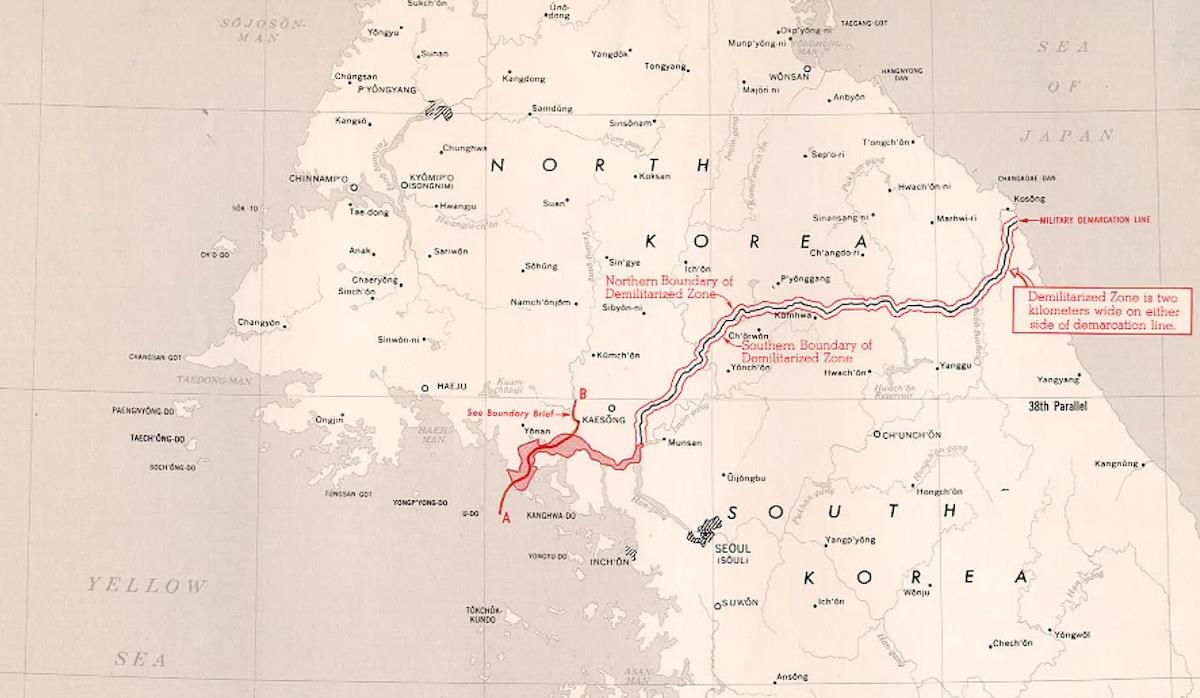
Korea was a ceasefire born from the exhaustion of ambition. The war began with North Korea's attempt to reunify the peninsula by force, expanded when the US and its allies moved from repelling the invasion to rolling back communist control in the North, and changed again when China entered to prevent that outcome. By 1953, after three years of enormous loss, the front had settled close to where the war had begun, leaving the armistice to formalise a truth that the battlefield had already made plain: neither side could impose reunification at a price it was prepared to keep paying.
The armistice signed in July 1953 ended the fighting without producing a peace treaty. That was its great limitation, but also the source of its durability. It reduced the violence by accepting that the political question would remain unresolved. The Korean peninsula became a place where the war had stopped but the conflict had continued, managed through a line, a zone, forces on alert, and the grim discipline of deterrence. The ceasefire has survived because it asked less of politics than the war had asked of force.

Legal Disclaimer:
MENAFN provides the
information “as is” without warranty of any kind. We do not accept
any responsibility or liability for the accuracy, content, images,
videos, licenses, completeness, legality, or reliability of the information
contained in this article. If you have any complaints or copyright
issues related to this article, kindly contact the provider above.
Most popular stories
Market Research

More Story




Comments
No comment