




403
Sorry!!
Error! We're sorry, but the page you were looking for doesn't exist.
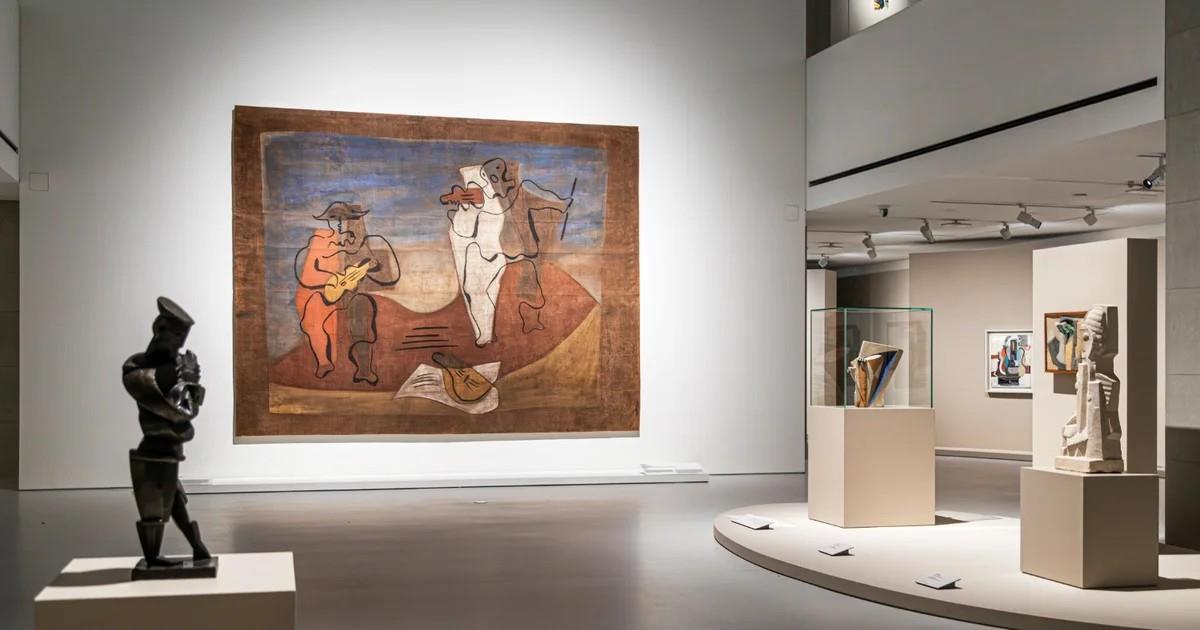
Inside Centre Pompidou Hanwha: What To Know About Seoul's Newest Museum Artsy
(MENAFN- USA Art News)
Centre Pompidou Opens a Seoul Outpost in a Former Aquarium
A new chapter in Seoul's museum landscape begins on June 4, when Centre Pompidou Hanwha opens in the city's financial district on Yeouido Island. The project gives the Paris institution its first long-term structural presence in South Korea, housed in an unexpected setting: a former aquarium inside the 63 Building, once the tallest skyscraper in Seoul and a landmark of the 1988 Summer Olympics.
The museum operates through a four-year partnership between the Hanwha Foundation of Culture, the philanthropic arm of Hanwha Group, and the Centre Pompidou. Spread across 11,000 square meters and four floors, the building is designed to function as both exhibition venue and public destination. The ground floor includes a large bookstore, while a café and auditorium occupy the first floor. A rooftop garden tops the structure, with a restaurant overlooking the Han River planned for a later phase.
At the center of the institution are two galleries on the second and third floors, each measuring roughly 1,600 square meters. Gallery 1, on the second floor, is a double-height space with seven-meter ceilings built to accommodate large touring exhibitions drawn from the Centre Pompidou's collection in Paris. Gallery 2, above it, is a split-level space with a mezzanine reserved for contemporary exhibitions curated by the Hanwha Foundation of Culture.
The building was designed by French architect Jean-Michel Wilmotte, whose work includes the Grand Palais Éphémère in Paris and the Ullens Center for Contemporary Art in Beijing. Wilmotte has long worked in Korea as well, with projects including Gana Art Gallery in 1998 and Seoul Auction Gangnam Center in 2019. A new museum on Jeju Island, also backed by the Gana Foundation, is expected to open this year.
Wilmotte described the building as“a box of light.” Wrapped in translucent glass, it is meant to gather daylight by day and glow after dark, while its curved exterior subtly recalls the silhouette of traditional Korean roof tiles.
The programming is equally ambitious. Over the next four years, Centre Pompidou Hanwha will present two major exhibitions annually, organized as eight monographic and thematic shows focused on the artists and movements that shaped the 20th century. Running alongside that schedule, a contemporary program will highlight Korean artists and place their work within broader art-historical narratives.
The inaugural exhibition,“The Cubists: Inventing Modern Vision,” brings together 112 works by 54 artists, including 91 works by 43 Cubist figures and 21 works by 11 modern and contemporary Korean artists. Organized by a joint French and Korean curatorial team, the exhibition traces Cubism from its emergence around 1907 through the 1920s, showing how the movement developed through exchanges across regions, media, and artistic circles. Among the works on view are Pablo Picasso's“The Guitarist” and Park Rae-hyun's“Street Stall.”
For Seoul, the opening adds another major international institution to a city already deeply engaged with contemporary art. For Centre Pompidou, it extends a model of cultural partnership that now reaches beyond a single exhibition and into the architecture, programming, and public life of the city itself.

Legal Disclaimer:
MENAFN provides the
information “as is” without warranty of any kind. We do not accept
any responsibility or liability for the accuracy, content, images,
videos, licenses, completeness, legality, or reliability of the information
contained in this article. If you have any complaints or copyright
issues related to this article, kindly contact the provider above.
Most popular stories
Market Research

More Story







Comments
No comment