




403
Sorry!!
Error! We're sorry, but the page you were looking for doesn't exist.
UN Security Council Race Turns Indo-Pacific Vs Eurasia Clash
(MENAFN- Asia Times)
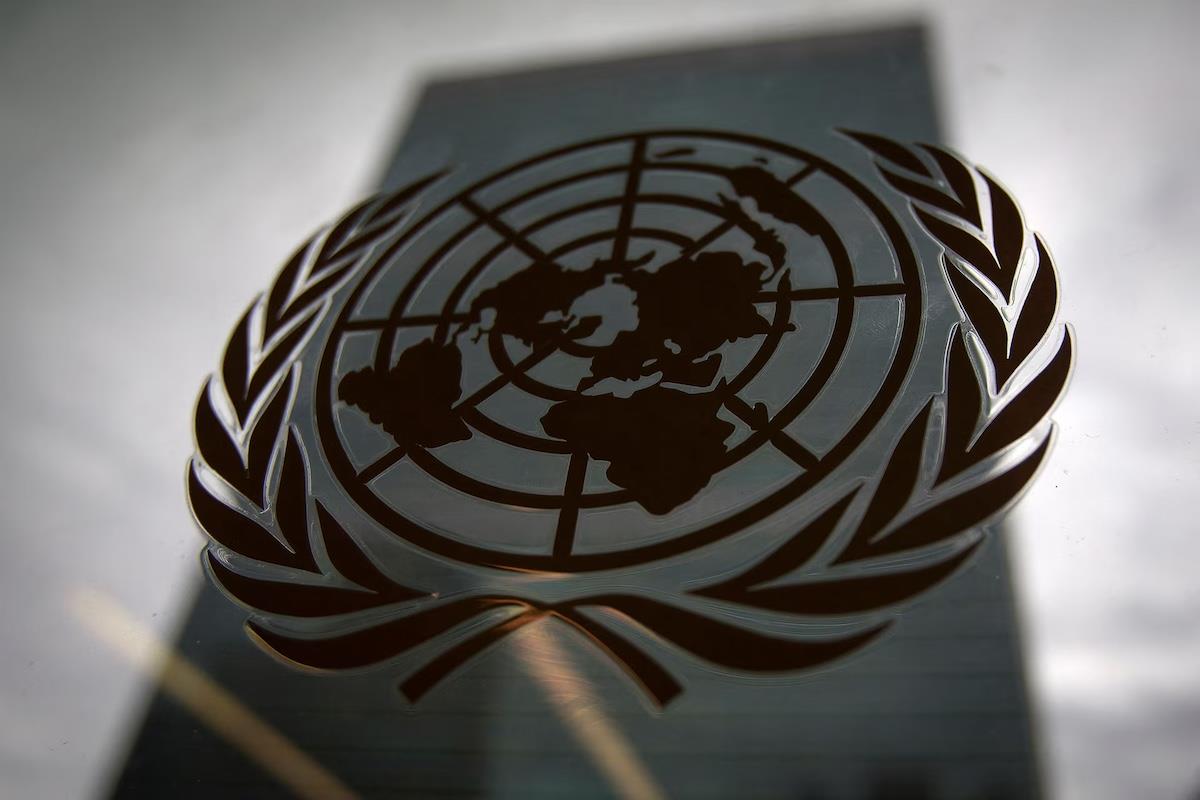
A quiet diplomatic battle is taking shape between the Philippines and Kyrgyzstan over the United Nations Security Council's sole Asia-Pacific non-permanent seat for the 2027-2028 term. The General Assembly will elect new members on June 3.
Long seen as the clear favorite, the Philippines now faces an unexpectedly forceful late push from Kyrgyzstan, turning what was expected to be a routine contest into a competitive race.
The Security Council has 15 members, five of them permanent – the United States, China, Russia, the United Kingdom and France. Kyrgyzstan is one of 59 countries that have never served on the Council, according to the UN website.
The last time Kyrgyzstan sought a seat, in 2011, it lost to Pakistan. It came a year after the bloody 2010 revolution and Kyrgyzstan did not have the consolidated support of its closest Central Asian neighbors. But Bishkek believes this time is different.
After settling long-standing border disputes with its neighbors, it now has the backing of all its Central Asian neighbors – Kazakhstan, Uzbekistan, Tajikistan and Turkmenistan – and the strong support of fellow Turkic nations, Turkey and Azerbaijan.
Kyrgyzstan is also betting that growing global interest in the Eurasian interior – from Washington's focus on critical minerals to Beijing's push for overland energy routes that bypass maritime choke points – will translate into calls for greater representation from the region.
Latest stories Silicon shock: the macro of technology inflation The deep, dark roots of unending US-Russia rivalry The sustained heatwave in India and Pakistan is quite dangerous“The UNSC elections are becoming much more competitive than many expected,” a Kyrgyz diplomat said.
If successful, Kyrgyzstan will become only the second Central Asian nation to serve on the Security Council, following Kazakhstan's term in 2017-2018.
The Philippines, by contrast, has served four times – in 1957, 1963, 1980-1981 and 2004-2005. A founding member of ASEAN and a U.S. treaty ally, its strategic location near Taiwan has made it central to Washington's efforts to strengthen deterrence against China.
While permanent members traditionally avoid publicly declaring preferences, a Philippine diplomat said it was only natural for Washington to back Manila.“The other side is supported by China and Russia,” the diplomat said, adding that countries should be on“the right side of history.”
Kyrgyzstan, however, has been working to shift that perception. Last month, it appointed Deputy Prime Minister Edil Baisalov as ambassador to Washington – an unusually high-profile move that underscores the importance Bishkek attaches to the race.
On May 25, Baisalov presented his credentials to US President Donald Trump in the Oval Office, making a direct pitch. Trump wished him well, according to sources. Two days later, Baisalov met Assistant Secretary of State for South and Central Asia Paul Kapur to reinforce Kyrgyzstan's case.
Meanwhile, in New York, Foreign Minister Zheenbek Kulubaev has been actively engaging counterparts from Uruguay, Cuba, Nicaragua, Costa Rica, Serbia, Bahrain and China as part of an intensified diplomatic push.
In mid-May, Kyrgyz President Sadyr Japarov set out his case in a lengthy Facebook post, arguing that the country's candidacy addresses a broader imbalance within the UN system.
“The continued existence of imbalances in the Council, especially the insufficient participation of small, developing, and landlocked states, undermines the stability of the entire architecture of collective security,” he wrote.
Pointing to Central Asia's recent progress in resolving border disputes“exclusively through peaceful means,” Japarov said the region offers a model showing that“even the most sensitive security issues can be resolved through negotiations and mutual consideration of interests.”
Winning a Security Council seat requires a two-thirds majority in the General Assembly - typically around 125 votes. Kyrgyzstan's strategy is to block a first-round victory and push the contest into multiple ballots, where positions can shift and diplomatic trade-offs intensify.
Sign up for one of our free newsletters-
The Daily Report
Start your day right with Asia Times' top stories
AT Weekly Report
A weekly roundup of Asia Times' most-read stories
It has secured the endorsement of the Organization of Islamic Cooperation and most of its 57 members, with the notable exception of Indonesia, Malaysia and Brunei, which have pledged support to their fellow ASEAN member.
Bishkek has also invested heavily in outreach to African states, promising alignment with African Union priorities and broader Global South concerns.
Ultimately, the Philippines-Kyrgyzstan contest is not simply about qualifications measured by traditional metrics. It is about what kind of world the United Nations believes it represents - and where it sees the center of geopolitical gravity: the Indo-Pacific or the Eurasian heartland.
The geopolitical map is shifting. The vast Eurasian landmass - stretching from Eastern Europe through Central Asia to Western China - is no longer a passive space between great powers.
It is increasingly a central arena where influence is contested, borders are negotiated and new forms of cooperation are taking shape.
Ken Moriyasu, a former correspondent for the Japanese newspaper Nikkei, is a senior fellow for greater Asia at the Hudson Institute.
Sign up here to comment on Asia Times stories OrThank you for registering!
-
Share on X (Opens in new window)
Share on LinkedIn (Opens in new window)
LinkedI
Share on Facebook (Opens in new window)
Faceboo
Share on WhatsApp (Opens in new window)
WhatsAp
Share on Reddit (Opens in new window)
Reddi
Email a link to a friend (Opens in new window)
Emai
Print (Opens in new window)
Prin

Legal Disclaimer:
MENAFN provides the
information “as is” without warranty of any kind. We do not accept
any responsibility or liability for the accuracy, content, images,
videos, licenses, completeness, legality, or reliability of the information
contained in this article. If you have any complaints or copyright
issues related to this article, kindly contact the provider above.
Most popular stories
Market Research

More Story




Comments
No comment