





403
Sorry!!
Error! We're sorry, but the page you were looking for doesn't exist.

Climate Change Could Significantly Worsen Summer Air Quality In Future Decades
Author: Rebecca Kaarina Saari
(MENAFN- The Conversation) Across the world, air pollution is associated with more early deaths than any other environmental exposure, raising risks of dying from lung cancer, respiratory infection, heart and lung disease and other causes.

Even in Canada, where air pollution is generally considered a low risk, more than 17,000 early deaths and over $140 billion in economic damages each year are linked to it.
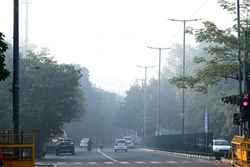
Pollution from heavy industry or wildfires, for example, can make outdoor air so polluted that it poses immediate health risks. Climate change can worsen air quality as changes to temperature, winds and rainfall enhance emissions, accelerate their transformation and allow them to build up to unhealthy levels.
In our recently published research, my colleagues and I estimated that, by 2100, 100 million Americans could breathe unhealthy air in the summer, seven times more than in 2000. Without action to keep the air clean, these people would face a regular choice of taking steps to protect themselves, like staying inside, or face higher risks of illness and death.
Growing health risksOur findings are based on models of the global economy, climate, atmosphere and health. Our approach can leave out factors that could make the situation better or worse. We modelled how climate change could affect air quality alerts and health risks, finding they could double for sensitive groups. Alerts are rare for most people living in Canada or the United States.
However, alert thresholds are lower for sensitive groups, reflecting their higher risks in relatively clean air. Many groups are considered“at risk” from air pollution, including infants and young children, seniors, pregnant people and those with underlying health conditions such as heart and lung disease, cancer, diabetes and mental illness. People who work or exercise outdoors are also at higher risk.
If people follow alert guidance, they reduce exposure to outdoor air pollution. We find that the health benefits of staying inside during an alert are similar regardless of which pollutant causes it. Seniors above age 65 receive higher benefits each day they adapt, as do young adults aged 18–35 - more than 45 times higher on average.
Read more: Wildfire smoke can harm your brain, not just your lungs
Everyone, especially sensitive groups, can protect themselves by tracking the air quality in their area and following associated guidance. That guidance usually involves limiting strenuous activity outdoors, keeping indoor air clean and, potentially, wearing a well-fitting N95 or P99 mask for high levels of particles or smoke.
Currently, relatively few people are aware of air quality alerts, and fewer comply. Around 15 to 20 per cent of Americans take some steps to reduce their exposure at least once per year.
Compliance is difficult for many who lack the resources to adapt their behaviour, even when they're aware of alerts. For example, outdoor workers and people experiencing homelessness may have limited access to clean indoor spaces.
Climate change and deregulationThe effect of climate change on air quality could be more serious than we show because we did not simulate changes to wildfires. In Canada, wildfire smoke is the largest contributor of the most harmful pollutant, fine particulate matter.
Climate change contributes to increased wildfires, like the 2023 season that made Canadian cities some of the most polluted in North America and led to multiple record-breaking particulate pollution in the U.S.
Our work did not assume anything about future environmental policy or deregulation that could move emissions up or down. Climate change could erode the air quality gains of the past 50 years of regulation, cutting them in half. So could recent deregulation of the American fossil-fuel industry, which releases pollutants like nitrogen oxides, sulphur oxides and particulate matter.
We found, instead, that policies to keep climate change from reaching dangerous levels could halt the rise in alerts at mid-century and avoid most of the rise in health risks.
Regardless, equitably protecting health from poor air quality will require action to reduce the emissions that cause air pollution and climate change, as well as boosting people's ability to protect themselves through adaptation.
If poor air and alerts become common, then improving the air tightness, ventilation and filtration of buildings and access to clean indoor spaces becomes more important as a long-term adaptation measure.
Institution:University of Waterloo

Legal Disclaimer:
MENAFN provides the
information “as is” without warranty of any kind. We do not accept
any responsibility or liability for the accuracy, content, images,
videos, licenses, completeness, legality, or reliability of the information
contained in this article. If you have any complaints or copyright
issues related to this article, kindly contact the provider above.
Most popular stories
Market Research

More Story






Comments
No comment