

Fitch Affirms UAE's 'AA-' Rating As Strong Buffers Shield Economy


The reaffirmation places the UAE among the highest-rated sovereigns in the Middle East and underscores investor confidence in the country's ability to withstand external shocks even as the region navigates one of its most volatile periods in recent years.
Recommended For You UAE's Eid Al Adha 2026 prayer timings: What you need to knowIn its latest assessment, Fitch said the stable outlook reflected expectations that the UAE's oil export revenues would remain resilient despite disruptions linked to the Iran conflict, supported by higher crude prices and the country's strategic export infrastructure.
“The 'AA-' rating reflects the UAE's low consolidated government debt, strong net external asset position and high GDP per capita,” Fitch said.
The agency highlighted Abu Dhabi's massive sovereign foreign assets - estimated at 164 per cent of UAE GDP in 2025 - among the strongest globally. These financial reserves, largely linked to the Abu Dhabi Investment Authority and other sovereign wealth entities, continue to provide a critical cushion against economic and geopolitical shocks.
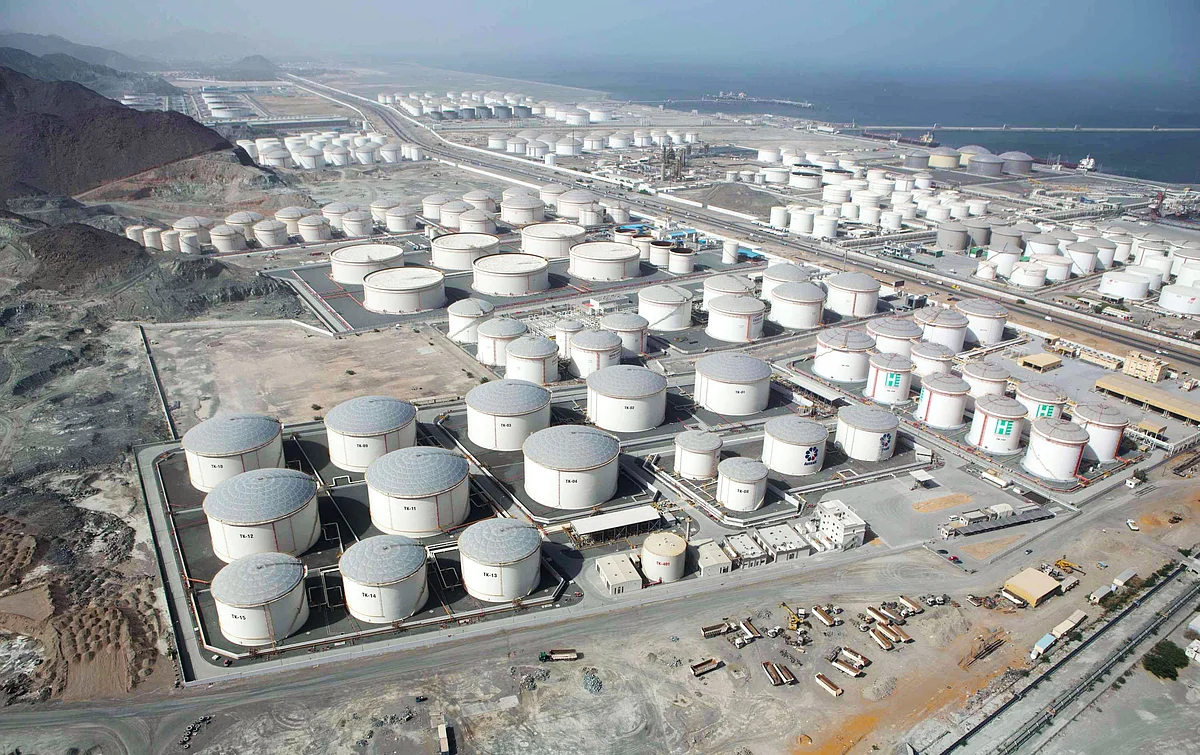
Fitch said higher oil prices, forecast to average $87 per barrel in 2026, along with pipeline exports through Fujairah, would help offset disruptions caused by instability around the Strait of Hormuz.
The rating agency nevertheless cautioned that prolonged geopolitical instability or renewed disruptions to regional energy infrastructure could pose risks to the UAE's economic outlook and public finances.
Conflict impact
While acknowledging the strength of the UAE's balance sheet, Fitch projected the economy would face short-term pressure from the regional conflict. The agency forecast the UAE's real GDP to contract by 4.8 per cent in 2026, including a 3.2 per cent decline in non-oil GDP and a near 7 per cent contraction in Dubai's economy as tourism, investment and expatriate inflows slow temporarily.
However, analysts say the projected contraction reflects extraordinary regional conditions rather than structural weakness, with the UAE still widely viewed as one of the Middle East's most diversified and resilient economies.
The report noted that hydrocarbon GDP could rebound strongly in 2027 as oil production constraints linked to Opec+ quotas ease and reconstruction spending gathers pace across the region.
Fitch also projected the UAE would maintain a consolidated fiscal surplus of 4.5 per cent of GDP in 2026 despite increased public spending and recovery programmes aimed at cushioning the impact of the war.
The agency estimated consolidated government debt would rise moderately to 27 per cent of GDP in 2026 from 24.3 per cent in 2025 - still significantly below the 'AA' category median of 50.3 per cent.
Economists say the UAE's relatively low debt burden and vast sovereign wealth assets provide the country with exceptional fiscal flexibility compared with many advanced and emerging economies.
Forex reserves
The Central Bank of the UAE's foreign exchange reserves stood at $277 billion in March 2026 despite a 9 per cent decline from earlier levels, while Abu Dhabi's sovereign wealth assets remain among the world's largest.
Fitch said these buffers were sufficient to maintain macroeconomic stability and dismissed concerns that discussions around a possible US Federal Reserve swap line reflected financial stress.
The report also highlighted the resilience of the UAE banking sector, noting that banks maintained strong liquidity and capital buffers despite regional uncertainty.
“UAE banks appear resilient under Fitch's base case for the war, reflecting sound financial metrics and ample liquidity and capital buffers,” the agency said.
Analysts noted that the UAE's banking sector has benefited from years of regulatory tightening, strong capitalisation and prudent risk management, helping it weather previous global crises including the Covid-19 pandemic and oil market volatility.
Fitch nevertheless flagged risks linked to high leverage among government-related entities and the economy's continued dependence on hydrocarbons, although it acknowledged the UAE's sustained progress in economic diversification.
The agency said future rating upgrades could depend on further reductions in oil dependence, stronger governance indicators and lower geopolitical risk while maintaining strong fiscal and external positions.
The UAE has accelerated diversification efforts over the past decade through investments in technology, renewable energy, logistics, tourism, advanced manufacturing and financial services. Non-oil sectors now account for more than 70 per cent of the country's GDP, according to recent government estimates.
Analysts say the reaffirmation of the UAE's sovereign rating during a period of heightened regional instability sends a strong signal to global investors about the country's financial resilience, institutional strength and long-term economic stability.

Legal Disclaimer:
MENAFN provides the
information “as is” without warranty of any kind. We do not accept any
responsibility or liability for the accuracy, content, images, videos,
licenses, completeness, legality, or reliability of the information
contained in this article. If you have any complaints or copyright issues
related to this article, kindly contact the provider above.
Comments
No comment