





403
Sorry!!
Error! We're sorry, but the page you were looking for doesn't exist.
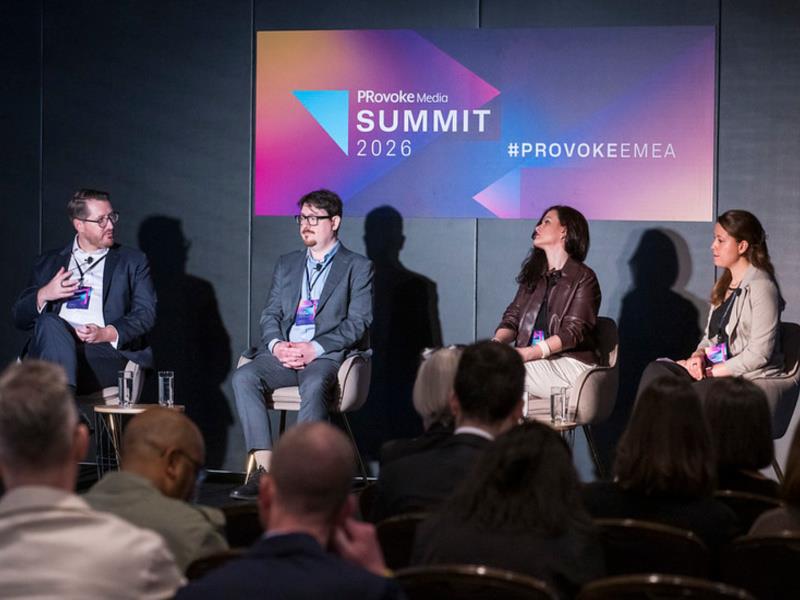
Provoke EMEA Summit 2026:“Bots Don't Buy Products, People Do”
(MENAFN- PRovoke)
LONDON - Communications teams are collecting more data than ever but still struggling to understand audiences, panelists said during a discussion at PRovoke Media's EMEA Summit, where speakers warned that widespread use of the same AI tools is making it harder for agencies and brands to stand out.
Hosted by Finn Partners' Global Intelligence Lab, the session focused on the gap between gathering intelligence and actually understanding the people behind it, as AI becomes increasingly embedded in research, analytics and strategy.
Financial Marketing Insights founder Jacob Howard said agencies and brands are increasingly relying on the same tools and models, making it harder to stand out.“It's not about the AI,” he said.
He also argued that communications teams remain too focused on measuring activity instead of business impact.
“What we are very good at as an industry is measuring activity,” Howard said.“What we are not good at is connecting that to impact.”
Palladium Hotel Group corporate communications & PR manager Inma Quirante questioned whether companies are using research to challenge assumptions or simply confirm them.
“If we are just getting insights and research corroborating what we are thinking, maybe we are not asking the right questions,” she said.
Quirante also said the communications industry often has access to huge amounts of information without necessarily getting closer to real audience understanding.
Moderated by Finn partners senior partner Thomas Morris, the panel also included PRCA head of communications Gabriela Weiss Clarke. Morris argued that despite the rapid evolution of AI tools, communications still comes back to understanding people.“Bots don't buy products, people do,” he said.
Clarke said AI and technology can help organizations react more quickly, particularly during crises, but cautioned against responding too fast.
“In crisis, the worst way to act is to precipitate,” she said.
Howard described the current moment as one of the biggest changes in how people work, but suggested AI itself is quickly becoming table stakes rather than a differentiator.
“We are going through one of the biggest changes ever to the way people work and we cannot underestimate that,” he said.“But the fact that it's a massive change and everyone is using it means that it's also uninteresting.”
He added that the real challenge is how organizations apply the technology and broaden the perspectives shaping communications decisions.“It's not about the AI, it's about how we use the global voices,” Howard said.
Howard also warned about the speed at which trust can now erode.“Years to build a brand, days to end trust,” he said.
Hosted by Finn Partners' Global Intelligence Lab, the session focused on the gap between gathering intelligence and actually understanding the people behind it, as AI becomes increasingly embedded in research, analytics and strategy.
Financial Marketing Insights founder Jacob Howard said agencies and brands are increasingly relying on the same tools and models, making it harder to stand out.“It's not about the AI,” he said.
He also argued that communications teams remain too focused on measuring activity instead of business impact.
“What we are very good at as an industry is measuring activity,” Howard said.“What we are not good at is connecting that to impact.”
Palladium Hotel Group corporate communications & PR manager Inma Quirante questioned whether companies are using research to challenge assumptions or simply confirm them.
“If we are just getting insights and research corroborating what we are thinking, maybe we are not asking the right questions,” she said.
Quirante also said the communications industry often has access to huge amounts of information without necessarily getting closer to real audience understanding.
Moderated by Finn partners senior partner Thomas Morris, the panel also included PRCA head of communications Gabriela Weiss Clarke. Morris argued that despite the rapid evolution of AI tools, communications still comes back to understanding people.“Bots don't buy products, people do,” he said.
Clarke said AI and technology can help organizations react more quickly, particularly during crises, but cautioned against responding too fast.
“In crisis, the worst way to act is to precipitate,” she said.
Howard described the current moment as one of the biggest changes in how people work, but suggested AI itself is quickly becoming table stakes rather than a differentiator.
“We are going through one of the biggest changes ever to the way people work and we cannot underestimate that,” he said.“But the fact that it's a massive change and everyone is using it means that it's also uninteresting.”
He added that the real challenge is how organizations apply the technology and broaden the perspectives shaping communications decisions.“It's not about the AI, it's about how we use the global voices,” Howard said.
Howard also warned about the speed at which trust can now erode.“Years to build a brand, days to end trust,” he said.

Legal Disclaimer:
MENAFN provides the
information “as is” without warranty of any kind. We do not accept
any responsibility or liability for the accuracy, content, images,
videos, licenses, completeness, legality, or reliability of the information
contained in this article. If you have any complaints or copyright
issues related to this article, kindly contact the provider above.
Most popular stories
Market Research

More Story








Comments
No comment