




403
Sorry!!
Error! We're sorry, but the page you were looking for doesn't exist.
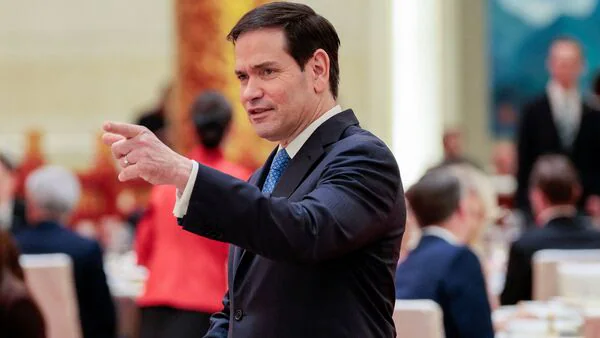
Marco Rubio To Visit India From May 23 After NATO Foreign Ministers Meeting In Sweden
(MENAFN- Live Mint) US Secretary of State Marco Rubio will travel to India from May 23 to 26 after attending a key NATO foreign ministers meeting in Helsingborg.
According to the US State Department, Rubio's India visit will include stops in Kolkata, Agra, Jaipur and New Delhi, where he is expected to hold discussions on energy security, trade and defence cooperation with senior Indian officials.
Rubio is also expected to engage with counterparts from the Quad grouping - comprising India, United States, Australia and Japan - during the visit.
The Quad has increasingly become a central platform for Indo-Pacific cooperation as Washington seeks to deepen partnerships in the region amid rising competition with China.
The trip comes at a time of heightened geopolitical uncertainty following the Iran conflict, rising global energy prices and renewed concerns among NATO allies over Trump's approach toward the military alliance.
NATO meeting in Sweden before India tourBefore arriving in India, Rubio will participate in the NATO Foreign Ministers Meeting in Helsingborg on May 22.
The gathering is one of the final high-level NATO meetings before alliance leaders convene for a summit in Ankara in July.
The State Department said Rubio will push for“increased defense investment and greater burden sharing in the alliance,” continuing longstanding US demands for European allies to raise military spending commitments.
Rubio is also expected to meet counterparts from NATO's Arctic member nations to discuss security and economic cooperation in the Arctic region and the alliance's“strengthened posture in the High North.”
In addition, the secretary will hold bilateral meetings with Swedish Prime Minister Ulf Kristersson and NATO Secretary General Mark Rutte.
Trump's NATO stance raises concerns among alliesRubio's Sweden visit comes amid growing unease within NATO over Trump's shifting stance on the alliance and recent US military decisions in Europe.
Trump earlier this month announced plans to reduce American troop deployments in Europe, sparking concern among allies already dealing with security uncertainties linked to the Iran conflict and tensions with Russia.
Although the Pentagon later clarified that the move involved canceling planned troop rotations to Poland and Germany rather than withdrawing permanently stationed forces, the announcement reportedly caught NATO officials off guard.
US Vice President JD Vance defended the administration's approach, saying Washington's focus was on promoting“European independence and sovereignty.”
“What we did is that we delayed a troop deployment that was going to go to Poland,” Vance told reporters at the White House.“That's not a reduction. That's just a standard delay in rotation that sometimes happens in these situations.”
The remarks followed concerns that Trump's broader foreign policy approach could weaken NATO coordination at a time when the alliance is facing multiple security challenges.
Trump has repeatedly criticized NATO allies over defence spending and has often questioned the extent of US commitments to the alliance.
Tensions with Germany add to alliance uncertaintyTrump's recent remarks and troop decisions also fueled diplomatic friction with Germany.
The US president was reportedly angered after German Chancellor Friedrich Merz criticized Washington's handling of the Iran conflict and said the United States was being“humiliated” by Iranian leadership.
Merz also questioned what he described as a lack of clear US strategy during the conflict.
The tensions have added to broader concerns among European allies over the future direction of NATO under Trump's leadership.
Also Read | Trump's new White House project: A helipad on the South Lawn
Legal Disclaimer:
MENAFN provides the
information “as is” without warranty of any kind. We do not accept
any responsibility or liability for the accuracy, content, images,
videos, licenses, completeness, legality, or reliability of the information
contained in this article. If you have any complaints or copyright
issues related to this article, kindly contact the provider above.
Most popular stories
Market Research

More Story








Comments
No comment