




403
Sorry!!
Error! We're sorry, but the page you were looking for doesn't exist.
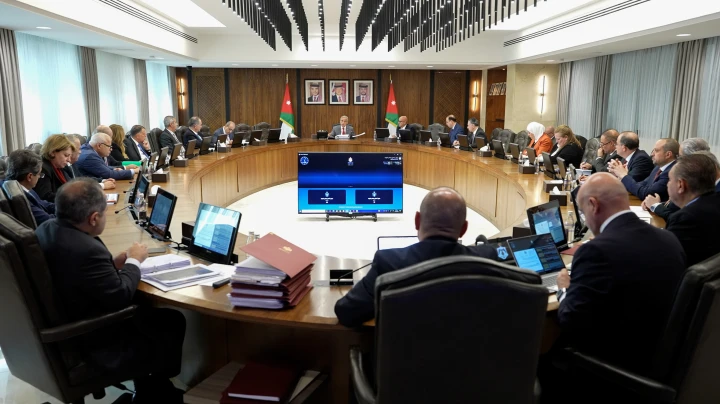
Cabinet Approves Merger Of Civil, Military Consumer Corporations
(MENAFN- Jordan Times)
- Expansion of Al Kharbeh Al Samra plant endorsed, capacity to reach 150m cubic metres
- $28m project to expand Al Kharbeh Al Samra wastewater treatment capacity
- New railway bylaw to support expansion of national rail network
- Organisational framework for Culture Ministry, Integrity, Anti-Corruption Commission
- Awards list for exceptional public sector performance incentives endorsedAMMAN - The Cabinet, in a session chaired by Prime Minister Jafar Hassan on Sunday, approved steps to merge the Civil Consumer Corporation with the Military Consumer Corporation to improve service efficiency, enhance competitiveness, support better pricing, strengthen food security, and curb inflation.
The Cabinet also approved the justifications for a draft law repealing the Civil Consumer Corporation Law of 2026, in preparation for completing the constitutional procedures for its endorsement.
The decision is part of a broader government vision aimed at consolidating efforts and resources and improving institutional efficiency in the consumer goods and services sector, with the goal of enhancing service delivery and stabilising prices across the Kingdom.
The merger aims to develop a more capable institution for providing basic commodities and strengthening strategic stockpiles, while integrating the logistical and administrative capabilities of both entities, according to a Prime Ministry statement.
The draft law ensures the preservation of the job and financial rights of employees of the Civil Consumer Corporation, guaranteeing job stability during and after the merger in line with the Human Resources Management Bylaw in the public sector No. (33) of 2024.
Employees will be transferred to the Military Consumer Corporation's personnel system under legal and regulatory procedures designed to ensure continuity of work and retain accumulated expertise, thereby strengthening institutional performance and preserving human capital.
The Cabinet also approved advancing plans to expand the Al Kharbeh Al Samra wastewater treatment plant, raising its annual capacity to 150 million cubic metres of treated water.
The expansion project will increase the plant's capacity by an additional 20 million cubic metres annually by the end of 2030, at a cost exceeding $28 million, financed by the US with contributions from the Jordan Water Authority.
Following the expansion, the plant will be capable of treating 150 million cubic metres of wastewater annually, which will be reused for the irrigation of suitable crops, including fodder and forest trees.
The Cabinet also endorsed an amended Licensing and Fees Bylaw for Railway Services for 2026, aimed at improving the investment environment in the railway sector and enhancing transport efficiency.
The regulation updates the sector's regulatory framework, improves operational efficiency, and aligns it with international standards, while supporting the gradual expansion of the national railway network in line with the Kingdom's strategic transport vision, the statement said.
It also aims to balance investment incentives with regulatory oversight, ensure operational readiness, and strengthen safety and service quality through improved licensing procedures, oversight mechanisms, and governance tools.
The regulation is expected to improve the investment climate in the railway sector and enhance transport efficiency in line with global best practices and the Economic Modernisation Vision (EMV).
The Cabinet also approved the Administrative Organisation Regulation for the Ministry of Culture for 2026, aimed at modernising and streamlining the ministry's operations.
The regulation seeks to clearly define roles and responsibilities, align the ministry's structure with national strategic priorities and the EMV, and enhance transparency and accountability.
It also aims to streamline cultural centres and programmes, and improve the delivery of cultural services through simplified procedures and greater institutional efficiency.
The Cabinet also approved the justifications for a draft amended Administrative Organisation Regulation for the Ministry of Social Development for 2026, to be referred to the Legislation and Opinion Bureau for completion of legal procedures.
It includes the abolition of assistant secretary-general positions, the creation of three specialised directorates, and the institutionalisation of inspection and compliance mechanisms through a new unit for oversight and regulatory adherence.
It also introduces a dedicated directorate for the governance of associations and the management of the associations' support fund, as well as a governance and transparency directorate for association funds.
The Cabinet also approved the justifications for a draft amended Administrative Organisation Regulation of the Integrity and Anti-Corruption Commission for 2026, aimed at strengthening institutional effectiveness and technical capacity.
The regulation seeks to reflect the diversity of the commission's technical specialisations and responsibilities, including engineering, financial analysis, and investment-related corruption cases, while taking into account the sensitive and technical nature of its work.
It also aims to enhance the commission's ability to enforce compliance with national integrity principles, strengthen anti-corruption efforts, and expedite decision-making process
The Cabinet also approved a list of national and international awards that qualify recipients for exceptional performance incentives, based on recommendations from the Public Service and Public Administration Commission, in line with the Human Resources Management Bylaw and performance incentive regulations.
Exceptional performance includes innovative and applied initiatives that significantly improve service delivery and institutional efficiency, support strategic objectives, and enhance work systems using modern technologies, the statement said.
It also includes obtaining patents, introducing major improvements to systems and applications, and developing innovative work models that enhance productivity and service quality.
The Public Service and Public Administration Commission will define and periodically update the criteria for these awards, ensure transparency in their selection, and guarantee equal opportunity for public sector employees.
The list covers a wide range of awards in institutional excellence, administrative, financial, technical, leadership, education, health, energy, and climate fields, offering public sector employees opportunities to showcase achievements at national and international levels.
The Cabinet said the measure aims to institutionalise a culture of innovation and performance excellence in the public sector, enhance productivity, improve service quality, and strengthen citizen satisfaction, in line with the Public Sector Modernisation Roadmap and its executive programmes.

Legal Disclaimer:
MENAFN provides the
information “as is” without warranty of any kind. We do not accept
any responsibility or liability for the accuracy, content, images,
videos, licenses, completeness, legality, or reliability of the information
contained in this article. If you have any complaints or copyright
issues related to this article, kindly contact the provider above.
Most popular stories
Market Research

More Story







Comments
No comment