




403
Sorry!!
Error! We're sorry, but the page you were looking for doesn't exist.
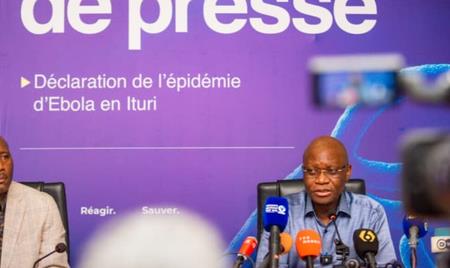
Congo Warns New Ebola Outbreak Poses High Fatality, Spread Risk: Minister
(MENAFN- IANS) Kinshasa, May 16 (IANS) Roger Kamba, health minister of Congo, warned Saturday that the newly declared Ebola outbreak in the eastern province of Ituri involves the Bundibugyo strain, which has a high fatality rate and carries a significant risk of further spread.
"The Bundibugyo strain has no vaccine and no specific treatment," Kamba told a press briefing in the capital Kinshasa, adding that the strain has "a very high lethality rate which can reach 50 per cent."
Congo declared a new Ebola outbreak in Ituri on Friday, the 17th, recorded in the country since 1976. According to the health ministry, 246 suspected cases and 80 deaths had been reported as of May 15, including four deaths among confirmed positive cases. The National Institute for Biomedical Research has confirmed Ebola virus disease caused by the Bundibugyo strain in tested samples.
Kamba said health teams had been deployed to trace contacts of confirmed cases and contain the disease in Ituri, neighbouring provinces, and border areas. Uganda confirmed Friday an "imported case" involving a Congolese national who died in Kampala, Xinhua news agency reported.
"This is a disease transmitted from human to human. The affected health zone of Mongwalu is a commercial area marked by intense mobility, exposing North Kivu, Tshopo, Uganda, and South Sudan," he said.
The minister said the Bundibugyo strain differs from the Zaire strain in some symptoms. It often begins with fever, while hemorrhagic signs appear later. Health authorities have urged residents to promptly report any suspected case involving symptoms such as fever, vomiting, fatigue, or bleeding.
"The Bundibugyo strain has no vaccine or specific treatment. But for the response, the DRC is ready and has the capacities, expertise, and means to face the outbreak," he said.
The Africa Centres for Disease Control and Prevention (Africa CDC) has announced the activation of immediate response measures following the outbreak.
The agency also expressed serious concerns over the risk of further spread, citing the intense population movement, mining-related mobility, insecurity in affected zones, gaps in contact listing, infection prevention and control challenges, as well as the proximity of affected areas to neighbouring countries.
The Africa CDC chief said the agency is working with the two affected countries, South Sudan, and partners to strengthen surveillance, preparedness, and response to swiftly contain transmission.

Legal Disclaimer:
MENAFN provides the
information “as is” without warranty of any kind. We do not accept
any responsibility or liability for the accuracy, content, images,
videos, licenses, completeness, legality, or reliability of the information
contained in this article. If you have any complaints or copyright
issues related to this article, kindly contact the provider above.
Most popular stories
Market Research








Comments
No comment