




403
Sorry!!
Error! We're sorry, but the page you were looking for doesn't exist.
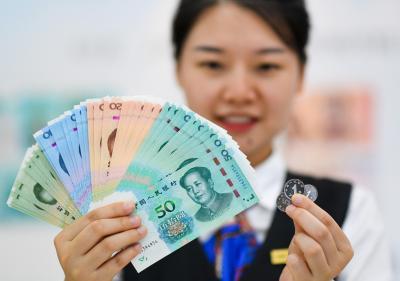
Singapore Playing Key Role In China's Plan To Globalise Yuan: Report
(MENAFN- IANS) New Delhi, May 12 (IANS) Singapore has emerged as a key hub in China's strategy to internationalise its currency, the renminbi (RMB), and reduce dependence on the US dollar-dominated global financial system. The city state facilitates China's monetary and capital flows, across other countries in Southeast Asia, according to a new report.
China's structural limits, like restricted capital mobility and regulatory uncertainty, constrain the RMB's global acceptance. Consequently, Singapore acts as a stable external gateway while diversifying financial opportunities and risks, and enabling China to shape a gradual, regionally anchored RMB ecosystem, according to an article published on the website of the Organisation for Research on China and Asia (ORCA).
The article cites the People's Bank of China's '2025 RMB Internationalisation Report' as stating that Singapore now ranks among the top offshore RMB hubs globally, only behind Hong Kong. It accounts for 276 billion RMB worth of deposits, contributing to a growing share of RMB trading and cross‐border settlements in Southeast Asia.
The recent announcement to designate DBS Bank as Singapore's second RMB clearing bank further strengthens its role in global offshore RMB markets. Singapore's emergence as an RMB hub is therefore not accidental. For Beijing, it offers a politically neutral, globally-trusted platform, at a time when Beijing's security-driven priorities for Hong Kong are increasingly affecting its financial role.
For Singapore, aligning with RMB internationalisation is a strategic bet to embed itself in China–ASEAN economic integration, while diversifying its financial opportunities and risks.
The recent initiatives on the expanded access to China's bond market, now exceeding $25 trillion USD, enable Singapore‐based institutions a greater role in facilitating foreign participation in the RMB market, the article by Omkar Bhole points out.
Singapore's offshore RMB liquidity ecosystem has strengthened significantly in recent years. The city now hosts two RMB clearing banks - ICBC Singapore, appointed in 2013, and DBS, designated in 2025 - enhancing direct access to Chinese financial markets. Singapore now accounts for 9.7 trillion RMB payments clearing in 2024, the article states.
Three Singapore banks have also become a part of China's cross-border interbank payment system (CIPS) -- an alternative to SWIFT, which reduces payment costs and clearing time for RMB transactions. This not only makes these institutions an attractive option for RMB-based settlements, but also allows China to gain more acceptance in strengthening an alternative financial system, the article observes.
It also highlights that Singapore's own strategic calculus is equally important in this growing ecosystem. As a global financial centre dependent on cross-border capital flows, the internationalisation of RMB opens an opportunity for Singapore to capture a growing share of China-linked trade settlement, wealth management and capital market activity, particularly as ASEAN economies continue to deepen integration with China.

Legal Disclaimer:
MENAFN provides the
information “as is” without warranty of any kind. We do not accept
any responsibility or liability for the accuracy, content, images,
videos, licenses, completeness, legality, or reliability of the information
contained in this article. If you have any complaints or copyright
issues related to this article, kindly contact the provider above.
Most popular stories
Market Research

More Story








Comments
No comment