

403
Sorry!!
Error! We're sorry, but the page you were looking for doesn't exist.
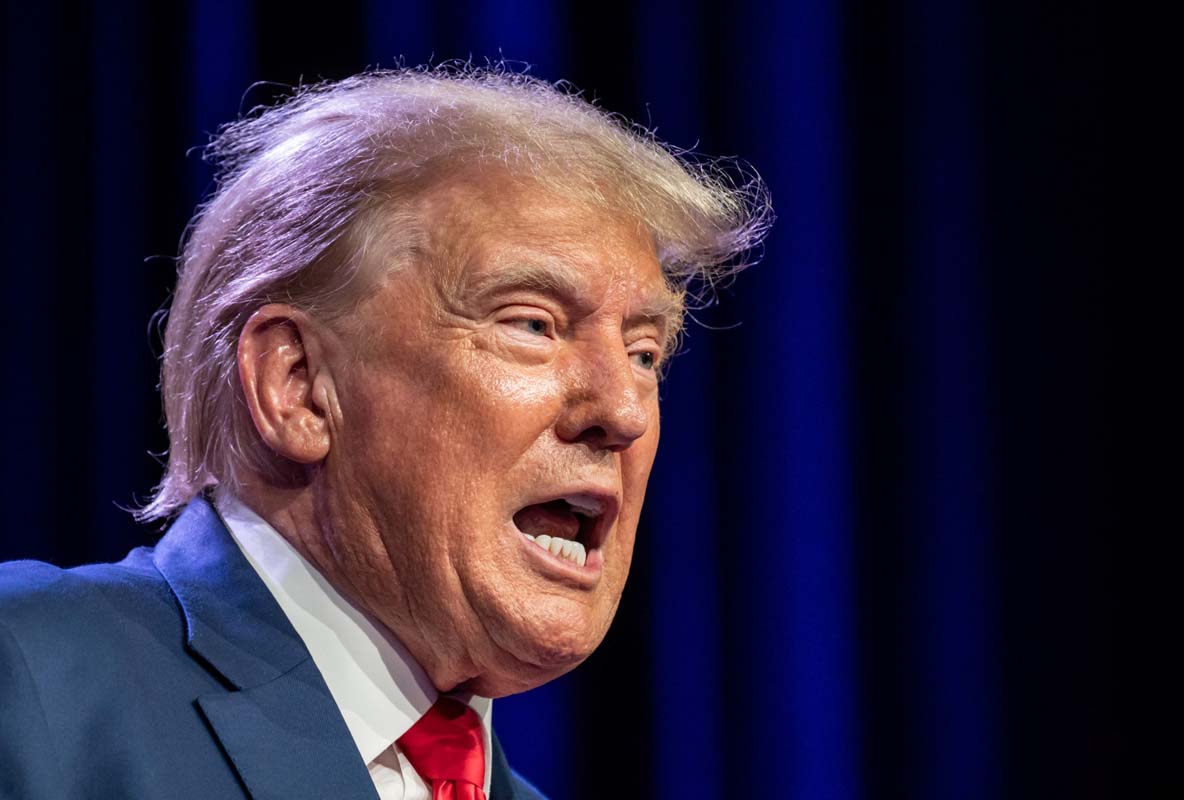
Trump Set for China Visit


(MENAFN) US President Donald Trump is set to travel to Beijing this week for a three-day summit with Chinese President Xi Jinping — his first visit to China as a sitting president since 2017, and one taking place against a backdrop of diminished American geopolitical standing and a fragile regional ceasefire.
The summit, originally penciled in for late March, was pushed back after a sharp escalation in the Middle East triggered by coordinated US-Israeli strikes on Iran and Tehran's subsequent retaliatory campaign, which spiraled into a broader regional conflict before an uneasy ceasefire took hold. Analysts note that the prolonged Iran crisis drained considerable diplomatic and military bandwidth from Washington, a dynamic that observers say has benefited Beijing.
Heading into the summit, experts anticipate Trump will concentrate on shoring up economic stability across the Asia-Pacific rather than opening new fronts of geopolitical friction.
Jonathan A. Czin, a former CIA analyst and researcher at the Brookings Institution, struck a cautious note on expectations, telling reporters that the meeting is unlikely to yield landmark breakthroughs. He described the likely focus as preserving existing, if temporary, trade arrangements. Specifically, Czin said the US delegation is expected to press Beijing for firm commitments to ramp up purchases of American soybeans and Boeing commercial aircraft, even as Washington maintains export restrictions on advanced semiconductor technology.
The summit also unfolds in the shadow of Washington's $11 billion arms sale to Taiwan late last year — a transaction Beijing has condemned as a breach of the Three Joint Communiques that underpin US-China relations. Czin indicated China is likely to raise the Taiwan question directly during talks.
The disruption roiling the Strait of Hormuz is expected to loom large over the agenda as well. Before the onset of hostilities, the strategic chokepoint channeled approximately 25 percent of global oil trade, 20 percent of liquefied natural gas shipments, and 30 percent of worldwide fertilizer commerce. Despite its significant exposure to Middle Eastern energy — the Persian Gulf supplies roughly 45 percent of China's oil imports and 30 percent of its liquefied natural gas needs — Beijing has rebuffed US pressure to intervene, and has reportedly directed domestic refineries to continue processing Iranian crude in defiance of American sanctions.
Washington has argued that surging maritime shipping and commodity costs will ultimately compel China to engage constructively. But that view is not universally shared.
Daniel Fu, a research fellow at Harvard Business School, cautioned against overstating Beijing's energy vulnerability. Speaking to reporters, including Anadolu, during an online briefing, Fu pointed to China's strategic petroleum reserves and its substantial reliance on domestically produced coal as buffers against maritime supply shocks. He also noted that Beijing's ownership of state-controlled energy companies enables swift rerouting of supply chains when disruptions arise.
Fu further argued that China's accelerating investment in renewable energy is steadily eroding its long-term dependence on seaborne fossil fuel imports. He added that Western sanctions on Russia following its invasion of Ukraine produced an unintended consequence that actually reinforced China's energy security — redirecting Russian oil and gas exports eastward via overland pipelines and into Chinese hands.
The prevailing view among Chinese analysts holds that the Strait of Hormuz crisis inflicts greater economic pain on the US and its Western allies than on China itself — a calculation that may shape Beijing's leverage at the negotiating table this week.
The summit, originally penciled in for late March, was pushed back after a sharp escalation in the Middle East triggered by coordinated US-Israeli strikes on Iran and Tehran's subsequent retaliatory campaign, which spiraled into a broader regional conflict before an uneasy ceasefire took hold. Analysts note that the prolonged Iran crisis drained considerable diplomatic and military bandwidth from Washington, a dynamic that observers say has benefited Beijing.
Heading into the summit, experts anticipate Trump will concentrate on shoring up economic stability across the Asia-Pacific rather than opening new fronts of geopolitical friction.
Jonathan A. Czin, a former CIA analyst and researcher at the Brookings Institution, struck a cautious note on expectations, telling reporters that the meeting is unlikely to yield landmark breakthroughs. He described the likely focus as preserving existing, if temporary, trade arrangements. Specifically, Czin said the US delegation is expected to press Beijing for firm commitments to ramp up purchases of American soybeans and Boeing commercial aircraft, even as Washington maintains export restrictions on advanced semiconductor technology.
The summit also unfolds in the shadow of Washington's $11 billion arms sale to Taiwan late last year — a transaction Beijing has condemned as a breach of the Three Joint Communiques that underpin US-China relations. Czin indicated China is likely to raise the Taiwan question directly during talks.
The disruption roiling the Strait of Hormuz is expected to loom large over the agenda as well. Before the onset of hostilities, the strategic chokepoint channeled approximately 25 percent of global oil trade, 20 percent of liquefied natural gas shipments, and 30 percent of worldwide fertilizer commerce. Despite its significant exposure to Middle Eastern energy — the Persian Gulf supplies roughly 45 percent of China's oil imports and 30 percent of its liquefied natural gas needs — Beijing has rebuffed US pressure to intervene, and has reportedly directed domestic refineries to continue processing Iranian crude in defiance of American sanctions.
Washington has argued that surging maritime shipping and commodity costs will ultimately compel China to engage constructively. But that view is not universally shared.
Daniel Fu, a research fellow at Harvard Business School, cautioned against overstating Beijing's energy vulnerability. Speaking to reporters, including Anadolu, during an online briefing, Fu pointed to China's strategic petroleum reserves and its substantial reliance on domestically produced coal as buffers against maritime supply shocks. He also noted that Beijing's ownership of state-controlled energy companies enables swift rerouting of supply chains when disruptions arise.
Fu further argued that China's accelerating investment in renewable energy is steadily eroding its long-term dependence on seaborne fossil fuel imports. He added that Western sanctions on Russia following its invasion of Ukraine produced an unintended consequence that actually reinforced China's energy security — redirecting Russian oil and gas exports eastward via overland pipelines and into Chinese hands.
The prevailing view among Chinese analysts holds that the Strait of Hormuz crisis inflicts greater economic pain on the US and its Western allies than on China itself — a calculation that may shape Beijing's leverage at the negotiating table this week.

Legal Disclaimer:
MENAFN provides the
information “as is” without warranty of any kind. We do not accept any
responsibility or liability for the accuracy, content, images, videos,
licenses, completeness, legality, or reliability of the information
contained in this article. If you have any complaints or copyright issues
related to this article, kindly contact the provider above.
Comments
No comment