




403
Sorry!!
Error! We're sorry, but the page you were looking for doesn't exist.
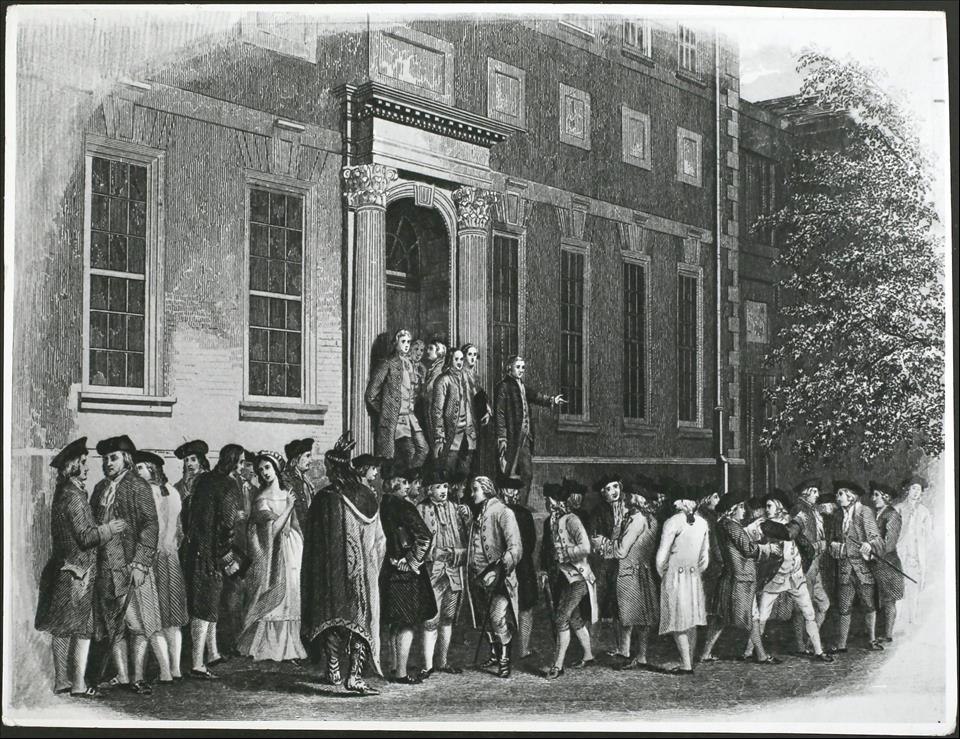
The American Revolution's Triumphant Story Of Democracy And Freedom Overlooks Loyalists Who Paid A Steep Price For Allegiance To Britain
Author: Kimberly Nath
(MENAFN- The Conversation) On the eve of the American Revolution, Matthias Aspden made a decision that would change the trajectory of his life. A wealthy merchant from Philadelphia, Aspden carefully prepared to leave his home in March 1776 as rumors of revolution circulated. He drafted a will and appointed trusted friends to manage his property while he traveled to England.

As a loyalist, someone who wanted to remain loyal to the crown and the British empire, Aspden believed the war would be brief. Historians estimate that at the beginning of the war as many as one-third of all American colonists identified as loyalists. Aspden believed his departure would be temporary. Order, he assumed, would soon be restored, and he would permanently return within a few years.
But that wasn't the case.
The American Revolution is often told as a triumphant story of democracy and freedom. But this narrative leaves out a significant group: the loyalist men and women who remained faithful to Britain and, as a result, lost their homes, property and sometimes their sense of belonging.
As a historian of the American Revolution who studies Philadelphia loyalists, I believe Aspden's story offers a glimpse into an overlooked experience of the war.
A wealthy Philly merchant exiled in EnglandBorn and raised in Philadelphia, Aspden was not a marginal figure. He was a Quaker merchant with extensive property holdings, including a home on Water Street, in what is now the Old City neighborhood, and land in Chester County outside Philadelphia.
When he left in 1776, he abandoned nearly everything he owned, believing he would return. As others celebrated independence that summer, Aspden quietly slipped away to London.
In England, reality set in. Exile was not just physical; it was deeply social and emotional. In Philadelphia, Aspden had been established. In London, he was one of tens of thousands of displaced loyalists trying to rebuild a life. He gravitated toward communities of fellow exiles. These networks offered some stability, but they could not replace what he had left behind.
Aspden's letters to friends and family from this period reveal a man caught between hope and anxiety. He followed news from Philadelphia obsessively, requesting newspapers and updates from friends and business contacts. At one point, he described himself as“an idle man until I can return to America.” His words suggest both longing and uncertainty, as if his life were on pause.
By 1780, that uncertainty turned into fear.
A 'traitor' trying to come back homeAspden began hearing about laws in Pennsylvania aimed at confiscating loyalist property. These laws required individuals accused of treason to appear in court and defend themselves. Aspden, still in England, could not do so. As a result, he was tried in absentia, declared a traitor and subjected to the state's harshest penalties.
The consequences were devastating. In 1782, Aspden learned that all of his property had been confiscated and would be sold to aid the patriots in the American Revolution. An official commissioner of confiscation seized his Philadelphia home and wharf, which were worth thousands of pounds, along with his land in Chester County. Aspden, facing financial ruin, decided to return to Philadelphia to defend his name and his property.
In 1785, after nearly a decade abroad and with the war over, he crossed the Atlantic, hoping the new United States would restore his property under the terms of the peace treaty with Britain. Instead, he was met with rejection.
Pennsylvania officials informed him that individuals in his position were not protected. He had no legal claim to his property and, more shockingly, no rights as a citizen. While the peace treaty prevented further confiscation of loyalist property, his property was not restored.
The message was clear: Philadelphia was no longer his home.
One last trip to PhiladelphiaAspden left again, traveling through New Jersey and New York before securing passage back to England. Reflecting on his departure, he wrote of the pain of being forced from his“native country.” His brief return confirmed what he had feared. He had no home.
In the years that followed, Aspden sought compensation wherever he could. The American government offered nothing, so he turned to Britain. The Loyalist Claims Commission, established to reimburse those who had lost property during the war, eventually awarded him just over 1,100 pounds, a fraction of his estimated losses.
Aspden made one final visit to America in the early 1790s. By then, he had received a legal pardon and could travel without fear of arrest. But he still could not recover his property or successfully pursue compensation in American courts. Once again, he left – this time for good.
Heirs recover his fortuneAspden died in England in 1824, having spent nearly 50 years in exile from the city he always considered home.
Decades after his death, his heirs pursued a legal claim in the United States against Pennsylvania, arguing that his estate had been unjustly seized. After years of litigation, the court ruled in their favor in 1848, awarding them over a half-million dollars – approximately US$20 million today. It was a remarkable reversal, but Aspden never saw justice.
His life raises difficult questions about loyalty, identity and belonging. Aspden did not see himself as disloyal to Philadelphia. To him, loyalty to the British Crown and loyalty to home were not opposites.
His story reminds us that the Revolution was not just a fight for independence. It was also a civil conflict that divided communities and reshaped lives. For every celebrated patriot, there were loyalists like Aspden and others who lost so much during the American Revolution.
Read more of our stories about Philadelphia, or sign up for our Philadelphia newsletter on Substack.
Institution:San Juan College

Legal Disclaimer:
MENAFN provides the
information “as is” without warranty of any kind. We do not accept
any responsibility or liability for the accuracy, content, images,
videos, licenses, completeness, legality, or reliability of the information
contained in this article. If you have any complaints or copyright
issues related to this article, kindly contact the provider above.
Most popular stories
Market Research

More Story








Comments
No comment