




403
Sorry!!
Error! We're sorry, but the page you were looking for doesn't exist.
How Pakistan Became The Primary Mediator Between The US And Iran
Author: Natasha Lindstaedt
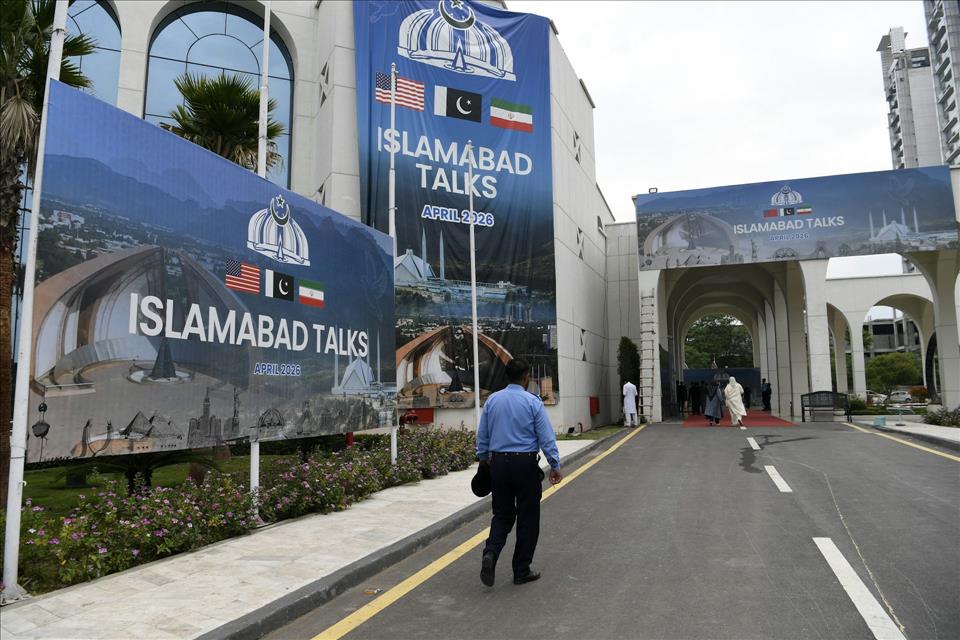
(MENAFN- The Conversation) Pakistan has emerged as a central diplomatic broker in the conflict between the US and Iran. When announcing a pause to the US operation to guide stranded vessels through the Strait of Hormuz on May 6, Donald Trump said he had made the decision“based on the request of Pakistan”.

The Pakistani prime minister, Shehbaz Sharif, subsequently expressed hope“that the current momentum will lead to a lasting agreement that secures durable peace and stability for the region and beyond”. This latest intervention comes a month after Pakistan secured its biggest diplomatic win in years by brokering a ceasefire in Iran.
But how did Pakistan emerge as the most trustworthy mediator in this conflict, and what drove Islamabad to involve itself? Pakistan's biggest advantage is that it enjoys relationships with both the US and Iran, which has helped it be seen as a neutral party by each side.
Pakistan has worked with the US in dealing with Iran for decades. Since 1981, two years after the US and Iran severed diplomatic ties following the Islamic revolution, a dedicated section of the Pakistani embassy in Washington has handled Iranian diplomatic affairs in the US.
Pakistan has also worked with the US in mediation efforts elsewhere. Most notably, it facilitated former US secretary of state Henry Kissinger's secret visit to China in 1971. This paved the way for the normalisation of relations between the US and China later that decade.
Relations between the US and Pakistan have not always been smooth. In 2011, a decade after the 9/11 terrorist attacks, the Atlantic magazine in the US referred to Pakistan as the “ally from hell”. Whether or not it did so knowingly, Pakistan hosted al-Qaeda mastermind Osama bin Laden following the attack.
Trump himself also denied Pakistan military aid during his first term as president, saying it was not doing enough to combat terrorism. And Pakistan's human rights record, particularly concerning democratic backsliding and restrictions on civil liberties, have at times led to tension with the US government.
However, Pakistan's relationship with the US has improved markedly in Trump's second term. Trump, who often uses personal ties to guide US foreign policy, has developed a strong relationship with Sharif and the chief of Pakistan's army, Asim Munir. In June 2025, Munir was even invited to the White House for a private lunch. This was the first time a US president had hosted a non-head of state military leader at this level.
Pakistan's recent efforts to court Trump have played a key role in building these ties. Over the past year Pakistan has nominated Trump for the Nobel Peace Prize, joined his Board of Peace and launched a collaboration with his World Liberty Financial crypto platform.
And in July, Islamabad signed a deal with the US to allow Washington to help develop Pakistan's largely untapped oil reserves.“We read him [Trump] right,” said the former chairman of the Pakistani Senate's Defense Committee, Mushahid Hussain Syed, in an interview with the Washington Post on April 20.
The relationship between Pakistan and Iran has also been characterised by ups and downs. While Iran was the first country to recognise Pakistan's independence in 1947, their relationship has often been fraught with tension. This largely stems from Iran's territorial claim to the Balochistan province of Pakistan, as well as from Pakistan's ties with Iranian rivals.
As recently as January 2024, tensions between the two countries appeared to be escalating again over Balochistan. However, hostilities soon receded and both countries formally resumed their bilateral ties. They subsequently expanded their security cooperation and invited each other's ambassadors and foreign ministers for a formal reconciliation ceremony.
Strategic necessitySome commentators argue that Pakistan's decision to step in as the primary mediator in Iran has been driven by strategic necessity. Its Balochistan province is currently grappling with an insurgency. Islamabad will thus want to avoid a situation where the Iran war spills into Pakistan, as this could destabilise its border regions even further.
There are also economic reasons explaining Pakistan's involvement. Pakistan has been severely affected by the disruption to Gulf shipping. It imports between 85% and 90% of its crude oil from Saudi Arabia and the United Arab Emirates (UAE) and almost 99% of its liquified gas from the UAE and Qatar.
Before the war broke out, Pakistan's economy had been starting to gain momentum. But higher oil prices are now affecting government revenues, increasing its fuel import bill from US$300 million (£220 million) before the conflict to US$800 million now. Pakistan's authorities have been forced to raise consumer fuel prices by more than 50%.
Pakistan's agricultural sector, which employs around 40% of the country's population, is also vulnerable to the conflict due to its reliance on fertiliser imported through the Strait of Hormuz. Prices of urea fertiliser have surged by 50% since the war broke out. Prolonged disruption to the agriculture sector risks plunging some of the most vulnerable people in Pakistan further into poverty.
Remittances are another area that could be affected by a protracted conflict, with as many as five million Pakistani people living in the Gulf region. Pakistan received roughly US$30 billion in remittances between 2025 and 2026, 54% of which came from the Gulf.
If the war continues to affect Gulf economies, many Pakistani workers may be forced to return home. This will cause remittance revenues to fall, depriving Pakistan of a vital source of foreign exchange, while simultaneously pushing up domestic unemployment.
Pakistan's relationships with the US and Iran put it in a strong position to intervene in the conflict diplomatically. But its mediation has also been a calculated effort to stabilise its borders and protect its economy.
Institution:University of Essex

Legal Disclaimer:
MENAFN provides the
information “as is” without warranty of any kind. We do not accept
any responsibility or liability for the accuracy, content, images,
videos, licenses, completeness, legality, or reliability of the information
contained in this article. If you have any complaints or copyright
issues related to this article, kindly contact the provider above.
Most popular stories
Market Research

More Story



Comments
No comment